ADVERTISEMENT

A.I. and the accountancy education sector

Published Oct 18, 2025 12:01 am  |  Updated Oct 17, 2025 12:54 pm
We cannot deny that Generative AI (GenAI) tools—such as ChatGPT, Grammarly, and others—are already here in our educational landscape. Since their introduction (at the end of 2022, if I am not mistaken), they have caused significant concerns at all levels of education, primarily because they have made cheating quite easy, as they say. Teachers and professors, as champions in the education sector, must now clearly see the far-reaching influence this technology has on the future of their work and the performance of their students. This requires taking cognizant of both the opportunities and the ethical concerns posed by these Artificial Intelligence tools.
Regarding learner performance, we've heard comments such as: “I think the program is only capable in certain ways of evaluating students, as it is incapable at recognizing the differences between weak, surface-level analysis, and sympathetic, novel and innovative content.” With this dilemma on hand, I should say that the deeper feedback that genuinely pushes our students to become better thinkers is simply not within the grasp of current AI machines. Instead, our professors are finding themselves grading a lot of student essays that were, somehow, all written by robots.
This leads to a sense of demoralization for some of our instructors, as described by others: "I believe it is demoralizing to some of our professors as the students are now free to use Artificial Intelligence for their work, and then will argue (until blue in the face) like they are arguing for their right to cheat and see no ethical consequences for their actions, yet they demand their instructors to give them all the genuine human effort and labor in return.” I can certainly see how this kind of scenario would be incredibly frustrating to any professor.
Concerning school administration, many universities and colleges still do not provide official guidelines on Artificial Intelligence. While some institutions have created guiding principles, they are often very broad and vague, leaving it up to the college and the respective professors to decide the details on their own. Given this, I would suggest that professors be offered optional professional development sessions focused specifically on how to ethically and effectively integrate Artificial Intelligence into their courses.
For the faculty, GenAI tools like Grammarly and ChatGPT can provide an opportunity to enhance the teaching presence of professors, but only if they are used appropriately. The guiding principle when utilizing these tools is that they should only be employed if the instructor can maintain their authenticity and do so in an ethical manner. As some say: “These tools should never be used to 'do the work' for the teachers; rather, they can be looked at as enhancements to the teachers’ already established processes.”
There must still be the value that professors add as instructors through the human feedback they provide to students. As Dr. Shovlin of Ohio University succinctly said, “It’s the human connections that we forge with students as human beings who are reading their words and who are being impacted by them.”
In a world where technology is advancing at an unprecedented pace, we find ourselves at the intersection of innovation and transformation, particularly in relation to our ethical responsibility. Emerging technologies—such as Artificial Intelligence, blockchain, big data, and cloud computing—present us with extraordinary opportunities, but they also come with significant ethical challenges, especially within our accounting practices where we are focused on the convergence of Environment, Social, and Governance (ESG) aspects. For this reason, it is always our duty to navigate this landscape with a steadfast commitment to our core values.
The essence of our profession lies in the integrity and trust we bring to our work. As we integrate new technologies into our practices, we must always ensure that our actions are guided by the principles of respect for our environment, honesty toward society, and transparency in governance. These values are not just abstract ideals; they are the foundation upon which we build our credibility and sustain the trust of our clients and stakeholders.
In closing, I do believe in the power of Artificial Intelligence to transform education, especially here in our country. However, there must be proper guidelines for both faculty and students to ensure that this technology enhances, rather than replaces, human creativity, oversight, and authentic, human-centric feedback.
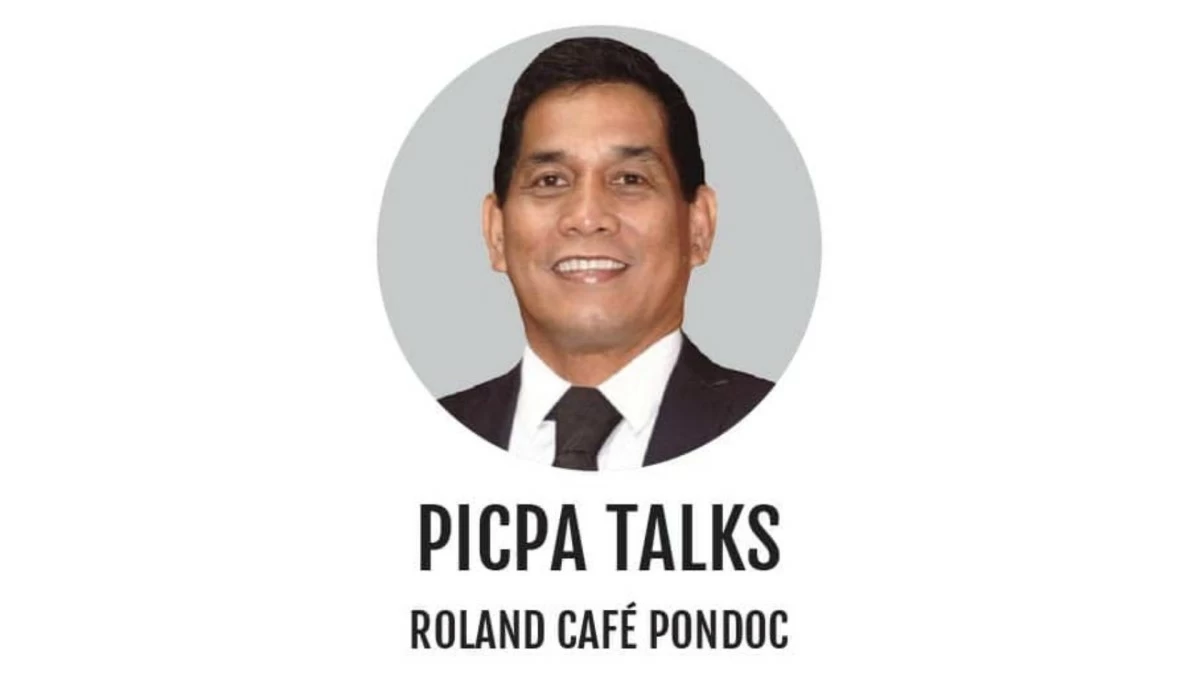
(Roland Café Pondoc is the current Chairperson of PICPA Foundation, Inc. and PICPA Davao Foundation, Inc., President of the University of Mindanao Alumni Association, Inc., Chairperson of UM Cooperative, Immediate Past National President of PICPA, former Professor of the University of Mindanao and former COA Commissioner)

Related Tags

Generative AI (GenAI) Philippine Institute of Certified Accountants (PICPA)
ADVERTISEMENT
.most-popular .layout-ratio{ padding-bottom: 79.13%; } @media (min-width: 768px) and (max-width: 1024px) { .widget-title { font-size: 15px !important; } }

{{ articles_filter_1561_widget.title }}

.most-popular .layout-ratio{ padding-bottom: 79.13%; } @media (min-width: 768px) and (max-width: 1024px) { .widget-title { font-size: 15px !important; } }

{{ articles_filter_1562_widget.title }}

.most-popular .layout-ratio{ padding-bottom: 79.13%; } @media (min-width: 768px) and (max-width: 1024px) { .widget-title { font-size: 15px !important; } }

{{ articles_filter_1563_widget.title }}

{{ articles_filter_1564_widget.title }}

.mb-article-details { position: relative; } .mb-article-details .article-body-preview, .mb-article-details .article-body-summary{ font-size: 17px; line-height: 30px; font-family: "Libre Caslon Text", serif; color: #000; } .mb-article-details .article-body-preview iframe , .mb-article-details .article-body-summary iframe{ width: 100%; margin: auto; } .read-more-background { background: linear-gradient(180deg, color(display-p3 1.000 1.000 1.000 / 0) 13.75%, color(display-p3 1.000 1.000 1.000 / 0.8) 30.79%, color(display-p3 1.000 1.000 1.000) 72.5%); position: absolute; height: 200px; width: 100%; bottom: 0; display: flex; justify-content: center; align-items: center; padding: 0; } .read-more-background a{ color: #000; } .read-more-btn { padding: 17px 45px; font-family: Inter; font-weight: 700; font-size: 18px; line-height: 16px; text-align: center; vertical-align: middle; border: 1px solid black; background-color: white; } .hidden { display: none; }
function initializeAllSwipers() { // Get all hidden inputs with cms_article_id document.querySelectorAll('[id^="cms_article_id_"]').forEach(function (input) { const cmsArticleId = input.value; const articleSelector = '#article-' + cmsArticleId + ' .body_images'; const swiperElement = document.querySelector(articleSelector); if (swiperElement && !swiperElement.classList.contains('swiper-initialized')) { new Swiper(articleSelector, { loop: true, pagination: false, navigation: { nextEl: '#article-' + cmsArticleId + ' .swiper-button-next', prevEl: '#article-' + cmsArticleId + ' .swiper-button-prev', }, }); } }); } setTimeout(initializeAllSwipers, 3000); const intersectionObserver = new IntersectionObserver( (entries) => { entries.forEach((entry) => { if (entry.isIntersecting) { const newUrl = entry.target.getAttribute("data-url"); if (newUrl) { history.pushState(null, null, newUrl); let article = entry.target; // Extract metadata const author = article.querySelector('.author-section').textContent.replace('By', '').trim(); const section = article.querySelector('.section-info ').textContent.replace(' ', ' '); const title = article.querySelector('.article-title h1').textContent; // Parse URL for Chartbeat path format const parsedUrl = new URL(newUrl, window.location.origin); const cleanUrl = parsedUrl.host + parsedUrl.pathname; // Update Chartbeat configuration if (typeof window._sf_async_config !== 'undefined') { window._sf_async_config.path = cleanUrl; window._sf_async_config.sections = section; window._sf_async_config.authors = author; } // Track virtual page view with Chartbeat if (typeof pSUPERFLY !== 'undefined' && typeof pSUPERFLY.virtualPage === 'function') { try { pSUPERFLY.virtualPage({ path: cleanUrl, title: title, sections: section, authors: author }); } catch (error) { console.error('ping error', error); } } // Optional: Update document title if (title && title !== document.title) { document.title = title; } } } }); }, { threshold: 0.1 } ); function showArticleBody(button) { const article = button.closest("article"); const summary = article.querySelector(".article-body-summary"); const body = article.querySelector(".article-body-preview"); const readMoreSection = article.querySelector(".read-more-background"); // Hide summary and read-more section summary.style.display = "none"; readMoreSection.style.display = "none"; // Show the full article body body.classList.remove("hidden"); } document.addEventListener("DOMContentLoaded", () => { let loadCount = 0; // Track how many times articles are loaded const offset = [1, 2, 3, 4, 5, 6, 7, 8, 9, 10]; // Offset values const currentUrl = window.location.pathname.substring(1); let isLoading = false; // Prevent multiple calls if (!currentUrl) { console.log("Current URL is invalid."); return; } const sentinel = document.getElementById("load-more-sentinel"); if (!sentinel) { console.log("Sentinel element not found."); return; } function isSentinelVisible() { const rect = sentinel.getBoundingClientRect(); return ( rect.top < window.innerHeight && rect.bottom >= 0 ); } function onScroll() { if (isLoading) return; if (isSentinelVisible()) { if (loadCount >= offset.length) { console.log("Maximum load attempts reached."); window.removeEventListener("scroll", onScroll); return; } isLoading = true; const currentOffset = offset[loadCount]; window.loadMoreItems().then(() => { let article = document.querySelector('#widget_1690 > div:nth-last-of-type(2) article'); intersectionObserver.observe(article) loadCount++; }).catch(error => { console.error("Error loading more items:", error); }).finally(() => { isLoading = false; }); } } window.addEventListener("scroll", onScroll); });

Sign up by email to receive news.