







US diplomat sets foot inside ICI headquarters
Published Oct 17, 2025 04:09 pm


At A Glance
- A ranking diplomat of the United States (US) Embassy in Manila on Friday, Oct. 17, became the first foreign official to step foot inside the four corners of the room that was hosting the investigation on the anomalous flood control projects in the country.
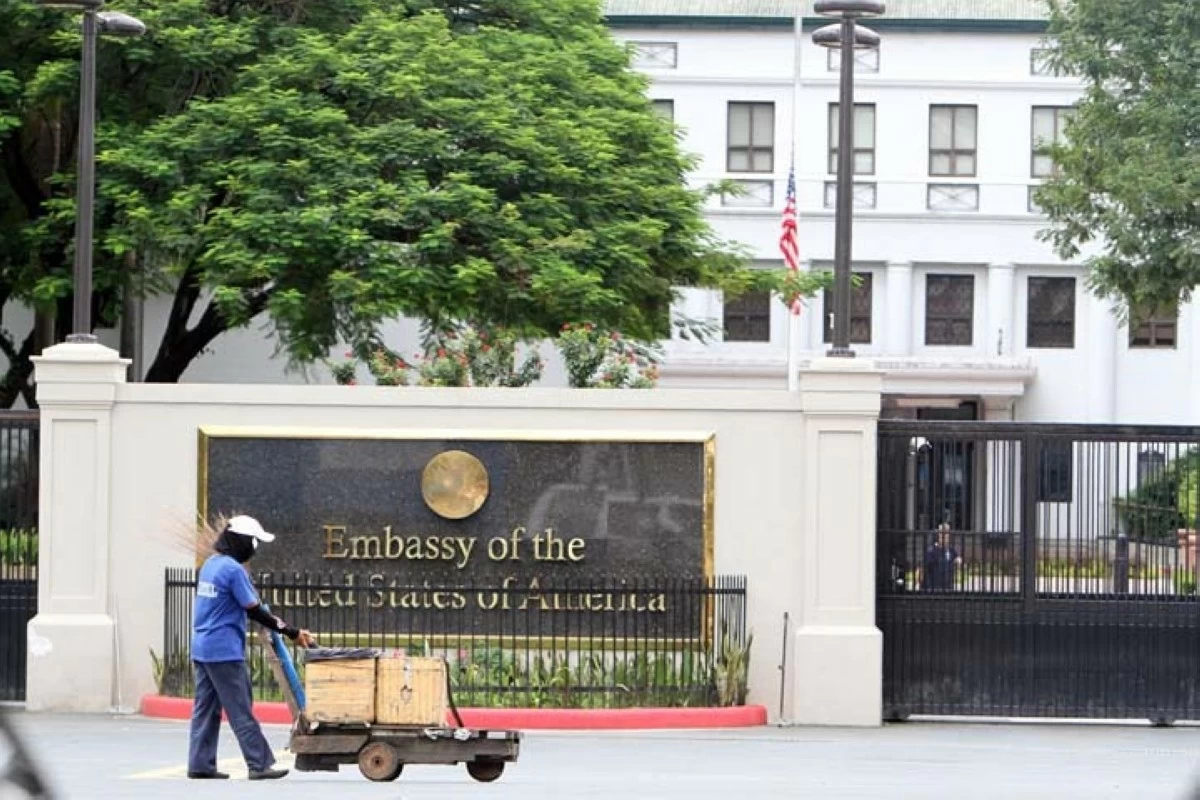
US Embassy in the Philippines (File Photo/MB)
A ranking diplomat of the United States (US) Embassy in Manila on Friday, Oct. 17, became the first foreign official to step foot inside the four corners of the room that was hosting the investigation on the anomalous flood control projects in the country.
Michael Kelleher, the Acting Deputy Chief of Mission of the US Embassy, visited the Independent Commission for Infrastructure (ICI) headquarters reportedly to inquire about the government's efforts to uncover the truth surrounding the billion-peso corruption scandal.
ICI Executive Director Brian Hosaka said Kelleher visited ICI "because the US Embassy was basically asking what's the task and the mandate of the ICI".
Just like the Filipino public, the US Embassy is interested in knowing about the body created by President Marcos' Executive Order (EO) No. 94, according to Hosaka.
Since its establishment a month ago, all personalities who have gone inside ICI's headquarters are contractors as well as Department of Public Works and Highways (DPWH) district engineers who are persons of interest in the anomalies, Philippine government agency heads and representatives, as well as incumbent and former politicians who have relevant knowledge in the flood control projects.
The ICI hearings are closed to the public.
"I guess, as one of the countries that have great of interest in the Philippines, they were very much interested in what the ICI will do to address the problem on the flood control projects and other anomalous infrastructure projects," Hosaka said in a press conference.
But Hosaka clarified that Kelleher's interaction did not reach the point where the US government offered its assistance in the Philippines' ongoing investigation.
Kelleher's visit came after the US State Department, in its 2025 Investment Climate report, flagged corruption in the Philippines, which it said was a "pervasive and long-standing problem in both the public and private sector".
The report also cited the Philippines' ranking, which is 114th out of 180 countries, on Transparency International's 2024 Corruption Perceptions Index and "remaining around that level since 2019".
"The Philippines' complex, slow, redundant, and sometimes corrupt judicial system inhibits the timely and fair resolution of commercial disputes," it said.
"Foreign investors describe the inefficiency and uncertainty of the judicial system as a significant barrier to investment. Investors often decline to file cases in court because of slow and complex litigation processes and fears of corruption. Stakeholders report an inexperienced judiciary when confronted with cases involving complex issues such as technology or science," it added.