ADVERTISEMENT

Leave no room for budget scandal

Published Oct 17, 2025 12:05 am  |  Updated Oct 16, 2025 04:10 pm
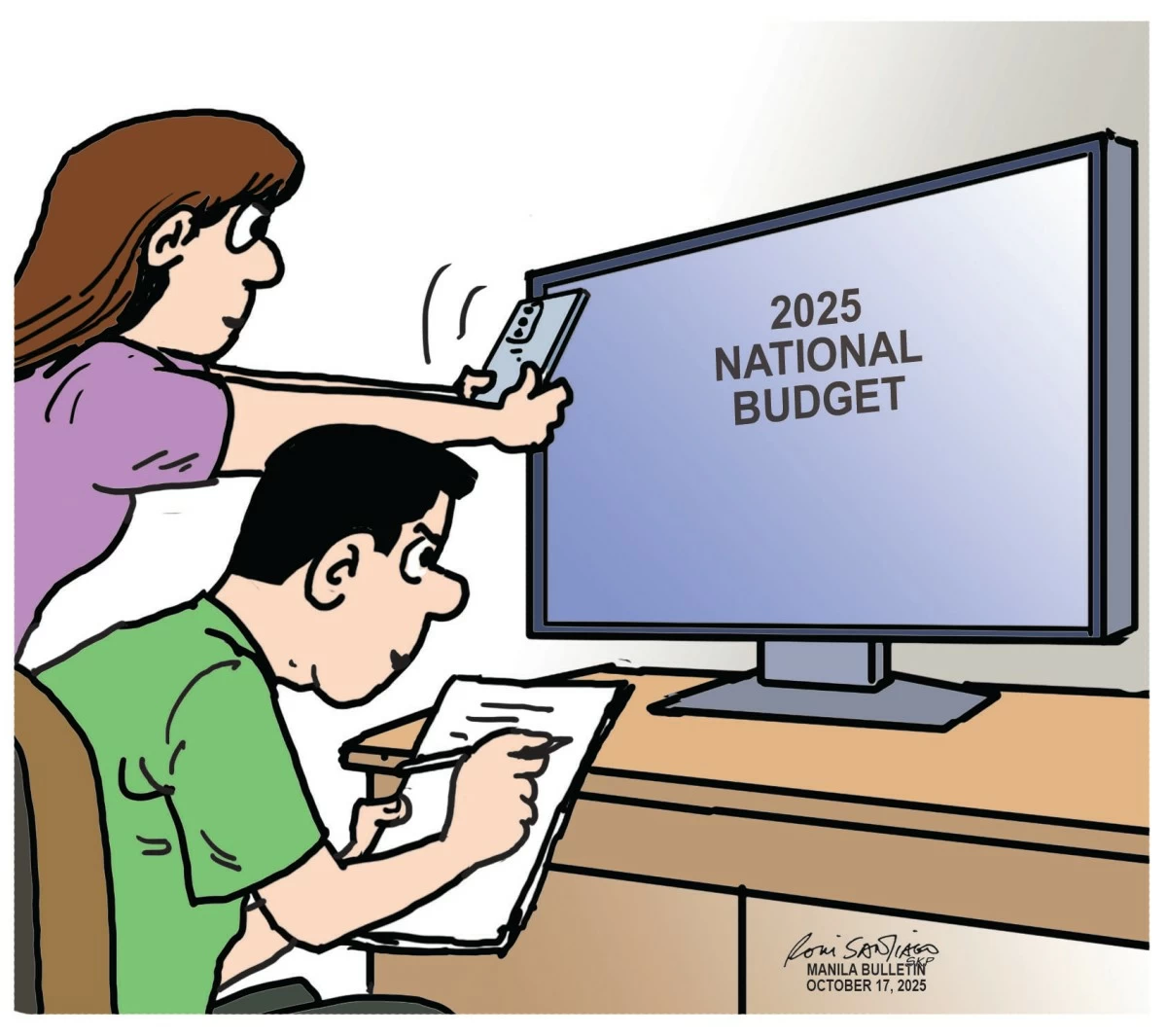
In a rare and promising move toward transparency, President Marcos has announced that the bicameral deliberations of the proposed 2026 national budget will be livestreamed. This development—finalized after consultations with Senate President Vicente “Tito” Sotto III and House Speaker Faustino “Bogie” Dy III—may appear technical, even mundane to the untrained eye. But in truth, this is nothing short of revolutionary.
For the first time, the nation will be given the chance to witness the process of fine-tuning the national budget, where billions of pesos in people’s money are allocated, shifted, juggled, or inserted—legitimately or otherwise.
This bold act comes in the wake of a corruption storm. The public's trust was battered by the flood control projects scandal, a mess born out of the shadows where last-minute budget insertions, favor-trading, and technical cover-ups thrived—a practice that has been going on year in and year out. And this is not simply about misuse of public funds. This is about lives disrupted by floods that could have been prevented. It’s about communities and students sacrificed on the altar of corruption.
Live streaming the bicameral conference is a bold step in the right direction in restoring public faith in the budget process. But genuine transparency should not be performative; it must be transformative.
If the government is serious about rebuilding trust, it has the moral obligation to go beyond pure rhetorics and optics. The livestream must be paired with real-time access to documents: proposed amendments, approved insertions, justifications, and the names of those who supported them. Accountability thrives in context. The public must be able to follow not just the show, but its substance.
Further, all deliberations—not just the sanitized, PR-ready highlights—must be broadcast. No strategic “technical working groups” behind closed doors. No midnight insertions. Every amendment must have a face, a name, and a reason.
And when the budget is passed, there must be public-facing audit trails: where did the money go, who implemented it, and what was the result? Agencies and lawmakers must answer, annually, to the people—not just to the Commission on Audit.
But the government alone cannot—and will not—carry this out with integrity unless it is pushed. Thus, the private sector must be loud, involved, and unrelenting.
Media outlets should not just cover the highlights; they must invest in in-depth policy journalism that explains to the public what’s at stake in these allocations. Civil society groups and think tanks should create open budget monitoring dashboards, identify red flags, and demand answers in real time. Business chambers should speak out when procurement is used as a vehicle for political gain. Keep in mind, silence is tantamount to complicity.
And what about the people? We must stop seeing the budget as “theirs” and start claiming it as “ours.” Yes, these are the taxes we paid from our hard-earned money. Every peso misallocated is a classroom, a health center, a road, or a flood control project never built; a hospital without medicine. It is not enough to watch the livestream; citizens must organize, question, comment, share, and show up.
We cannot afford another flood control mess. The warning was not just the scandal, but the floodwaters themselves—rushing into homes, drowning crops, sweeping away futures. If that doesn’t wake us up, what will?
Keep in mind, the budget is a moral document, a declaration of whose lives matter. And now, with cameras rolling and the public watching, every vote, every peso, will carry a heavier weight.
This livestream is a spotlight. Let it shine into every corner. Let it burn away the rot. Let it light the path forward. And never again will we allow last-minute budget insertions done under the shadows.
ADVERTISEMENT
.most-popular .layout-ratio{ padding-bottom: 79.13%; } @media (min-width: 768px) and (max-width: 1024px) { .widget-title { font-size: 15px !important; } }

{{ articles_filter_1561_widget.title }}

.most-popular .layout-ratio{ padding-bottom: 79.13%; } @media (min-width: 768px) and (max-width: 1024px) { .widget-title { font-size: 15px !important; } }

{{ articles_filter_1562_widget.title }}

.most-popular .layout-ratio{ padding-bottom: 79.13%; } @media (min-width: 768px) and (max-width: 1024px) { .widget-title { font-size: 15px !important; } }

{{ articles_filter_1563_widget.title }}

{{ articles_filter_1564_widget.title }}

.mb-article-details { position: relative; } .mb-article-details .article-body-preview, .mb-article-details .article-body-summary{ font-size: 17px; line-height: 30px; font-family: "Libre Caslon Text", serif; color: #000; } .mb-article-details .article-body-preview iframe , .mb-article-details .article-body-summary iframe{ width: 100%; margin: auto; } .read-more-background { background: linear-gradient(180deg, color(display-p3 1.000 1.000 1.000 / 0) 13.75%, color(display-p3 1.000 1.000 1.000 / 0.8) 30.79%, color(display-p3 1.000 1.000 1.000) 72.5%); position: absolute; height: 200px; width: 100%; bottom: 0; display: flex; justify-content: center; align-items: center; padding: 0; } .read-more-background a{ color: #000; } .read-more-btn { padding: 17px 45px; font-family: Inter; font-weight: 700; font-size: 18px; line-height: 16px; text-align: center; vertical-align: middle; border: 1px solid black; background-color: white; } .hidden { display: none; }
function initializeAllSwipers() { // Get all hidden inputs with cms_article_id document.querySelectorAll('[id^="cms_article_id_"]').forEach(function (input) { const cmsArticleId = input.value; const articleSelector = '#article-' + cmsArticleId + ' .body_images'; const swiperElement = document.querySelector(articleSelector); if (swiperElement && !swiperElement.classList.contains('swiper-initialized')) { new Swiper(articleSelector, { loop: true, pagination: false, navigation: { nextEl: '#article-' + cmsArticleId + ' .swiper-button-next', prevEl: '#article-' + cmsArticleId + ' .swiper-button-prev', }, }); } }); } setTimeout(initializeAllSwipers, 3000); const intersectionObserver = new IntersectionObserver( (entries) => { entries.forEach((entry) => { if (entry.isIntersecting) { const newUrl = entry.target.getAttribute("data-url"); if (newUrl) { history.pushState(null, null, newUrl); let article = entry.target; // Extract metadata const author = article.querySelector('.author-section').textContent.replace('By', '').trim(); const section = article.querySelector('.section-info ').textContent.replace(' ', ' '); const title = article.querySelector('.article-title h1').textContent; // Parse URL for Chartbeat path format const parsedUrl = new URL(newUrl, window.location.origin); const cleanUrl = parsedUrl.host + parsedUrl.pathname; // Update Chartbeat configuration if (typeof window._sf_async_config !== 'undefined') { window._sf_async_config.path = cleanUrl; window._sf_async_config.sections = section; window._sf_async_config.authors = author; } // Track virtual page view with Chartbeat if (typeof pSUPERFLY !== 'undefined' && typeof pSUPERFLY.virtualPage === 'function') { try { pSUPERFLY.virtualPage({ path: cleanUrl, title: title, sections: section, authors: author }); } catch (error) { console.error('ping error', error); } } // Optional: Update document title if (title && title !== document.title) { document.title = title; } } } }); }, { threshold: 0.1 } ); function showArticleBody(button) { const article = button.closest("article"); const summary = article.querySelector(".article-body-summary"); const body = article.querySelector(".article-body-preview"); const readMoreSection = article.querySelector(".read-more-background"); // Hide summary and read-more section summary.style.display = "none"; readMoreSection.style.display = "none"; // Show the full article body body.classList.remove("hidden"); } document.addEventListener("DOMContentLoaded", () => { let loadCount = 0; // Track how many times articles are loaded const offset = [1, 2, 3, 4, 5, 6, 7, 8, 9, 10]; // Offset values const currentUrl = window.location.pathname.substring(1); let isLoading = false; // Prevent multiple calls if (!currentUrl) { console.log("Current URL is invalid."); return; } const sentinel = document.getElementById("load-more-sentinel"); if (!sentinel) { console.log("Sentinel element not found."); return; } function isSentinelVisible() { const rect = sentinel.getBoundingClientRect(); return ( rect.top < window.innerHeight && rect.bottom >= 0 ); } function onScroll() { if (isLoading) return; if (isSentinelVisible()) { if (loadCount >= offset.length) { console.log("Maximum load attempts reached."); window.removeEventListener("scroll", onScroll); return; } isLoading = true; const currentOffset = offset[loadCount]; window.loadMoreItems().then(() => { let article = document.querySelector('#widget_1690 > div:nth-last-of-type(2) article'); intersectionObserver.observe(article) loadCount++; }).catch(error => { console.error("Error loading more items:", error); }).finally(() => { isLoading = false; }); } } window.addEventListener("scroll", onScroll); });

Sign up by email to receive news.