






Manila Bulletin
 Business
Trade & Industry
DA earmarks ₱3.3 billion to build 300 new rice mills by 2028
Business
Trade & Industry
DA earmarks ₱3.3 billion to build 300 new rice mills by 2028
Business
Trade & Industry
DA earmarks ₱3.3 billion to build 300 new rice mills by 2028
DA earmarks ₱3.3 billion to build 300 new rice mills by 2028
Published Oct 16, 2025 01:56 pm


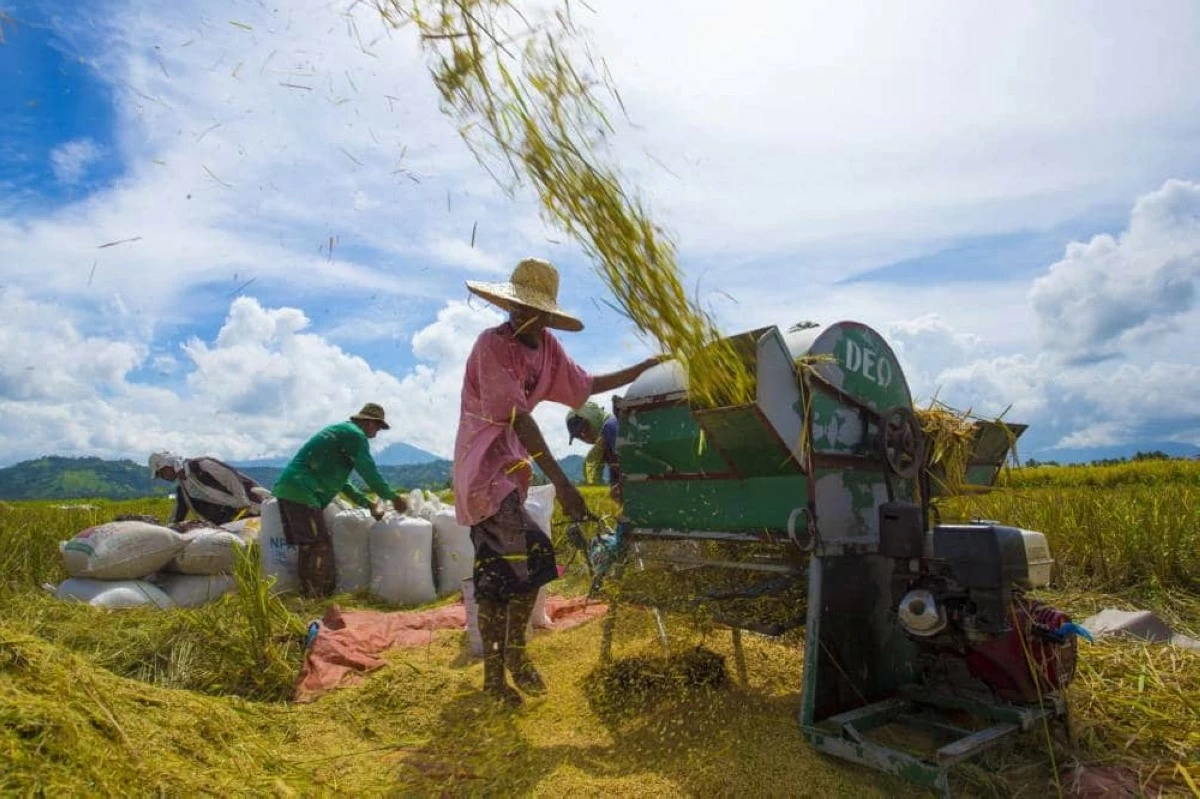
The Department of Agriculture (DA) would build 300 more rice mills in the next three years, as the government seeks to reverse post-harvest losses by improving the rice sector’s drying capacity.
Agriculture Secretary Francisco Tiu Laurel said his agency has earmarked ₱3.3 billion until 2028 to establish more rice processing systems (RPS) nationwide.
Tiu Laurel said this is part of the Marcos administration’s push to modernize the rice sector through the Philippine Center for Postharvest Development and Mechanization (PhilMech).
Under the mechanization program of PhilMech’s Rice Competitiveness Enhancement Fund (RCEF), the government has ramped up the construction of RPS to help farmers remain competitive.
The government has turned to RPS to address the persistent gap in drying and milling facilities among local rice farmers.
With the plan to build 300 rice mills, Tiu Laurel stated that the government will increase drying capacity by up to 40 percent during the wet season.
He said this is “game-changing” for the sector as it loses around 16 percent of potential yield due to postharvest inefficiencies.
“This aggressive infrastructure build-out could mark a turning point for the country’s beleaguered rice industry,” said Tiu Laurel.
“Postharvest losses, inefficiencies in the supply chain, and poor access to processing facilities have long eroded farmer income and inflated consumer prices,” he stressed.
According to the DA, it was President Marcos himself—who once concurrently served as the agency’s chief—who pushed for higher funding for rice mills.
Last year, RCEF saw its annual allocation triple to ₱30 billion following the amendment to the Rice Tariffication Law (RTL). RCEF is sourced from duties collected from rice imports.
Under the first phase of the RCEF’s mechanization program, which started in June 2019 and ended in June 2025, 151 RPS were planned to be established. Of which, 145 are under the current administration.
As of writing, 118 RPS have already been established by the Marcos-led government.
The DA stated that the delivery, installation, and commissioning of the remaining 27 RPS will be completed by the end of the year.
Citing concerns from economists, Tiu Laurel noted that investments in RPS must be backed by broader reforms, such as land consolidation, irrigation development, and market access
With drying and milling facilities having been largely underinvested in by previous administrations, the secretary said the government is now intent on laying the groundwork for the future.
“This is a legacy investment. One that finally gives our farmers the tools to compete and thrive,” he said.