








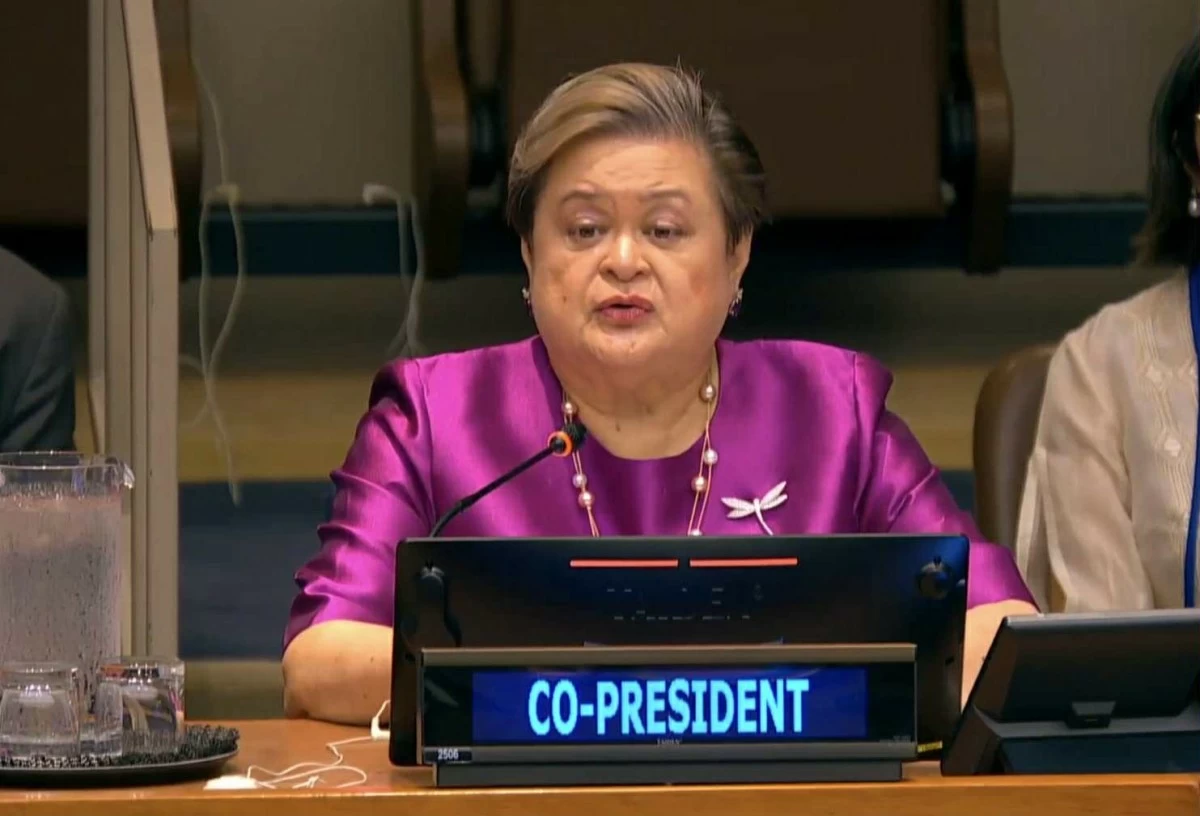
The Philippines has been “proactive” in building its network of “bilateral, mini-lateral, and regional partnerships” to prepare itself in taking on a bigger role in international politics as “traditional powers” have diminished their influence in maintaining global order, Department of Foreign Affairs (DFA) Secretary Ma. Theresa Lazaro said on Wednesday, Oct. 15.
Speaking at the 7th Katipunan Conference Philippine Strategic Outlook 2025, she stressed the Philippines’ foreign policy about enhancing cooperation with other partners, especially with developing nations, as it believes no country can singlehandedly address the “traditional and emerging challenges” the world now faces.“As such, the DFA remains committed to promoting our nation’s interests by strengthening our network of partnerships across the globe,” she said in her keynote speech. “We seek to strengthen our ties with our traditional partners, and even non-traditional partners.”
“We also seek new partnerships, and have been aggressively expanding our diplomatic footprint,” she added.
Lazaro shared that this month, the Philippines established diplomatic relations with the Kingdom of Bhutan and is scheduled to open its embassies in Suva in Fiji, in Kazakhstan, and Accra in Ghana.
This new and strengthened role that the Philippines must play comes on the heels of what Lazaro called as a “governance vacuum” resulting from the diminishing influence of traditional global powers “that once dictated the international order.”
“Internal divisions, economic uncertainties, and political polarization have eroded their ability to provide credible and coherent leadership on global issues,” she said.
This “governance vacuum,” however, has “profound consequences” on the global South and developing countries that often face “instability, economic inequality and disasters.”
“In this moment of uncertainty, developing countries — particularly emerging middle powers — must seize the initiative and play a more active, constructive role in shaping international politics,” Lazaro said.
“By building stronger South–South cooperation, fostering preventive diplomacy, and asserting a unified voice, we can help craft a more balanced, inclusive and sustainable multilateral world order together — one that truly reflects the interests and aspirations of humanity,” she added.
As the Philippines prepares to host the Association of Southeast Asian Nations (ASEAN) summits next year, the DFA chief shared the country’s intention “to lead the region to addressing key cross-cutting issues.”