

ADVERTISEMENT

A review of 'Tron: Ares'

Published Oct 15, 2025 01:40 pm
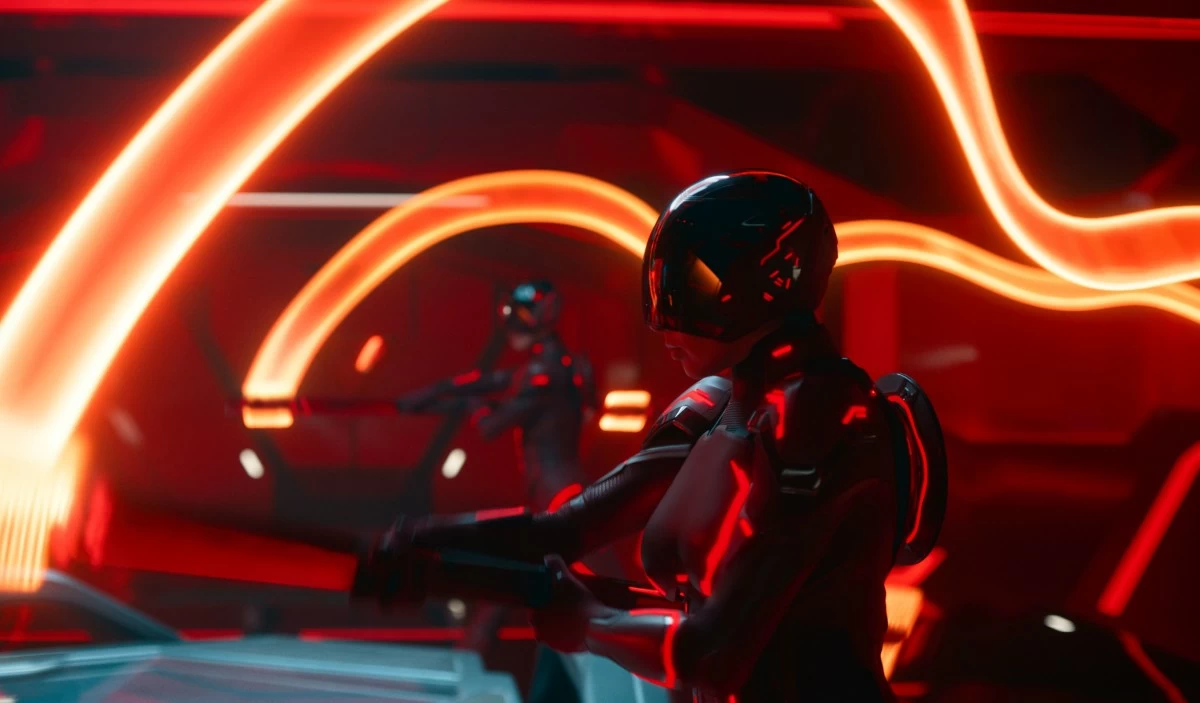
A scene from 'Tron: Ares' (Images courtesy of Walt Disney Studios)

The original Tron from the 1980s gained a solid cult following in the years after its initial release. It took 20-plus years before a sequel came around, 2020’s Tron: Legacy, and then another fifteen before the third installment landed, this year’s Tron: Ares. 

While Legacy was a direct continuation of the original, Ares is its own story, related to, but not built upon, the events of the previous movies, making it a perfect entry point for newbies. It's not exactly Tron 3.0, and it never really tries to be.

The titular character, Ares, played by Jared Leto, is a program, the “Master Control” security program developed and written by software mogul Julian Dillinger (Evan Peters). Eagle-eyed viewers know that another Dillinger was the main antagonist in the original Tron, whereas the villainous program in that movie was also known as Master Control. It’s little bits like this peppered throughout the film that aim to please old-time audience members, and sure enough, there were amused smiles and hushed whispers from those in the know at the screening I attended.

The main premise of this installment of Tron is that Dillinger has a way of bringing out programs from the Grid (the electronic world inhabited by sentient, anthropomorphic programs) into our world, for his own not-so-benevolent uses. Meanwhile, Dillinger’s biggest competitor, Encom

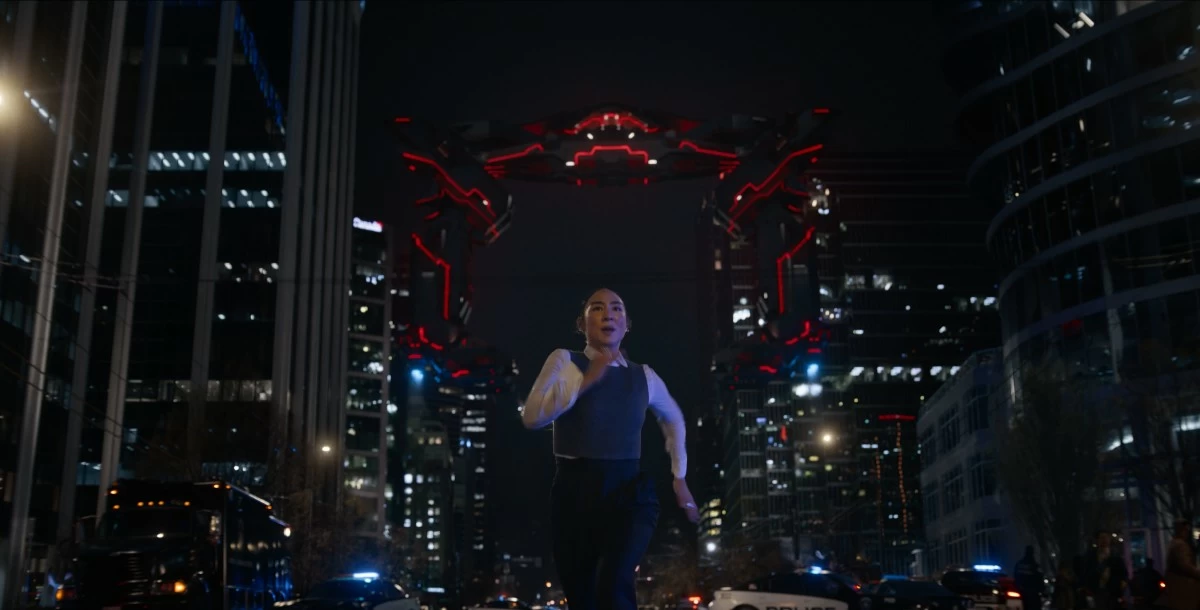
has similar tech, but its CEO, Eve Kim (Greta Lee) has more humanitarian uses for it in mind.

Ares is caught in the middle. On the one hand, he is compelled to obey his directives, and on the other hand, for lack of a better word, he actually grows a conscience. Leto does a commendable job as Ares, bridging the world of the digital and real with an aloofness to his performance, interspersed with glimmers of humanity. He is calm, not quite cold, but at the same time humorously relentless and determined.
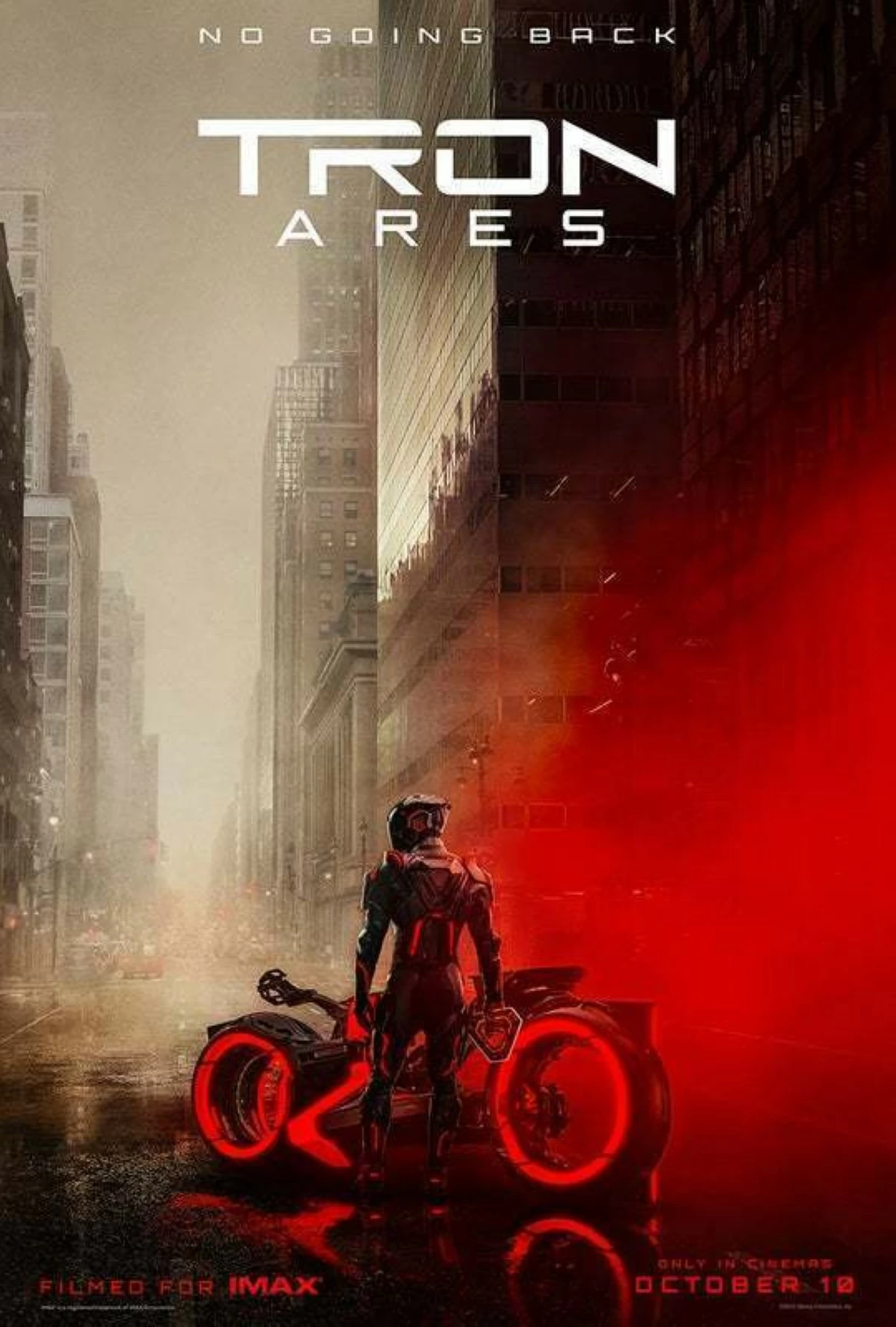
Lee lifts her share of the load as well as the maverick, motorcycle-riding head of a tech company, as does Peters, who seems to be channeling his own version of Lex Luthor, young, filthy rich, insanely smart, and ever so full of himself.

The visuals do not disappoint and continue the franchise’s tradition of cutting-edge visual effects. The color choices are intentional: red on black instead of the standard blue and white. This adds contrast and menace to certain scenes, but also makes every scene jump off the screen. The light cycle chase scene, with its trails of solid light set against the city's night, is both fun and eye-popping, making a compelling argument to see Ares on the biggest IMAX screen you can get to.

Another reason to get as immersive as you can is the hammering soundtrack by Trent Reznor and Atticus Ross, better collectively known as Nine Inch Nails. The music, heavily pulse-pounding industrial rock laced with just enough techno, kicks the visuals over the top.

Some themes could have been explored a bit more, such as what it means to be “real” and our relationship with technology. It is a conundrum we face every day, as AI has made it extremely difficult to figure out what is actually true and what is made up. 

Our socials are lit up with videos of how AI is learning faster than we are and starting to work independently, making it seem like the uprising will come any time now. But none of that is touched on. While it may be a missed opportunity, it doesn’t really harm the film. 
You go to a Tron movie for the light cycles, not the meaning of life. What might get longtime fans in a tizzy is an apparent disconnection from 2015’s Tron: Legacy, where the idea of artificial beings from the grid making their way into the real world was already planted. While Ares runs with it, it otherwise glosses over its predecessor.

Ares does possess much fondness for the 80s and what made that era distinct, like the look and music (Ares himself admits in one of the movie’s quieter moments that he tends to gravitate toward Depeche Mode) so there’s still a lot of nostalgia for those who were around when this all started.


This film is firmly looking forward, trying to carve its own corner of the world Tron created while still holding on to the past just enough for direction, but not getting buried in it.

Any way you slice it, Tron: Ares is a film worth seeing, and worth seeing on the biggest screen with the best sound you can find.

ADVERTISEMENT
.most-popular .layout-ratio{ padding-bottom: 79.13%; } @media (min-width: 768px) and (max-width: 1024px) { .widget-title { font-size: 15px !important; } }

{{ articles_filter_1561_widget.title }}

.most-popular .layout-ratio{ padding-bottom: 79.13%; } @media (min-width: 768px) and (max-width: 1024px) { .widget-title { font-size: 15px !important; } }

{{ articles_filter_1562_widget.title }}

.most-popular .layout-ratio{ padding-bottom: 79.13%; } @media (min-width: 768px) and (max-width: 1024px) { .widget-title { font-size: 15px !important; } }

{{ articles_filter_1563_widget.title }}

{{ articles_filter_1564_widget.title }}

.mb-article-details { position: relative; } .mb-article-details .article-body-preview, .mb-article-details .article-body-summary{ font-size: 17px; line-height: 30px; font-family: "Libre Caslon Text", serif; color: #000; } .mb-article-details .article-body-preview iframe , .mb-article-details .article-body-summary iframe{ width: 100%; margin: auto; } .read-more-background { background: linear-gradient(180deg, color(display-p3 1.000 1.000 1.000 / 0) 13.75%, color(display-p3 1.000 1.000 1.000 / 0.8) 30.79%, color(display-p3 1.000 1.000 1.000) 72.5%); position: absolute; height: 200px; width: 100%; bottom: 0; display: flex; justify-content: center; align-items: center; padding: 0; } .read-more-background a{ color: #000; } .read-more-btn { padding: 17px 45px; font-family: Inter; font-weight: 700; font-size: 18px; line-height: 16px; text-align: center; vertical-align: middle; border: 1px solid black; background-color: white; } .hidden { display: none; }
function initializeAllSwipers() { // Get all hidden inputs with cms_article_id document.querySelectorAll('[id^="cms_article_id_"]').forEach(function (input) { const cmsArticleId = input.value; const articleSelector = '#article-' + cmsArticleId + ' .body_images'; const swiperElement = document.querySelector(articleSelector); if (swiperElement && !swiperElement.classList.contains('swiper-initialized')) { new Swiper(articleSelector, { loop: true, pagination: false, navigation: { nextEl: '#article-' + cmsArticleId + ' .swiper-button-next', prevEl: '#article-' + cmsArticleId + ' .swiper-button-prev', }, }); } }); } setTimeout(initializeAllSwipers, 3000); const intersectionObserver = new IntersectionObserver( (entries) => { entries.forEach((entry) => { if (entry.isIntersecting) { const newUrl = entry.target.getAttribute("data-url"); if (newUrl) { history.pushState(null, null, newUrl); let article = entry.target; // Extract metadata const author = article.querySelector('.author-section').textContent.replace('By', '').trim(); const section = article.querySelector('.section-info ').textContent.replace(' ', ' '); const title = article.querySelector('.article-title h1').textContent; // Parse URL for Chartbeat path format const parsedUrl = new URL(newUrl, window.location.origin); const cleanUrl = parsedUrl.host + parsedUrl.pathname; // Update Chartbeat configuration if (typeof window._sf_async_config !== 'undefined') { window._sf_async_config.path = cleanUrl; window._sf_async_config.sections = section; window._sf_async_config.authors = author; } // Track virtual page view with Chartbeat if (typeof pSUPERFLY !== 'undefined' && typeof pSUPERFLY.virtualPage === 'function') { try { pSUPERFLY.virtualPage({ path: cleanUrl, title: title, sections: section, authors: author }); } catch (error) { console.error('ping error', error); } } // Optional: Update document title if (title && title !== document.title) { document.title = title; } } } }); }, { threshold: 0.1 } ); function showArticleBody(button) { const article = button.closest("article"); const summary = article.querySelector(".article-body-summary"); const body = article.querySelector(".article-body-preview"); const readMoreSection = article.querySelector(".read-more-background"); // Hide summary and read-more section summary.style.display = "none"; readMoreSection.style.display = "none"; // Show the full article body body.classList.remove("hidden"); } document.addEventListener("DOMContentLoaded", () => { let loadCount = 0; // Track how many times articles are loaded const offset = [1, 2, 3, 4, 5, 6, 7, 8, 9, 10]; // Offset values const currentUrl = window.location.pathname.substring(1); let isLoading = false; // Prevent multiple calls if (!currentUrl) { console.log("Current URL is invalid."); return; } const sentinel = document.getElementById("load-more-sentinel"); if (!sentinel) { console.log("Sentinel element not found."); return; } function isSentinelVisible() { const rect = sentinel.getBoundingClientRect(); return ( rect.top < window.innerHeight && rect.bottom >= 0 ); } function onScroll() { if (isLoading) return; if (isSentinelVisible()) { if (loadCount >= offset.length) { console.log("Maximum load attempts reached."); window.removeEventListener("scroll", onScroll); return; } isLoading = true; const currentOffset = offset[loadCount]; window.loadMoreItems().then(() => { let article = document.querySelector('#widget_1690 > div:nth-last-of-type(2) article'); intersectionObserver.observe(article) loadCount++; }).catch(error => { console.error("Error loading more items:", error); }).finally(() => { isLoading = false; }); } } window.addEventListener("scroll", onScroll); });

Sign up by email to receive news.