






Manila Bulletin
 Business
Trade & Industry
Philippines inks agrifood coop pact with Brunei to seek balanced trade
Business
Trade & Industry
Philippines inks agrifood coop pact with Brunei to seek balanced trade
Business
Trade & Industry
Philippines inks agrifood coop pact with Brunei to seek balanced trade
Philippines inks agrifood coop pact with Brunei to seek balanced trade
Published Oct 14, 2025 04:12 pm


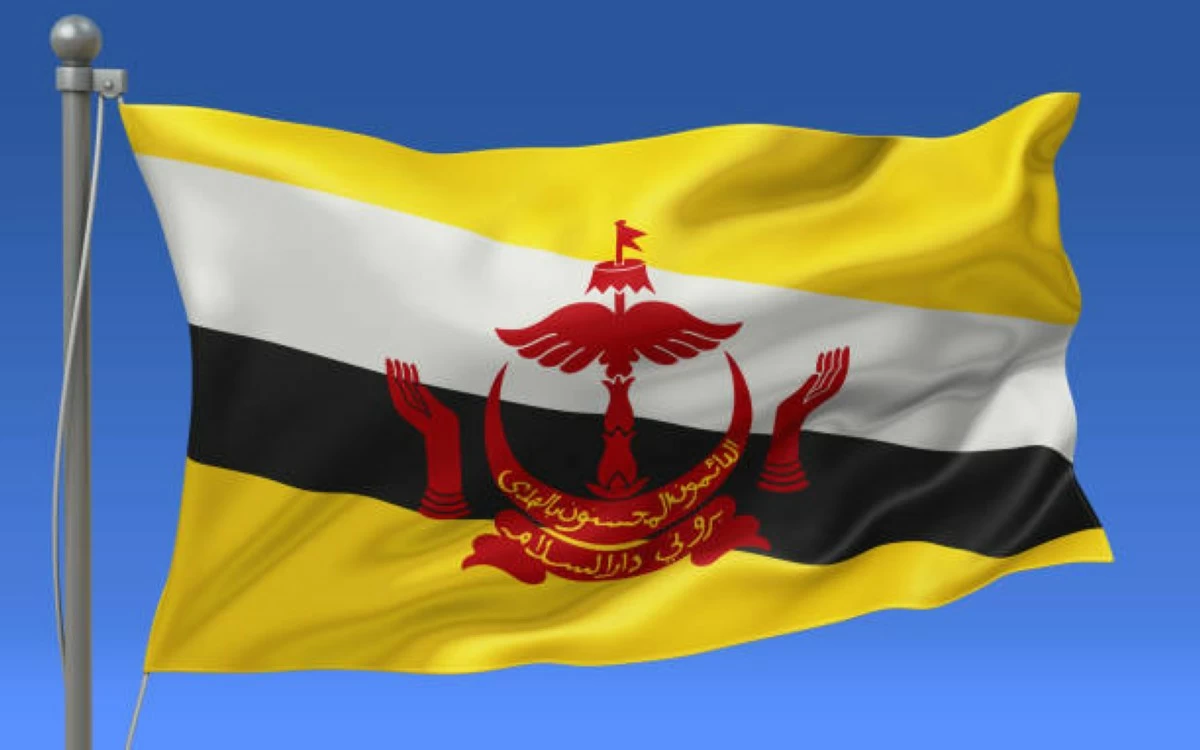
Brunei flag waving on the flagpole on a sky background
The Philippines aims to deepen its agricultural and fisheries cooperation with Brunei Darussalam following the signing of an agreement to enhance regional food security, the Department of Agriculture (DA) said.
In a statement on Tuesday, Oct. 14, the DA said both the Philippines and Brunei signed a memorandum of understanding (MOU) on the sidelines of the 47th ASEAN Ministers of Agriculture and Forestry (AMAF) meeting.
The AMAF meeting, held earlier this month, was chaired by Agriculture Secretary Francisco Tiu Laurel.
The new agreement, signed between the DA and Brunei’s Ministry of Primary Resources and Tourism, outlines joint efforts in key areas across agriculture and fisheries.
The MOU formalizes a commitment first signaled in a letter of intent signed in May of last year.
The renewed partnership will specifically focus on research, the exchange of expertise, and promoting market access.
It will also promote capacity-building efforts, such as joint training, technical visits, and the exchange of publications, studies, and technical data.
The DA said key areas of cooperation include livestock and poultry development, disease prevention, high-yield crop technologies, and downstream processing.
As part of this, private sector engagement is deemed critical, with both countries committing to facilitating agrifood investment and trade through information sharing.
Both the Philippines and Brunei recognize the importance of tapping the private sector for sanitary and phytosanitary standards and market access requirements.
At the same time, the MOU also provides framework for policy coordination and knowledge exchange, with mechanisms in place to protect intellectual property, handle research outcomes, and maintain the confidentiality of shared information.
“Both sides emphasized that the deal underscores long-standing diplomatic and economic ties, while laying the groundwork for mutually beneficial cooperation in the face of regional and global food system challenges,” the DA said.
With the commitment to boost the region’s food security, both countries agreed that the MOU will take effect promptly upon compliance with their respective domestic procedures through diplomatic channels.
The new agreement comes at an opportune time for the Philippines as it seeks to balance trade with Brunei.
Last year, Brunei recorded a trade surplus of $224 million with the Philippines.
Tiu Laurel noted that the MOU builds upon the shared vision of both countries to “enhance food security through collaboration, innovation, and responsible development.”
The DA chief earlier said that the Philippines is also exploring an MOU with Timor-Leste, which is expected to be an official member of the Association of Southeast Asian Nations (ASEAN) this month.
He stated that the Philippines stands ready to support Timor-Leste through capacity-building programs, research collaborations, and assistance, particularly in its livestock sector.