







Davao Oriental under state of calamity due to earthquake
Published Oct 14, 2025 11:06 am


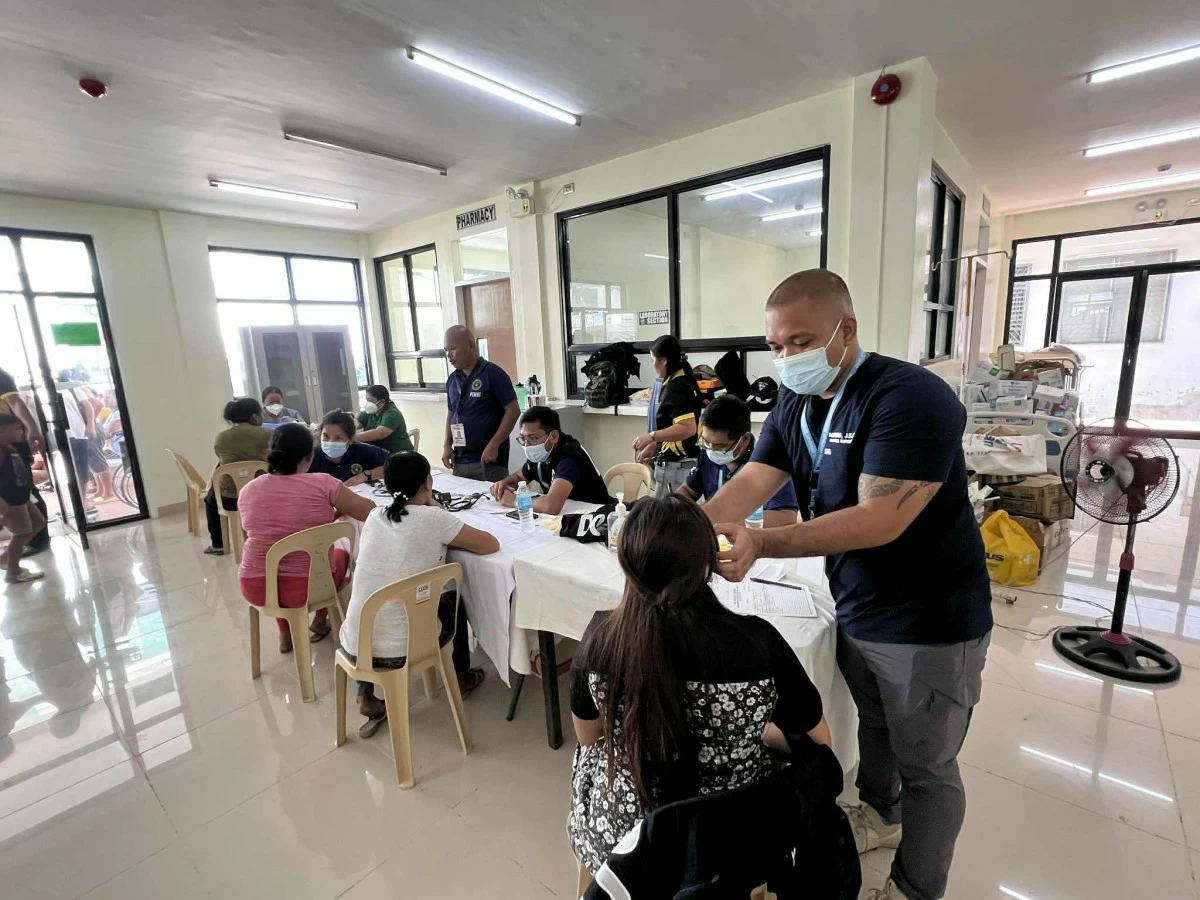
MEDICAL workers attend to patients at the Super Health Center in Manay, Davao Oriental. (DOH photo)
DAVAO CITY – The province of Davao Oriental has been placed under a state of calamity due to the recent twin earthquakes.
The Sangguniang Panlalawigan approved Resolution No. 18-152-10-2025 following the recommendation of the Provincial Disaster Risk Reduction and Management Council (PDRRMC) on Monday, Oct. 13.
The declaration enables the provincial government to utilize emergency funds and implement urgent interventions to support affected communities.
Gov. Nelson Dayanghirang directed all agencies to mobilize immediate relief operations and accelerate rehabilitation efforts in areas heavily affected by the earthquakes.
Over the weekend, Dayanghirang convened with key Cabinet secretaries to ensure a smooth and coordinated relief efforts.
Vice Gov. Glenda Rabat-Gayta said the declaration of the state of calamity would safeguard the welfare of her constituents as well as their right to immediate protection and sustainable recovery.
As of 6 a.m. Tuesday, Oct. 14, the National Disaster Risk Reduction and Management Council (NDRRMC) said that the doublet earthquake has affected 494,004 persons or at least 80 percent of the population of the province.
Eight persons were killed, 403 were injured, and 1,421 houses were damaged, 292 of which totally.
Sixty-one infrastructure was damaged.
Among the severely damaged government structures was the Davao Oriental Provincial Hospital-Manay.
It was forced to temporarily transfer its operations to the Super Health Center in Barangay Central.
Dr. Ricardo Audan, chief of the Southern Philippines Medical Center (SPMC) in Davao City, has sent an emergency medical team to augment the DOH-Manay.
Audan deployed a 19-man Philippine Emergency Medical Assistance Team, composed of four medical specialists, eight registered nurses, a midwife, a pharmacist, a physical therapist, and four biomedical and administrative staff led by Dr. Francis Porticos.
The deployment aims to strengthen the provincial hospital’s service capacity while the regular staff continues to attend to the influx of patients.