






Manila Bulletin
 Philippines
National
Could this be the end of stomach ulcers? Ateneo scientists research a potential vaccine
Philippines
National
Could this be the end of stomach ulcers? Ateneo scientists research a potential vaccine
Philippines
National
Could this be the end of stomach ulcers? Ateneo scientists research a potential vaccine
Could this be the end of stomach ulcers? Ateneo scientists research a potential vaccine
If successful, the Ateneo study could lead to the first H. pylori vaccine against ulcers, stomach cancer
Published Oct 14, 2025 08:47 pm



Ateneo de Manila University researchers are using immunoinformatics to identify potential vaccine targets against Helicobacter pylori, the main cause of stomach ulcers and a risk factor for stomach cancer. (Manila Bulletin / file photo)
Scientists from Ateneo de Manila University are researching a potential vaccine that could stop Helicobacter pylori (H. pylori)—the bacterium responsible for most ulcer cases—before it causes damage, using cutting-edge immunoinformatics technology to design a new line of defense for millions at risk worldwide.
The Ateneo research team from the School of Science and Engineering’s Department of Biology—composed of Demy Valerie Chacon, Kiana Alika Co, Daphne Noreen Enriquez, Aubrey Love Labarda, Reanne Eden Manongsong, and Edward Kevin Bragais—is leveraging immunoinformatics, a cutting-edge approach that merges computer science with immunology.
Using advanced software and computational models, the scientists analyzed how the human immune system interacts with various proteins produced by H. pylori.
This process allows researchers to predict which parts of the bacterium can safely and effectively trigger an immune response, helping narrow down the best vaccine targets.
Identifying the bacterium’s weak points
The Ateneo team pinpointed key proteins that enable H. pylori to survive stomach acid, adhere to the stomach lining, and evade the immune system.
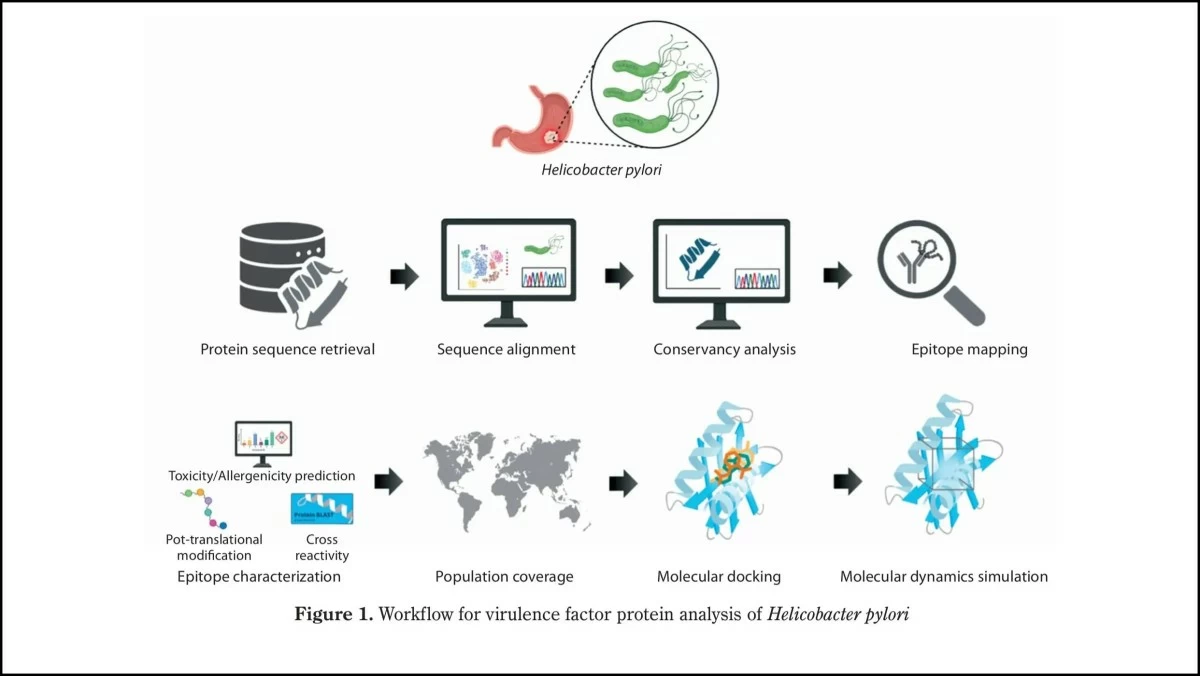
Ateneo researchers used computer software and computational techniques aimed at studying the immune system—a process called “immunoinformatics”—to analyze how the human body responds to various proteins produced by H. pylori. (Source: Chacon et al., 2025)
They also identified specific fragments of these proteins that are non-allergenic and capable of activating protective immune cells, making them strong candidates for vaccine development.
While the current findings are based on computer simulations, the researchers are preparing for laboratory testing to confirm their predictions.
A step closer to preventing stomach ulcers and cancer
For centuries, people believed that eating spicy food or having an unhealthy diet caused painful stomach ulcers.
Modern science, however, revealed that a bacterium called H. pylori—found in more than 60 percent of the global population—is the real culprit behind most ulcer cases and a major risk factor for stomach cancer.
The scientists from Ateneo are exploring a possible breakthrough: a vaccine that could protect against H. pylori, potentially preventing stomach ulcers and reducing cancer risk.
To date, there are no approved vaccines against H. pylori, despite decades of international research.
The Ateneo team’s findings could therefore mark a significant step toward developing the first-ever vaccine for this infection.
If successful, their work could lead to a major public health breakthrough—helping millions of people worldwide prevent stomach ulcer and cancer.