






Manila Bulletin
 Philippines
National
Minor phreatic eruption at Taal Volcano sends 900-meter plume; Alert Level 1 still in effect — Phivolcs
Philippines
National
Minor phreatic eruption at Taal Volcano sends 900-meter plume; Alert Level 1 still in effect — Phivolcs
Philippines
National
Minor phreatic eruption at Taal Volcano sends 900-meter plume; Alert Level 1 still in effect — Phivolcs
Minor phreatic eruption at Taal Volcano sends 900-meter plume; Alert Level 1 still in effect — Phivolcs
Published Oct 13, 2025 01:07 pm


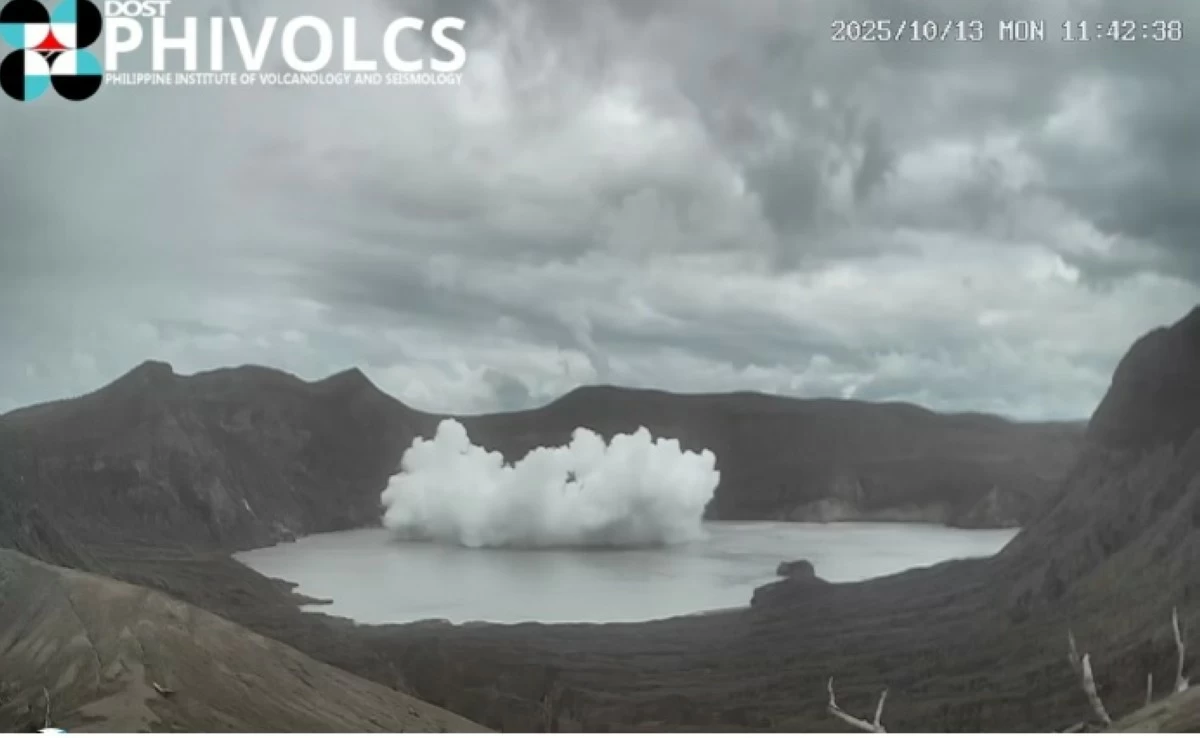
Phivolcs recorded a minor phreatic eruption at Taal Volcano on October 13, 2025, generating a 900-meter plume; Alert Level 1 remains in effect as monitoring continues. (Screenshot/ Phivolcs)
A minor phreatic eruption occurred at the summit crater of Taal Volcano on Monday, October 13, according to the Philippine Institute of Volcanology and Seismology (Phivolcs).
In an advisory, Phivolcs said the short-lived steam-driven activity, which occurred at around 11:42 a.m., produced plumes that rose approximately 900 meters above the main crater, as captured by the Main Crater IP Camera.
Despite the event, Alert Level 1 (low-level unrest) remains in effect over Taal Volcano, indicating that it is still in an abnormal condition, Phivolcs said.
24-hour observation
In its latest monitoring report covering the period from 12 a.m. on October 12 to 12 a.m. on October 13, Phivolcs recorded 21 volcanic earthquakes, signaling ongoing low-level volcanic activity.
Other key parameters recorded include a sulfur dioxide (SO₂) flux of 272 tonnes per day as of October 11; a main crater lake temperature of 69.3°C as of October 9; a main crater lake acidity (pH) of 0.3 as of February 19; plume activity reaching up to 1,800 meters high with moderate emissions drifting west-southwest and southwest; and ground deformation characterized by short-term inflation observed at Taal Volcano Island.
Advisory and safety reminders
Phivolcs strongly prohibits entry into Taal Volcano Island, particularly within the Permanent Danger Zone (PDZ), including the Main Crater and Daang Kastila fissures, due to the risk of sudden steam-driven or phreatic explosions.
The agency also warns against boating or occupying Taal Lake, as well as flying aircraft near the volcano, given the potential for ashfall, volcanic earthquakes, and the buildup or expulsion of lethal volcanic gases.
Taal Volcano, located in the province of Batangas, remains one of the most active volcanoes in the Philippines. Phivolcs said it continues to closely monitor its activity for any signs of escalation.