







Let's talk about carbon credit exchange
Published Oct 13, 2025 12:05 am
|
Updated Oct 12, 2025 03:19 pm


FROM THE MARGINS
Last Sept. 23 to 29, I joined a group of senior officers from leading Philippine microfinance institutions (MFIs) on a “High-Level Study Visit Program on Credit Guarantee Operations” in Tokyo, Japan. Hosted by the Credit Risk Database (CRD)-Business Support Limited, the visit deepened our understanding of Japan’s robust credit guarantee system — a model that underpins credit risk management, as well as micro-small-and-medium-enterprise (MSME), housing and agriculture financing.
Our delegation included representatives from Kabalikat para sa Maunlad na Buhay, Inc. (KMBI), ASA Philippines Foundation, Negros Women for Tomorrow Foundation (NWTF), Community Economic Ventures, Inc. (CEVI), CARD Mutually Reinforcing Institutions (CARD MRI), and the Ramon Aboitiz Foundation, Inc. (RAFI). Together, we explored governance, risk management, and operational frameworks that could inspire new directions for inclusive finance back home. The highlight of this exchange program was the agreement to establish a Microfinance Guarantee Fund Corporation, an industry-owned entity designed to enhance credit access, manage risks, and strengthen our collective resilience.
As we exchanged ideas, I was struck by one common thread: six of the largest MFIs present are running “green” initiatives — from mangrove reforestation to waste recycling and sustainable agriculture. It made me think: imagine the power of a unified environmental movement led by the microfinance sector. With over 15 million active clients, more than 50,000 dedicated staff, and over 300,000 community centers nationwide, we already have the infrastructure and network to mobilize grassroots climate action. If every microfinance client planted just one tree, we could collectively help reforest our nation — while creating measurable environmental and social value.
Beyond environmental or social advocacy, this could be a business opportunity that aligns with global climate goals. Under the carbon trading framework, countries or corporations that emit higher levels of carbon — such as those in Europe, Japan, Canada, the United States, and China — can purchase carbon credits from entities that have reduced or absorbed carbon emissions. MFIs can participate in the carbon credit exchange. Through proper registration and verification with the Department of Environment and Natural Resources (DENR) and related agencies, MFIs could qualify their large-scale reforestation, renewable energy, and sustainable livelihood programs for participation in carbon markets.
The Philippines contributes only about 0.4-0.5 percent of global carbon dioxide emission. Thus, we are in a strong position to participate in carbon trading as a creditor of clean air, rather than a debtor of pollution. With the government leading the way, MFIs could generate carbon credits through their environmental projects, creating new income streams to support the proposed microfinance guarantee fund corporation, strengthen green enterprises, and reward clients for their role in protecting the planet.
The idea finds strong resonance in the private sector. Last Oct. 2, the Makati Business Club (MBC) convened over 200 business leaders for the “High-Level Forum on Carbon Credits: Strengthening Philippine-Singapore Collaboration for Climate Action.” MBC Chair Edgar Chua and Philippine–Singapore Business Council Chairman Jaime Augusto Zobel de Ayala underscored the importance of facilitating discussions on carbon credit collaboration across countries and industries, while government representatives including DENR Undersecretary Analiza Rebuelta-Teh affirmed the country’s commitment to building local robust ecosystems to support our participation in international carbon markets.
The enabling environment for participating in carbon markets is slowly taking shape. The Department of Finance (DOF) has been working to develop a voluntary carbon market framework, through the Interagency Task Force on Sustainable Finance. This initiative will establish institutional arrangements, a national registry, and credible monitoring and verification systems — essential steps to attract investment and ensure transparency.
To move forward, MFIs can begin by mapping and quantifying their green initiatives, which can serve as baseline data for carbon credit registration. Accredited verifiers and academic institutions can help in developing robust monitoring systems, while government agencies can provide technical support to ensure that small institutions are not left behind.
Meanwhile, the private sector, particularly large corporations and banks, can invest in or co-develop community-based carbon projects with MFIs, ensuring that carbon trading not only offsets emissions but also improves livelihoods. This kind of public-private partnership can position the Philippines as a regional leader in inclusive carbon markets — where the poor are not just beneficiaries but active contributors to global climate solutions.
For the microfinance community, this is an opportunity to link social mission with environmental stewardship and financial innovation. By organizing our collective green initiatives into a registered, measurable, and tradable carbon credit program, we can help protect the planet and empower communities, while creating new sources of income for the industry and our clients.
MFIs can be both foot soldiers of poverty eradication and stewards of the environment. Through a coordinated carbon credit engagement strategy, we can turn grassroots environmental action into long-term sustainability — protecting livelihoods, strengthening communities, and helping the Philippines take its rightful place in the global climate economy.
* * *
“No country, no community, and no individual can face the climate change challenge alone.” — Singapore Minister Grace Fu
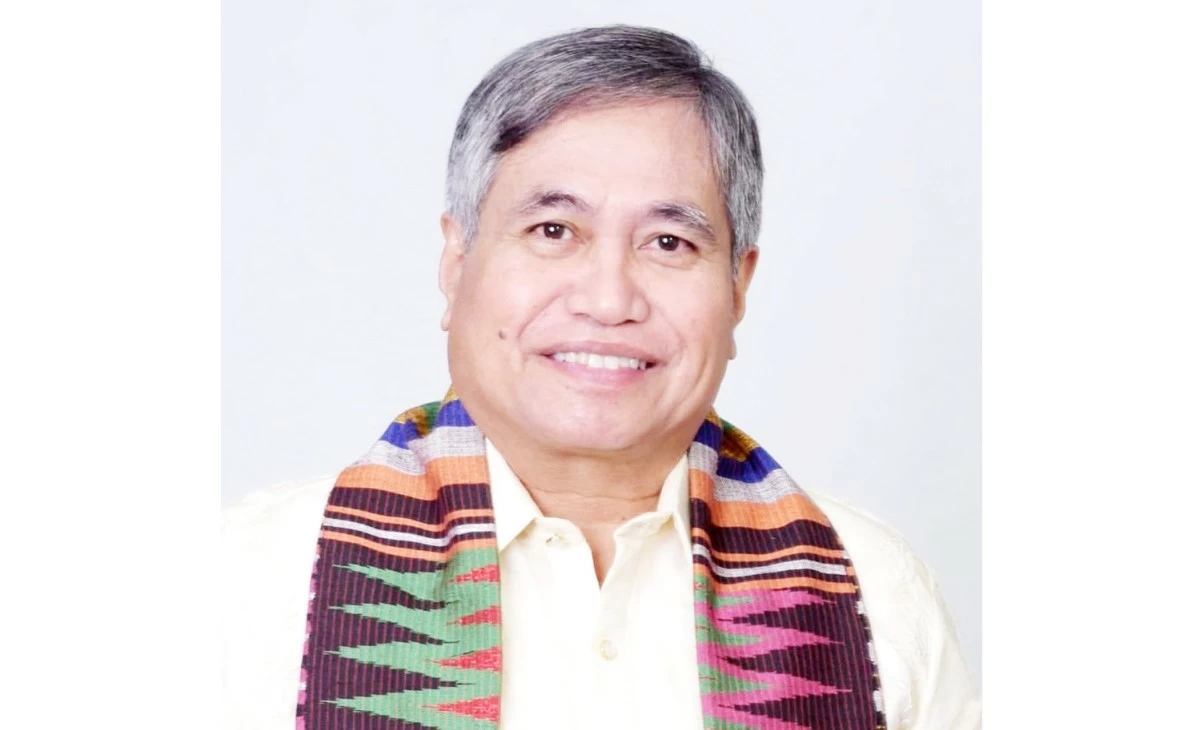
(Dr. Jaime Aristotle B. Alip is a poverty eradication advocate. He is the founder of the Center for Agriculture and Rural Development Mutually-Reinforcing Institutions (CARD MRI), a group of 23 organizations that provide social development services to eight million economically-disadvantaged Filipinos and insure more than 27 million nationwide.)