






Manila Bulletin
 Business
The Economy
DA seeks FAO help to reverse decades of underinvestment in agri
Business
The Economy
DA seeks FAO help to reverse decades of underinvestment in agri
Business
The Economy
DA seeks FAO help to reverse decades of underinvestment in agri
DA seeks FAO help to reverse decades of underinvestment in agri
Published Oct 13, 2025 03:52 pm


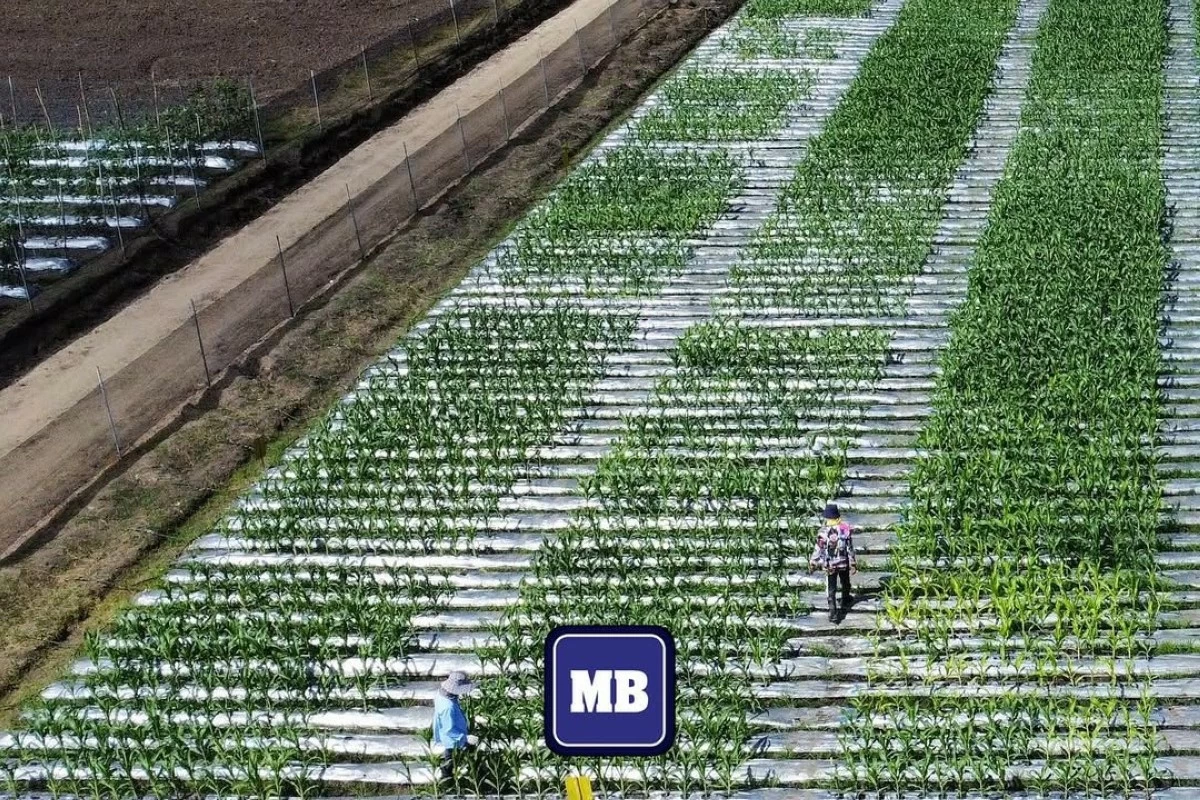
(Manila Bulletin file photo)
The Philippines is asking the assistance of the Food and Agriculture Organization (FAO) to help address 27 years of developmental gaps in the country’s agriculture sector, fueled by the government’s funding shortfalls, the Department of Agriculture (DA) said.
In a statement, DA Secretary Francisco Tiu Laurel said he met with FAO Assistant Director-General and Regional Representative for Asia and the Pacific Alue Dohong to affirm the country’s long-standing partnership with the global body.
Tiu Laurel said the meeting focused on aligning priorities related to climate resilience, innovation, and inclusive growth.
FAO, a specialized agency under the United Nations (UN), is the leading organization that spearheads international efforts to curb hunger and strengthen food security.
In the Philippines, the FAO has been working with the government, civil society groups, and the private sector to address challenges in the agriculture, fisheries, and forestry sectors.
According to its website, the organization has led efforts to promote sustainability, value-added practices, post-harvest management, and the resiliency of agriculture-based livelihoods in the country.
Tiu Laurel said he personally requested the FAO to provide technical assistance to help the Philippines catch up on nearly three decades of “backlogs” in agricultural development.
He acknowledged that the sector has suffered from over two decades of underinvestment, resulting in the Philippines lagging behind countries with better-funded agriculture industries.
With FAO’s assistance, the secretary said the country could harness high economic and social impact potential of seaweed, mango, abaca, and bamboo.
“By combining FAO’s technical expertise and convening power with the Philippines’ reform agenda and investment priorities, we can deliver lasting improvements in food security, rural livelihoods, and climate resilience,” said Tiu Laurel.
“The Philippines wants to move beyond project proposals to implementation pathways, with FAO’s support through normative guidance, technical assistance, and convening power,” he added.
Tiu Laurel, who earlier chaired the 47th meeting of the ASEAN Ministers on Agriculture and Forestry (AMAF) in Manila, also discussed with FAO initiatives to strengthen food security in Southeast Asia.
“We are committing to the transformation of agrifood systems with investment, innovation, and inclusive growth,” he said.
In pursuit of this, both the DA and FAO agreed to jointly refine the upcoming Country Programming Framework (CPF) 2025–2031, aligning it with the government’s climate goals, national food security agenda, and the broader Philippine Development Plan.
The revised framework will specifically focus on accelerating reforms and delivering measurable benefits for farmers, fishers, and rural communities.
During the meeting, Tiu Laurel announced that the Philippines will actively participate in FAO’s 80th anniversary celebrations through high-level representation, exhibits, and events that highlight progress in agriculture, fisheries, and rural development.
He also relayed the country’s full support for the 2025 World Food Forum (WFF), where the DA will showcase youth-led innovations, agritech solutions, and climate-smart farming.
Furthermore, the country will contribute expertise in climate resilience, digital agriculture, fisheries, and nutrition to the FAO Regional Conference for Asia and the Pacific (APRC) 2026.
Tiu Laurel said he expressed to the FAO the Philippines’ willingness to offer the 2028th edition of APRC, reinforcing its aspiration to become a regional hub for agrifood innovation.
“This renewed collaboration positions the Philippines as a regional leader in advancing sustainable, resilient, and inclusive agrifood systems,” he said.