







Chooks-to-Go targets 2,000 outlets by end-2025
Published Oct 13, 2025 05:18 pm


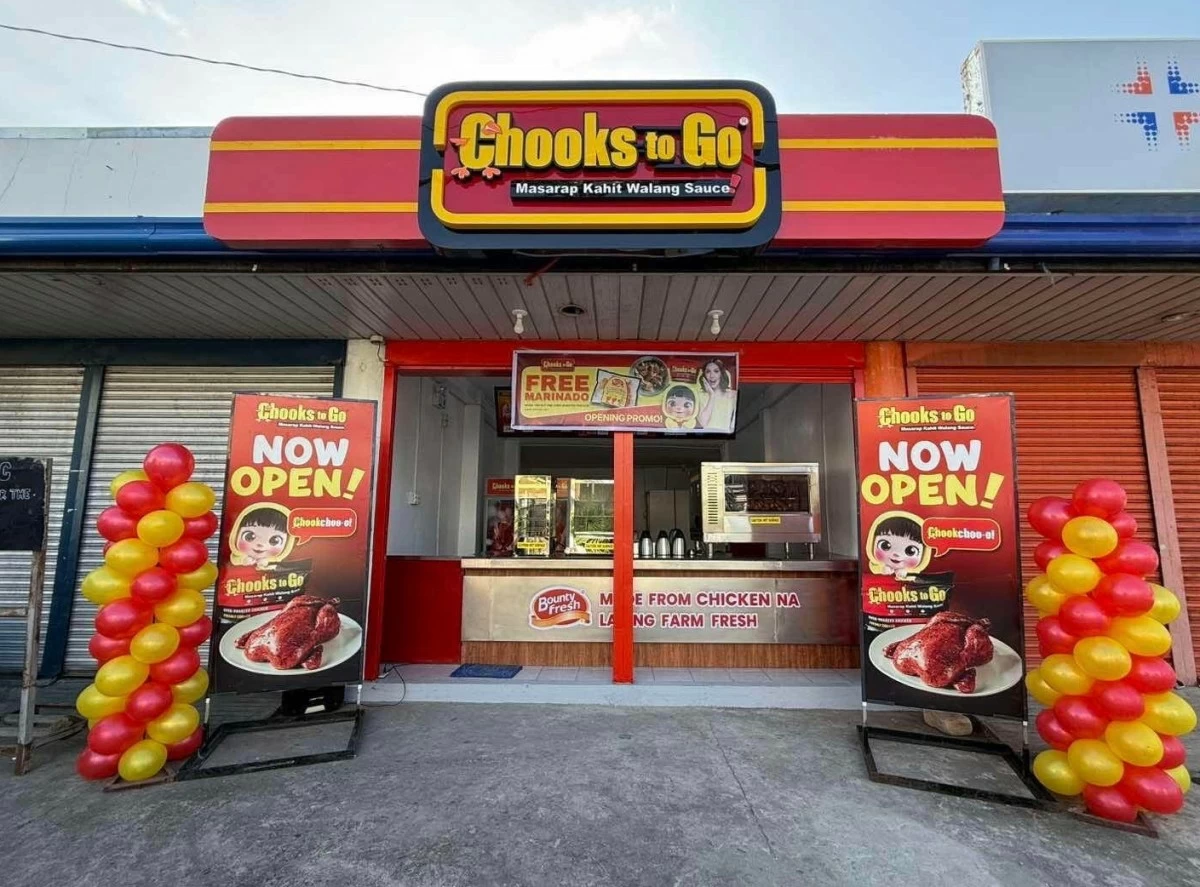
(Chooks-to-Go photo)
Bounty Fresh Group Holdings Inc. is banking on strong consumer demand as it plans to expand its popular rotisserie chicken brand Chooks-to-Go to over 2,000 outlets before the end of the year.
Bounty Fresh President and Chief Executive Officer (CEO) Kenneth Cheng said the company plans to add around 300 chains this year to meet the growing demand for chicken products.
“As of now, we’re still planning to add for this year. I guess a total of 300 [stores] for the year,” Cheng said in a chance interview.
Chooks-to-Go ended last year with around 1,800 outlets. With new openings offsetting some closures, the roasted chicken brand is projected to end 2025 with more than 2,000 outlets.
The new stores are distributed across Luzon, Visayas, and Mindanao, depending on the strength of demand in each area.
Cheng said this year has been strong for the brand, with each outlet seeing “organic growth” or improved sales performances.
The plan to expand Chooks-to-Go coincides with the projected growth in poultry meat consumption.
Citing the Philippine Statistics Authority (PSA), Cheng noted that the country’s population will grow to between 132 million and 145 million by 2030.
This would make the Philippines one of the largest consumer markets, reaching about 66 million consumers.
In terms of poultry consumption, Cheng said there is a projected growth of 500,000 tons of poultry meat per year or up to 4.5 million tons in 25 years.
Bounty Fresh looks to position Chooks-to-Go and the Bounty Fresh brand itself to maximize opportunities from this anticipated growth.
In this regard, Cheng said the company is now transforming its operations to adapt to future needs.
“Unless we learn how to address the concerns that forces us to raise our bird, we will not be able to benefit from this opportunity,” he said in a presentation.
Bounty Fresh looks to expand investments in its poultry farms to maintain animal welfare despite increasing production.
The company will also set aside funding for improved housing and ventilation to protect chickens from climate risks, alongside vaccines to provide protection against contagious diseases.
Cheng said an area of growth could be through government support, with potential policies seen to strengthen local produce while maintaining affordability.