







Basilan's journey to long-lasting peace
Published Oct 13, 2025 12:05 am
|
Updated Oct 12, 2025 03:21 pm


PEACE BY PEACE
The bulk of my younger years in the military were spent in Mindanao, particularly in Basilan. At that time, the island-province was a hotbed of conflict where insurgents and violent extremists wrought havoc on helpless communities. It was one of the most difficult assignments in my military career, which tested my resolve as a soldier, an officer and commander.
This armed conflict continued throughout my career, even as I became the youngest commander to lead the island's brigade and later as the chief of the Western Mindanao Command (WestMinCom). I lost count of the countless battles my men and I undertook in Basilan.
So when I set foot in Basilan last Oct. 9, I felt a deep sense of pride and joy. From the festive atmosphere, to the bustling economic activity, and to the bright smiles on people’s faces, the area was truly undergoing a remarkable transformation.
And when I sat side by side with my good Eisenhower Co-Fellow Governor Mujiv S Hataman to sign two Memoranda of Agreement (MOAs), I was overwhelmed with emotion as the Basilan I once knew had already become a distant memory.
The first MOA was for the continuation of the Localizing Normalization Implementation (LNI) Program, and the other for the roll-out of the Preventing and Transforming Violent Extremism (PTVE) Program.
These initiatives represent the national government’s firm commitment to strengthen and sustain Basilan’s hard-won peace by addressing the roots of conflict — poverty, marginalization, and lack of economic opportunity.
Through the LNI Program, the OPAPRU turned over ₱9.4 million to the Basilan provincial government to implement socioeconomic initiatives for the communities of the Moro Islamic Liberation Front and the Moro National Liberation Front.
This reflects the government's commitment to empowering local government units, ensuring they play an active role in normalizing and transforming communities of former rebels—a true example of an inclusive peace process.
These LNI’s interventions include emergency employment, civil registration, financial literacy, skills training, and livelihood programs that will capacitate these ex-fighters to build a peaceful, productive and dignified life.
In his speech during the BARMM Local Government Peace and Development Summit last Aug. 28, 2025, President Ferdinand R. Marcos Jr. underscored the importance of the LNI’s implementation in advancing the government’s peace agenda.
“This government-led LGU inclusive approach does not only highlight the pivotal role of LGUs in peacebuilding but also fosters their ownership of normalization and its transformation projects,” the President declared.
“It also allows our programs to be more responsive on the situation on the ground. That said, we are giving LGUs a greater role in the implementation of the projects not only in the BARMM but all across the country,” he noted.
“To date, five provinces have already adopted and launched the localized normalization implementation. This strengthens our belief that peace must be built from the ground up with local leaders as active architects,” the President emphasized.
The PTVE Program, on the other hand, wherein we turned over ₱5 million to the provincial government, shall focus on helping former violent extremists, particularly former members of the notorious Abu Sayyaf Group, to reintegrate into mainstream society.
Through our “Kabuhayang Pang-Agrikultura Para sa Kapayapaan” project, they are provided with agricultural and fisheries livelihood assistance and psychosocial recovery support, which are essential in rebuilding their lives.
Even then as a military commander, I had always believed that peace is not just the silencing of guns and the signing of peace agreements. More than anything else, peace is about restoring dignity among those who once engaged in armed struggle.
For it is when we give people the chance to reform, become self-sufficient and empowered to provide for the needs of their families, we take away the very reasons why they engaged in lawless activities.
What makes Basilan’s story even more extraordinary is that it has been officially declared "Abu Sayyaf-free.” This historic milestone, affirmed earlier this year by our Armed Forces, is a testament to the province’s amazing evolution.
Once the stronghold of the country’s most notorious kidnap-for-ransom groups that had to be avoided at all cost, Basilan is now emerging as a center of trade, investment, and tourism in the western region of Mindanao.
But this transformation did not happen overnight. It is the result of the strong and tireless collaboration between local leaders, civil society organizations, security forces , and the people of Basilan themselves who chose peace and reconciliation over violence and retaliation.
Governor Hataman and the previous leaders served before him knew that the only way to free Basilan from the threat of violent terrorism is to anchor governance on the key principles of transparency, inclusivity, and accountability.
That is why the remarks he made during the MOA signing ceremony resonated among the participants. The governor declared: “Hindi pa po tapos ang ating trabaho sapagkat hindi pa normal ang ating sitwasyon. But we are getting there.”
And by all indications, there is no doubt that we are getting there. The progress we are seeing today in Basilan is clear and undeniable. By and large, it is the fruit of the hard work, steadfast determination and strong collaboration among stakeholders.
As I looked at the crowd gathered that day, I realized that the changes happening in Basilan are not just physical or economic. It is a paradigm shift, a major revision of the province’s narrative of what the province has now become.
What inspires me the most is that the people of Basilan are helping to rewrite the story of the province. Essentially, what they are saying is that they no longer see themselves as victims of war but instruments of peace and development.
Basilan’s story is a beacon of hope not only for the people of Mindanao but for all Filipinos. It shows that even the most conflict-ridden provinces can rise above violence and re-shape the reality and future of their homeland.
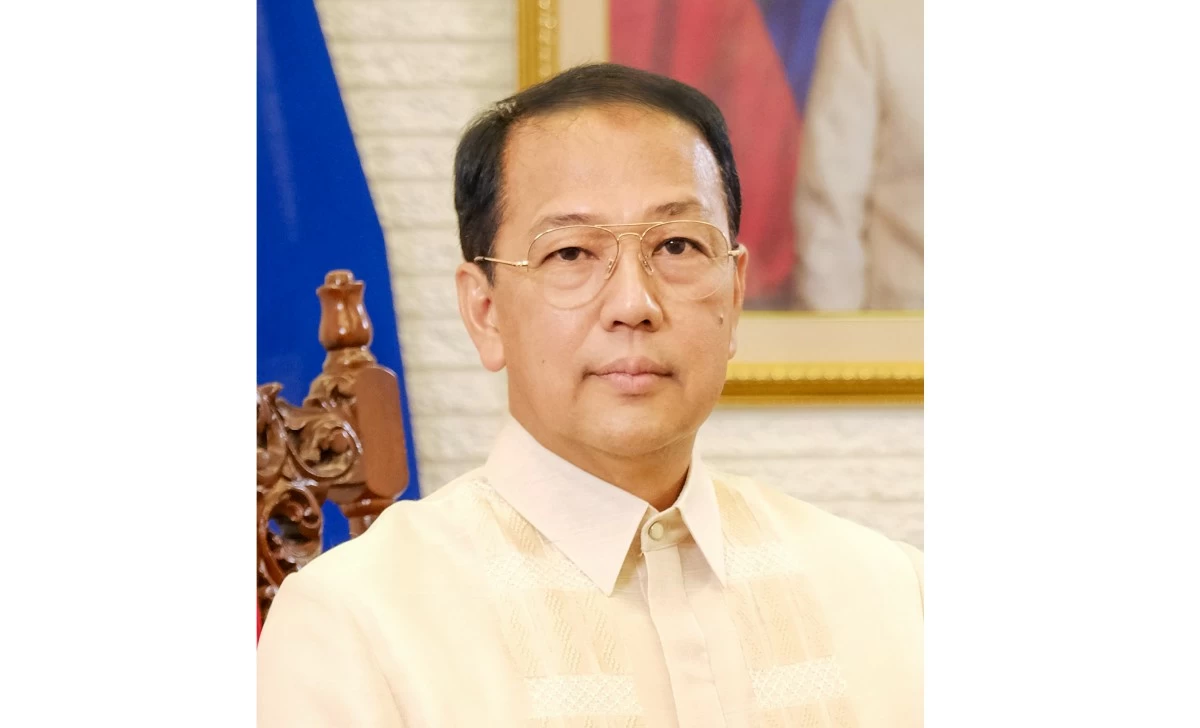
(Secretary Carlito G. Galvez, Jr., is the presidential adviser on peace, reconciliation and unity.)