






Manila Bulletin
 Philippines
National
Not just cameras: PPA says body-worn cameras part of full, high-tech surveillance system in agency-managed ports
Philippines
National
Not just cameras: PPA says body-worn cameras part of full, high-tech surveillance system in agency-managed ports
Philippines
National
Not just cameras: PPA says body-worn cameras part of full, high-tech surveillance system in agency-managed ports
Not just cameras: PPA says body-worn cameras part of full, high-tech surveillance system in agency-managed ports
Published Oct 12, 2025 02:33 pm


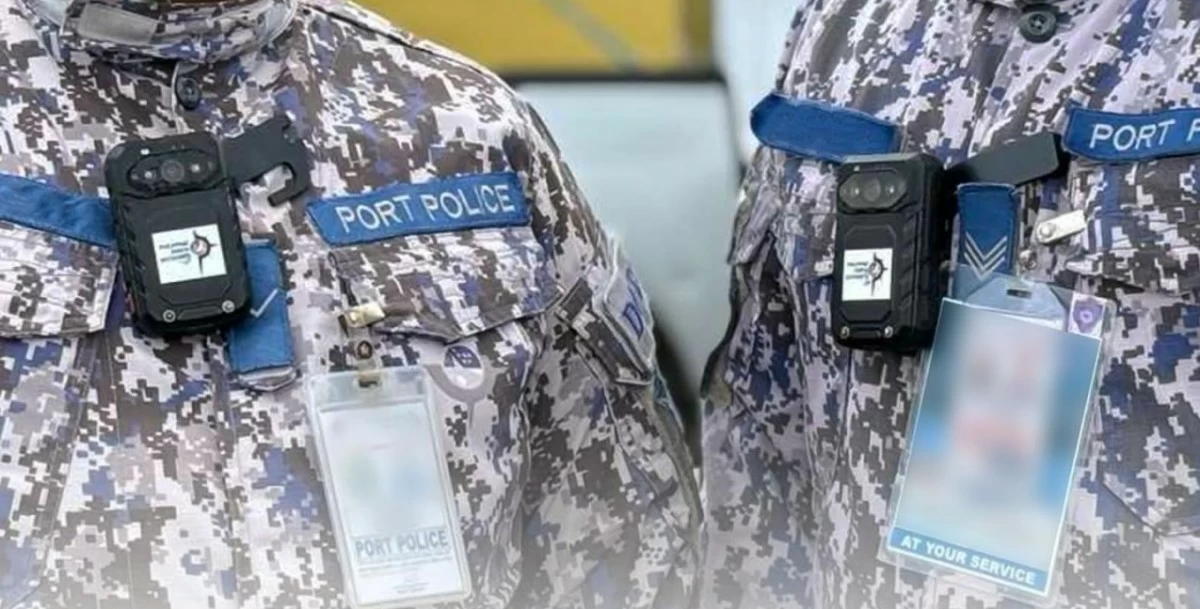
The body-worn cameras bought by the Philippine Ports Authority (PPA) are part of a full surveillance and evidence-management system across all the ports under the supervision and control of the agency, a top official said as he welcomed any auditing by oversight agencies in relation to the procurement.
PPA General Manager Jay Daniel Santiago explained that each of the 164 body-worn cameras bought in 2020 and are now being used by the port police forces contain security features that include facial-recognition capabilities.
The cameras, he said, are directly linked to a system that contains encrypted software licenses for live streaming and evidence storage, and with a dedicated 50 megabytes per second connected to satellite communications system.
“PPA stresses that the project is a complete digital surveillance infrastructure, not a simple camera purchase,” Santiago said as he emphasized that the procurement also includes installation, nationwide training, and three-year after-sales support.
Sen. Raffy Tulfo earlier called out the PPA for alleged overpriced procurement of 164 camera units for P168.6 million. With the fund, Tulfo said each camera appears to cost more than 800,000 per unit.
‘
But Santiago pointed out the impropriety of computing the project cost by the number of cameras bought since each unit is part of the full surveillance system necessary to protect PPA ports from various threats.
“The unit cost cannot be computed by dividing the contract price by the mere number of cameras alone. This includes nationwide connectivity, backend servers, software, training, and system integration,” said Santiago.
Transparent process
Santiago emphasized that the project underwent transparent and competitive bidding processes in full compliance with Republic Act No. 9184 or the Government Procurement Reform Act.
In fact, he said the winning bidder has a valid PhilGEPS registration, or the Philippine Government Electronic Procurement System accreditation.
In the Senate hearing, Tulfo said his team inspected the office of the Boston Home Inc. and said its office is not a kind of company which could be entrusted with a multi-million government project.
Santiago, however, said that the bidding process for the project was done at the time of the Covid-19 pandemic when the national government were implementing restrictions on the movement of people as part of the health protocol.
And even if they could, the PPA chief said inspection of any office of the bidders is prohibited by the law to prevent conflict of interest or undue advantage.
Instead, the Bids and Awards Committee checked the Consolidated Blacklisting Report of the Government Procurement Policy Board (GPPB) to check if the Boston Home Inc. was blacklisted at the time of the bidding process—and it was not.
“They are not backlisted, and they have a valid PhilGEPS registration. When it comes to financial capability, there is a formula under the procurement law that is strictly being followed,” said Santiago, in response to Tulfo’s statement that the company only had P10 million capital.
He also disclosed that the same company delivered a P217 million worth surveillance system project for the Philippine Coast Guard.
Fund protection
Since he assumed the top PPA post nine years ago, Santiago said he has been very protective of the agency, especially when it comes to spending the agency fund.
“In the past nine years, I have been very protective of the agency and its employees, especially in the procurement process. This is critical for me since I do not want to hear any accusation that we are violating the law or any process,” said Santiago, who is a lawyer.
The proof, he said, was when he ordered the termination of the contract in 2019 for the procurement of Mobile X-Ray Machines as he revealed that he was not satisfied with the specifications of the machines.
“The Philippine Ports Authority assures the public that all its procurement activities strictly adheres to existing laws and upholds the principles of accountability, transparency, and prudent use of public funds,” he said.
“PPA reiterates its commitment to improving port security, efficiency, and public safety through modern systems and technologies that undergo lawful, fair, and competitive processes,” he added.