ADVERTISEMENT

Manila LGU showcases contents of emergency 'Go Bags'

Published Oct 12, 2025 02:00 pm
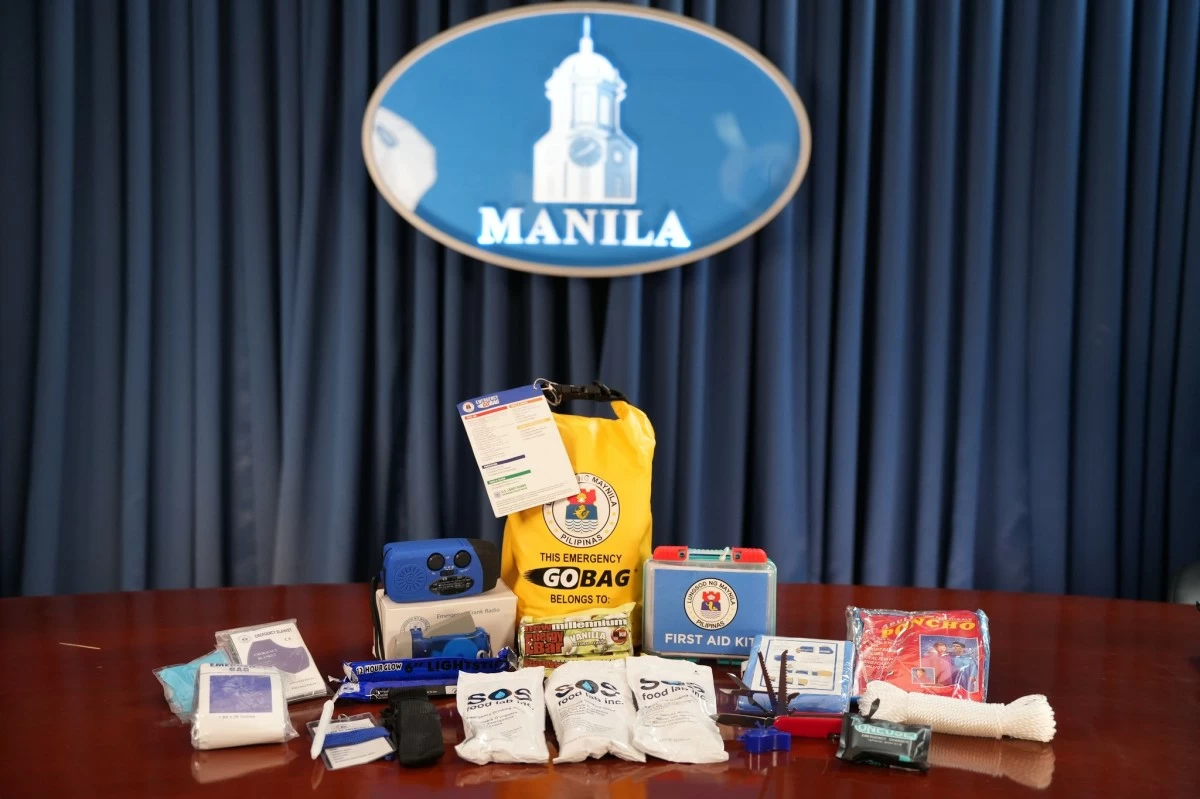
The contents of the Emergency Go Bag distributed by the Manila City Government in 2020 include first aid supplies, emergency food and water, protective gear, lighting and communication tools, and multi-purpose survival items, part of the city’s disaster preparedness initiative for public school teachers and students. (Photo courtesy of the Manila PIO


The Manila City Government has released a detailed look at the contents of the Emergency Go Bags that were distributed in 2020 under the first term of Mayor Francisco “Isko Moreno” Domagoso, as part of the city's ongoing disaster preparedness initiatives.
Through the Manila City Disaster Risk Reduction and Management Office (MCDRRMO), the local government emphasized the importance of readiness amid the increasing frequency of natural disasters, particularly earthquakes.
The Go Bags were originally distributed to public school teachers and students with yellow bags designated for teachers and blue bags for students to ensure that basic emergency needs could be met during critical situations.
Each Go Bag contains essential first aid items, such as sheer bandages in various sizes, sterile gauze pads, alcohol wipes, electrolyte tablets, butterfly closures, antiseptic towelettes, antibiotic ointments, muscle gels, burn creams, paper tape, an instant cold compress, a forehead thermometer, and eyewash.
To provide personal protection, the kits include an all-purpose poncho, an emergency thermal blanket, and an emergency sleeping bag, items that can help individuals stay dry and warm in the event of evacuation or exposure.
For emergency food and hydration, each bag is equipped with three packs of emergency water and two high-calorie food bars, meant to sustain individuals for up to 72 hours.
The Go Bags also feature multi-functional tools and supplies, including a 13-in-1 tool, ID card holder, rope, mini pen, foam splint pad, and a power charger, ensuring that recipients have basic tools for survival and communication during an emergency.
To address lighting and communication needs, the kits contain three brightsticks, an emergency whistle, a solar-powered radio, and a hand-crank flashlight, allowing users to stay informed and visible even during power outages.
According to the MCDRRMO, showcasing the contents of the Go Bag serves as a reminder to the public of the importance of being prepared at all times.
With recent seismic activity affecting various parts of the country and the continued risk of a major earthquake, the LGU urges all residents to have their own emergency kits and to familiarize themselves with disaster protocols.
The Manila City Government said continues to promote awareness, readiness, and resilience through its disaster risk reduction programs, and encourages other communities to implement similar measures.

Related Tags

metronews
ADVERTISEMENT
.most-popular .layout-ratio{ padding-bottom: 79.13%; } @media (min-width: 768px) and (max-width: 1024px) { .widget-title { font-size: 15px !important; } }

{{ articles_filter_1561_widget.title }}

.most-popular .layout-ratio{ padding-bottom: 79.13%; } @media (min-width: 768px) and (max-width: 1024px) { .widget-title { font-size: 15px !important; } }

{{ articles_filter_1562_widget.title }}

.most-popular .layout-ratio{ padding-bottom: 79.13%; } @media (min-width: 768px) and (max-width: 1024px) { .widget-title { font-size: 15px !important; } }

{{ articles_filter_1563_widget.title }}

{{ articles_filter_1564_widget.title }}

.mb-article-details { position: relative; } .mb-article-details .article-body-preview, .mb-article-details .article-body-summary{ font-size: 17px; line-height: 30px; font-family: "Libre Caslon Text", serif; color: #000; } .mb-article-details .article-body-preview iframe , .mb-article-details .article-body-summary iframe{ width: 100%; margin: auto; } .read-more-background { background: linear-gradient(180deg, color(display-p3 1.000 1.000 1.000 / 0) 13.75%, color(display-p3 1.000 1.000 1.000 / 0.8) 30.79%, color(display-p3 1.000 1.000 1.000) 72.5%); position: absolute; height: 200px; width: 100%; bottom: 0; display: flex; justify-content: center; align-items: center; padding: 0; } .read-more-background a{ color: #000; } .read-more-btn { padding: 17px 45px; font-family: Inter; font-weight: 700; font-size: 18px; line-height: 16px; text-align: center; vertical-align: middle; border: 1px solid black; background-color: white; } .hidden { display: none; }
function initializeAllSwipers() { // Get all hidden inputs with cms_article_id document.querySelectorAll('[id^="cms_article_id_"]').forEach(function (input) { const cmsArticleId = input.value; const articleSelector = '#article-' + cmsArticleId + ' .body_images'; const swiperElement = document.querySelector(articleSelector); if (swiperElement && !swiperElement.classList.contains('swiper-initialized')) { new Swiper(articleSelector, { loop: true, pagination: false, navigation: { nextEl: '#article-' + cmsArticleId + ' .swiper-button-next', prevEl: '#article-' + cmsArticleId + ' .swiper-button-prev', }, }); } }); } setTimeout(initializeAllSwipers, 3000); const intersectionObserver = new IntersectionObserver( (entries) => { entries.forEach((entry) => { if (entry.isIntersecting) { const newUrl = entry.target.getAttribute("data-url"); if (newUrl) { history.pushState(null, null, newUrl); let article = entry.target; // Extract metadata const author = article.querySelector('.author-section').textContent.replace('By', '').trim(); const section = article.querySelector('.section-info ').textContent.replace(' ', ' '); const title = article.querySelector('.article-title h1').textContent; // Parse URL for Chartbeat path format const parsedUrl = new URL(newUrl, window.location.origin); const cleanUrl = parsedUrl.host + parsedUrl.pathname; // Update Chartbeat configuration if (typeof window._sf_async_config !== 'undefined') { window._sf_async_config.path = cleanUrl; window._sf_async_config.sections = section; window._sf_async_config.authors = author; } // Track virtual page view with Chartbeat if (typeof pSUPERFLY !== 'undefined' && typeof pSUPERFLY.virtualPage === 'function') { try { pSUPERFLY.virtualPage({ path: cleanUrl, title: title, sections: section, authors: author }); } catch (error) { console.error('ping error', error); } } // Optional: Update document title if (title && title !== document.title) { document.title = title; } } } }); }, { threshold: 0.1 } ); function showArticleBody(button) { const article = button.closest("article"); const summary = article.querySelector(".article-body-summary"); const body = article.querySelector(".article-body-preview"); const readMoreSection = article.querySelector(".read-more-background"); // Hide summary and read-more section summary.style.display = "none"; readMoreSection.style.display = "none"; // Show the full article body body.classList.remove("hidden"); } document.addEventListener("DOMContentLoaded", () => { let loadCount = 0; // Track how many times articles are loaded const offset = [1, 2, 3, 4, 5, 6, 7, 8, 9, 10]; // Offset values const currentUrl = window.location.pathname.substring(1); let isLoading = false; // Prevent multiple calls if (!currentUrl) { console.log("Current URL is invalid."); return; } const sentinel = document.getElementById("load-more-sentinel"); if (!sentinel) { console.log("Sentinel element not found."); return; } function isSentinelVisible() { const rect = sentinel.getBoundingClientRect(); return ( rect.top < window.innerHeight && rect.bottom >= 0 ); } function onScroll() { if (isLoading) return; if (isSentinelVisible()) { if (loadCount >= offset.length) { console.log("Maximum load attempts reached."); window.removeEventListener("scroll", onScroll); return; } isLoading = true; const currentOffset = offset[loadCount]; window.loadMoreItems().then(() => { let article = document.querySelector('#widget_1690 > div:nth-last-of-type(2) article'); intersectionObserver.observe(article) loadCount++; }).catch(error => { console.error("Error loading more items:", error); }).finally(() => { isLoading = false; }); } } window.addEventListener("scroll", onScroll); });

Sign up by email to receive news.