







National convention calls for recalibrating housing strategies
Real estate stakeholders discussed housing strategies, sustainable development, and collaborative initiatives at the 33rd National Developers Convention
Published Oct 11, 2025 04:58 pm


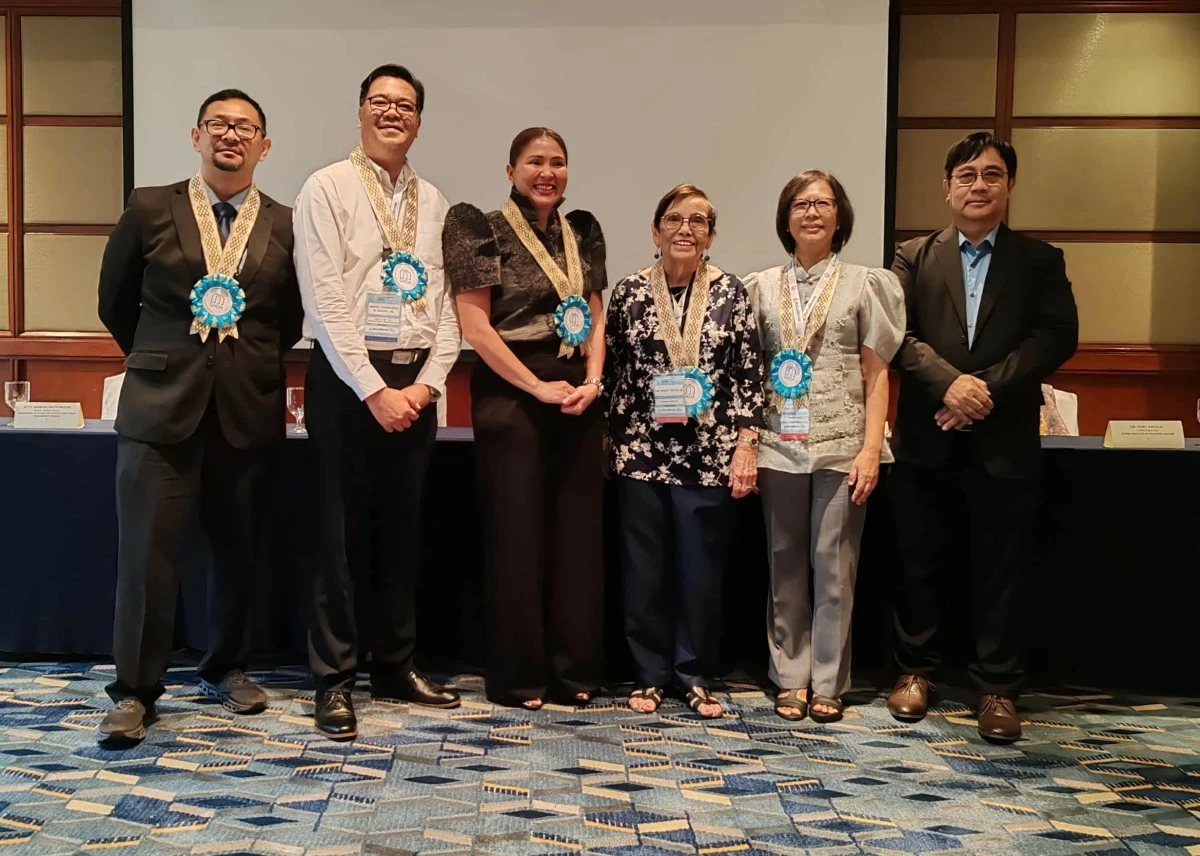
Engr. Francis Richmond Villegas, Subdivision and Housing Developers Association (SHDA) national president, Arch. Leonardo Dayao Jr., SHDA national chairman, Atty. Sharon Faith Paquiz, senior undersecretary, Department of Human Settlements and Urban Development (DHSUD), Dr. Marife Ballesteros, vice president, Philippine Institute for Development Studies, Dr. Mary Racelis, former director, Ateneo Institute of Philippine Culture, and Sonny Ducay, SHDA Executive Director
From October 9 to 10, the Subdivision and Housing Developers Association (SHDA) and the Department of Human Settlements and Urban Development (DHSUD) convened the 33rd National Developers Convention at the Makati Shangri-La in Makati City.
Under this year’s theme, “ReCalibrate: Upgrading Housing Strategies for a Better Tomorrow,” the convention underscored shared commitment to innovative financing, sustainable design, and regulatory reforms that are shaping the future of housing in the Philippines.
SHDA National President Engr. Francis Richmond Villegas led the opening ceremonies, accompanied by SHDA Chief Marketing Officer and 2025 National Convention Chairperson Renelyn Tan-Castillejos.
At the press conference, DHSUD Senior Undersecretary Atty. Sharon Faith Paquiz cited milestones under the Expanded Pambansang Pabahay para sa Pilipino (4PH), which includes the new guidelines to streamline the application system and digitalization of payment transactions, the three percent interest rate on socialized housing loans —covering both horizontal (subdivision-type) and vertical (condominium-type) housing by Pag-IBIG Fund, the revival of the Community Mortgage program allowing informal settler families to purchase land through affordable financing collectively, the Memorandum of Agreement (MoA) approval by the University of the Philippines (UP) management for the pilot rental housing project benefitting informal settler families inside UP-Diliman, and the issuance of decades-old Presidential Proclamations covering areas occupied by thousands of families.
“Hopefully, with all these changes, we will see a more vibrant housing industry at least until 2028,” responded SHDA National Chairman Architect Leonardo Dayao Jr.
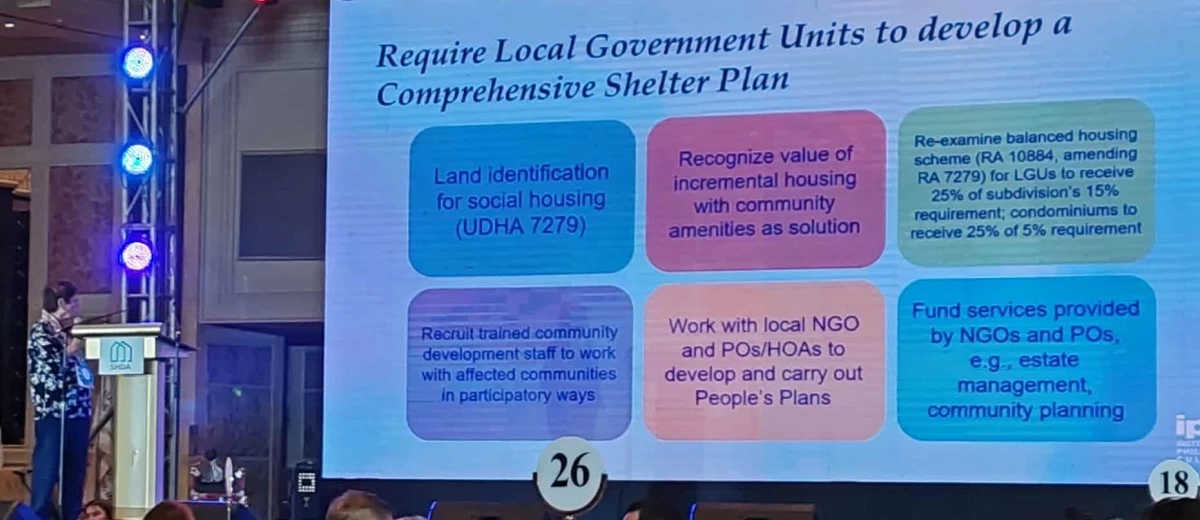
Dr. Mary Racelis, former director of Ateneo Institute of Philippine Culture, discusses housing opportunities for the marginalized sector.
Dr. Marife Ballesteros, vice president of the Philippine Institute for Development Studies, stated that the Philippine Statistics Authority's 2021 data indicates a housing backlog of six million, highlighting the need to update this information. She further explained that “only two to three million of that is what the government needs to respond, while the others are inventory losses, as projected by the agency.”
“The housing inventory is actually on the positive side; the constraint is in affordable housing,” she added.
In addressing the housing backlog, Atty. Paquiz emphasized the collaborative effort between the public and private sectors under the expanded 4PH program. “The SHDA is committed to delivering 250,000 housing units per developer by 2028. We already have 63,000 units in ongoing production for direct housing.”
“That's the commitment of SHEDA; however, I do understand that it is just targeting those with the ability to pay, but there are other issues we have to contend with, especially with the urban poor. By definition, they live in urban areas, and, for instance, in Metro Manila, it will be very difficult to assume that we can deliver affordable housing, because property values are already high. That's why there's that other dimension beyond affordability,” said Architect Dayao Jr.
In her presentation, Dr. Mary Racelis, the former director of the Ateneo Institute of Philippine Culture, challenges the convention of working with informal settlers, community workers, and non-governmental organizations. “Listen to the civil society sector involved in housing the urban poor. We have to develop a section of community workers, or government social workers, who know how to deal with and facilitate processes on the ground, because communities are organized. They are a tremendous resource. They are not the problem, as everybody thinks. They are the solution. They support themselves for years with very little government support. In fact, they send their kids to school, and many of them are struggling to get them to college. So, recognize that they are a very significant part of a flourishing active population.”
The two-day convention was marked by plenary sessions and breakout group discussions on affordable housing, regional development, and sustainable solutions, featuring insights from government leaders and industry experts driving change in the housing sector.