






Manila Bulletin
 Philippines
National
Gov't launches pilot program to expand access to medicines through telepharmacy
Philippines
National
Gov't launches pilot program to expand access to medicines through telepharmacy
Philippines
National
Gov't launches pilot program to expand access to medicines through telepharmacy
Gov't launches pilot program to expand access to medicines through telepharmacy
Published Oct 11, 2025 07:41 am


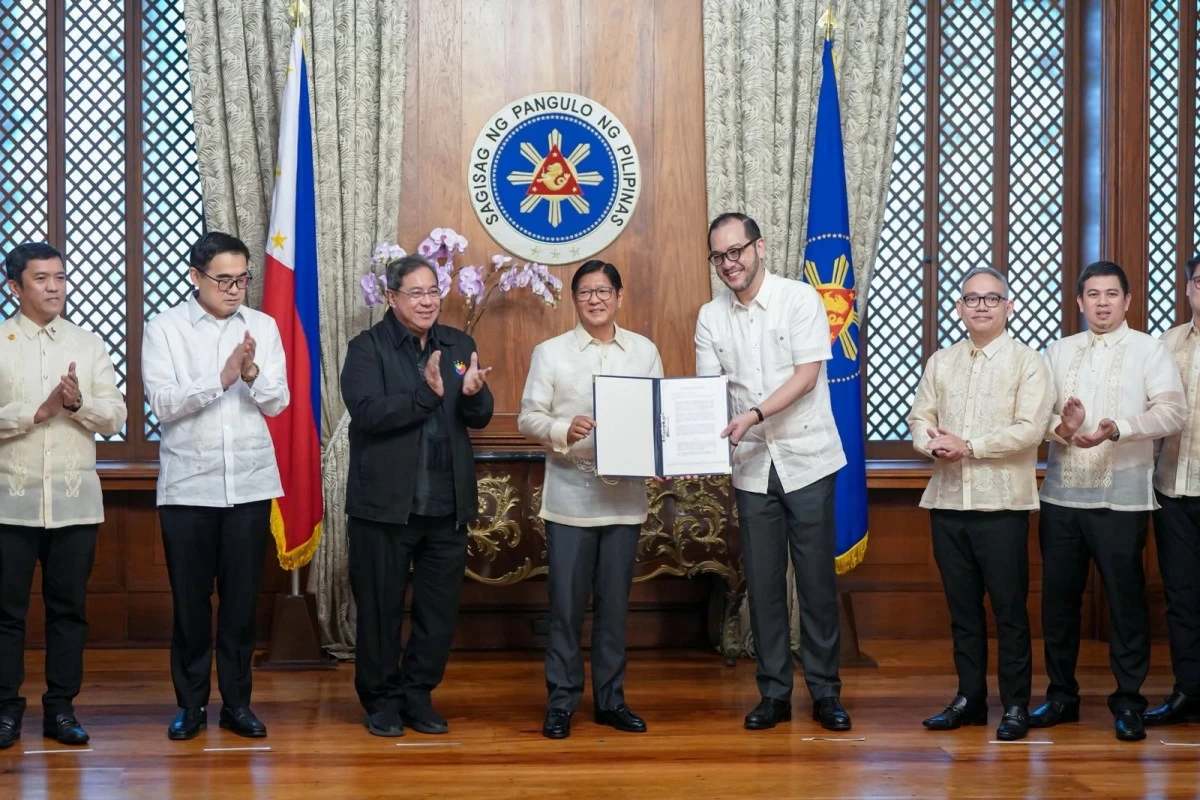
Malacañang photo
President Marcos renewed his administration’s commitment to making medicine more affordable to the public following the launch of a pilot program that allows licensed pharmacists to supervise multiple drugstores remotely.
Marcos said this as he witnessed the signing of the Memorandum of Understanding (MOU) for the Regulatory Sandbox Pilot Program for Flexible Supervision of Pharmacies between the Food and Drug Administration (FDA), Professional Regulation Commission (PRC), and private pharmacy chains in Malacañan on Thursday, Oct. 9.
In an Instagram post, the President said the move will improve access to medicines in underserved communities across the country, especially in areas without a pharmacist.
“Through telepharmacy, one licensed pharmacist can now supervise multiple drugstores online,” he wrote.
“The government and private sector are working together to bring faster service and safer, more affordable medicines to all,” he added.
The Sandbox Pilot Program seeks to address the nationwide shortage of registered pharmacists — estimated at 27,500 — by introducing flexible and technology-driven supervision mechanisms, including telepharmacy and video consultations, while maintaining safety and professional oversight.
The two-year pilot program, to be implemented from 2025 to 2027, will be jointly managed by the FDA, the Professional Regulatory Board of Pharmacy (PRB-PHA), and members of the Private Sector Advisory Council (PSAC)–Health Sector.
The FDA will provide regulatory guidance and ensure compliance with Republic Act 10918 or the Philippine Pharmacy Act of 2016, which mandates one licensed pharmacist for every pharmacy.
Participating pharmacies include Mercury Drug, Watsons, Southstar Drug, Rose Pharmacy, Generika, MedExpress, St. Joseph Drug, Cecile’s Pharmacy, TGP Pharma, and Carlos Drugs – Lucena, Inc.
Pilot areas identified for the rollout include Caloocan, Manila, Abra, Ilocos, La Union, Camarines Sur, Quezon, Iloilo, Negros, and Misamis.
Innovation for better access
PSAC–Health Sector Lead Paolo Borromeo said the project reflects the private sector’s partnership with the government in driving innovation in healthcare delivery.
“By enabling pharmacies to operate with alternative supervision mechanisms, we can expand access to medicines, improve operational efficiency, and support the evolving role of pharmacy professionals in our healthcare ecosystem,” Borromeo said.
Under the program, one licensed pharmacist will be able to oversee several pharmacies within defined geographic limits through FDA-approved platforms. Pharmacy assistants will also receive training to help deliver essential services under close supervision.
The pilot will use a data-driven and evidence-based approach to assess its effectiveness. The FDA, PRB–PHA, and PSAC–Health will conduct semi-annual reviews to evaluate safety, efficiency, and outcomes, with findings intended to inform future amendments to RA 10918.
The initiative’s broader goal, officials said, is to strengthen healthcare access, especially in rural and low-income areas where opening new pharmacies has been limited by the one-to-one pharmacist requirement.