






Manila Bulletin
 Philippines
National
Several Metro Manila colleges, universities declare health breaks, shift to online classes amid surge in flu cases
Philippines
National
Several Metro Manila colleges, universities declare health breaks, shift to online classes amid surge in flu cases
Philippines
National
Several Metro Manila colleges, universities declare health breaks, shift to online classes amid surge in flu cases
Several Metro Manila colleges, universities declare health breaks, shift to online classes amid surge in flu cases
Flu surge prompts some schools to suspend in-person classes, issue health advisories, and reinforce sanitation measures
Published Oct 10, 2025 11:27 am


At A Glance
- Education institutions such as Adamson University, NU Fairview, UST, and San Beda Alabang have adopted temporary health breaks, online learning arrangements, and sanitation drives to protect their communities while maintaining learning continuity
- The series of advisories underscores the collective response of educational institutions to the flu surge across Metro Manila

Several educational institutions in the National Capital Region (NCR) have implemented health breaks, disinfection drives, and online learning in response to the rise in influenza and flu-like illnesses among students and faculty. (Photo from Unsplash)
After noticing a steep rise in student and staff absences due to flu-like illnesses, several schools and universities across Metro Manila have issued health advisories, declared short “health breaks,” shifted to remote learning, and reinforced sanitation measures amid a surge in influenza and influenza-like illnesses (ILI) affecting school communities.
In recent days, some educational institutions in Metro Manila have released advisories urging students and personnel to observe preventive measures — including wearing face masks, practicing proper hygiene, and seeking medical attention when experiencing symptoms.
Shift to online classes
Some schools have also opted for the temporary suspension of in-person classes or hybrid learning setups to curb further transmission and allow affected individuals to recover.
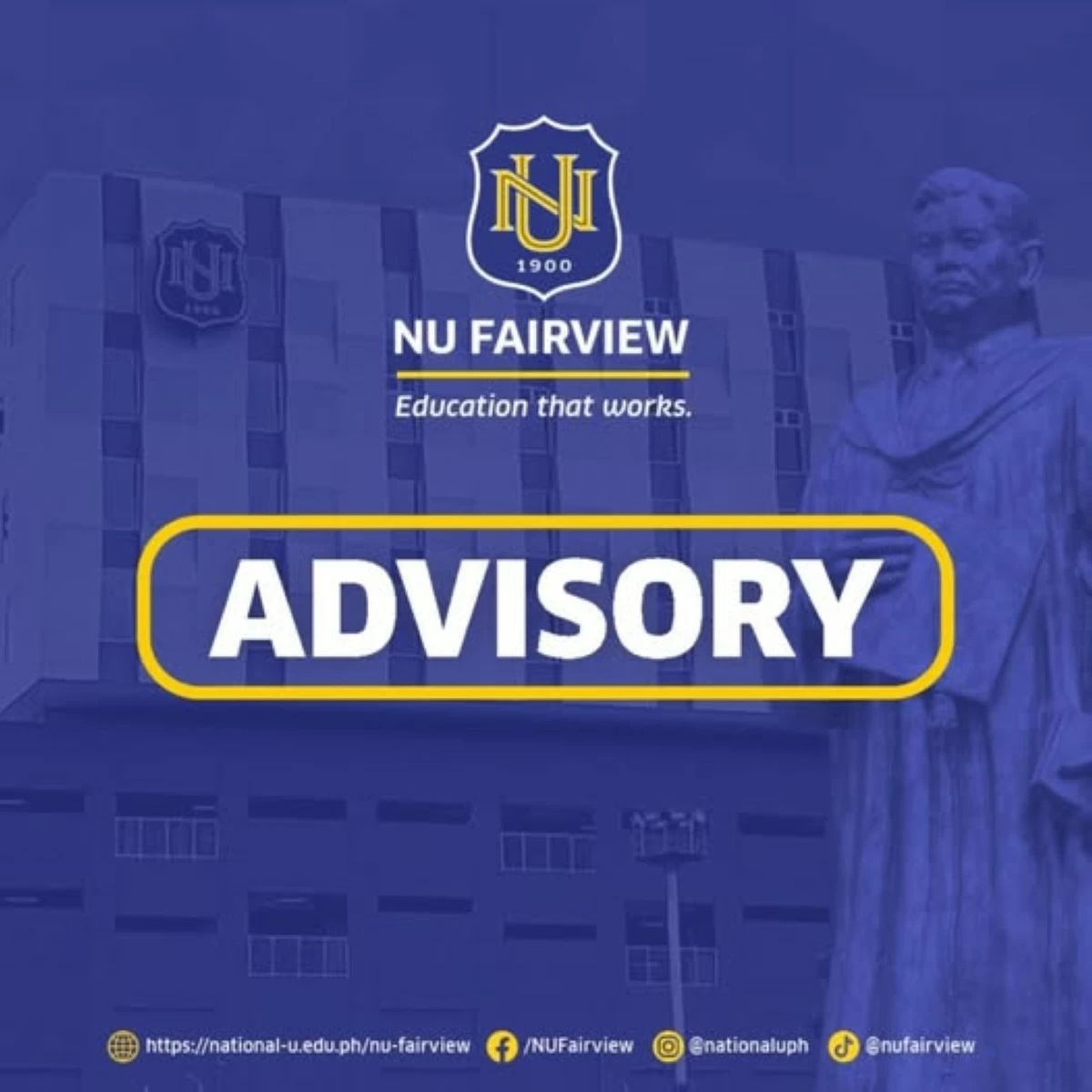
On October 9, National University (NU) Fairview announced a shift to a two-day remote learning schedule.
As “influenza-like cases increased” in Quezon City, NU Fairview issued a Health and Safety Advisory implementing precautionary measures starting Friday, October 10.
Nu Fairview / Facebook
In the advisory, NU Fairview said only laboratory subjects would continue onsite, while all other Senior High School and College classes would shift to Remote Synchronous Learning (RSL) until October 11.
The university encouraged students and faculty to prioritize health while ensuring learning continuity. “Let us all continue to take care of our health and support one another as we prioritize safety while ensuring learning continues,” NU Fairview said.
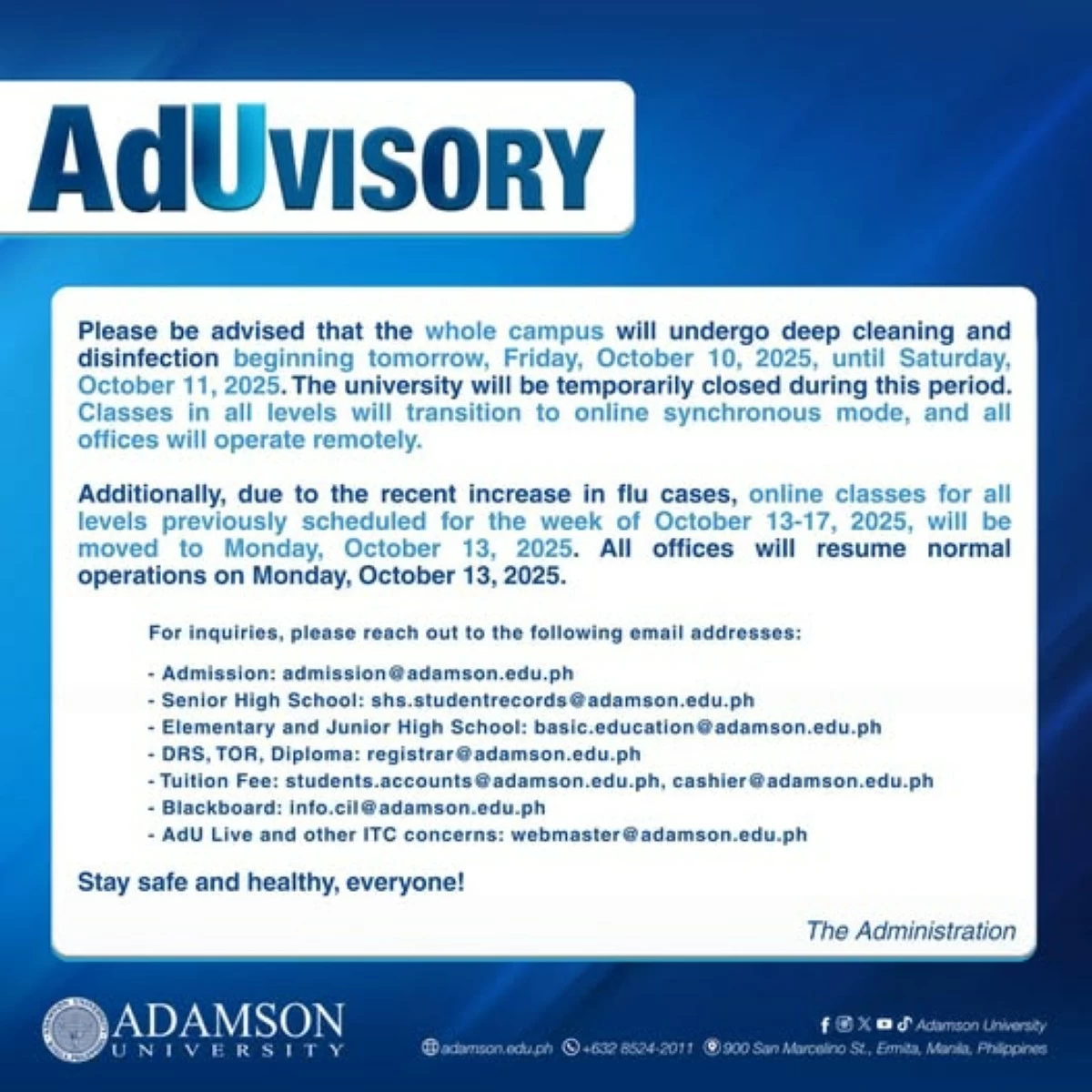
On October 9, Adamson University (AdU) in Manila also issued an advisory on deep cleaning and the shift to online classes, effective October 10.
Adamson University / Facebook
AdU announced a two-day campus-wide disinfection from October 10 to 11, following a rise in influenza cases.
“The university will be temporarily closed during this period,” AdU said. “Classes in all levels will transition to online synchronous mode, and all offices will operate remotely,” it added.
During the sanitation period, all classes across levels were held online via synchronous sessions, while offices operated remotely.
“Additionally, due to the recent increase in flu cases, online classes for all levels previously scheduled for the week of October 13–17, 2025, will be moved to Monday, October 13, 2025. All offices will resume normal operations on Monday, October 13, 2025,” AdU said in its advisory.
Influenza advisory
On October 8, the University of Santo Tomas (UST), through its Office of the Secretary-General, also released a Health Advisory on Influenza and Influenza-like Illnesses (ILI) to raise awareness and promote preventive action.
Influenza was described as a contagious infection affecting the nose, throat, and lungs, while ILI may result from other viruses such as rhinovirus, respiratory syncytial virus (RSV), or COVID-19, UST said.
Common symptoms include fever, cough, sore throat, runny or stuffy nose, headache, body pain, fatigue, and chills, it added.
Thomasians were urged to wear a face mask when experiencing respiratory symptoms; wash hands frequently and practice proper hygiene; clean and disinfect frequently touched surfaces; get vaccinated against influenza; and strengthen the immune system through rest, diet, and hydration.
Those who experience ILI symptoms were advised to seek medical consultation through ThOMedSS or the UST Health Service.
Academic and health breaks
Meanwhile, some secondary schools have implemented “health breaks” following recent cases of ILI among students and teachers.
The UST Junior High School (JHS), for instance, implemented a three-day academic and health break from October 7 to 9 in response to rising flu-like symptoms among students and faculty.
Classes shifted to asynchronous learning to allow the community to rest and recover, with no new performance tasks or graded submissions required.
The administration said the pause would support the community’s physical and mental well-being. “Amidst uncertainties, may we remain focused, creative, and flexible in addressing challenges as we continue to provide services to our stakeholders,” UST said.
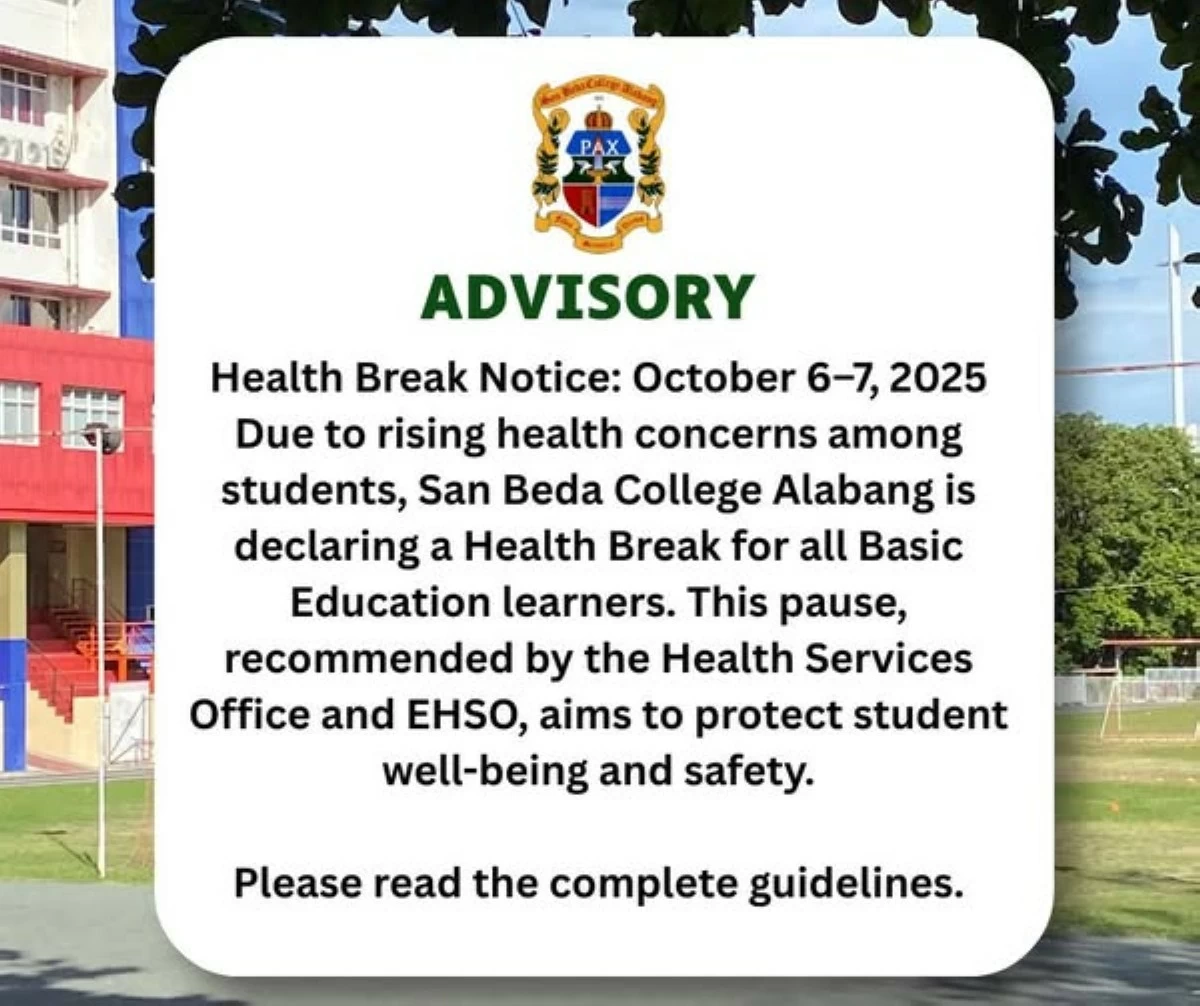
San Beda College Alabang was among the first to respond, announcing on October 5 a two-day health break for all Basic Education students from October 6 to 7.
San Beda College Alabang / Facebook
The decision, made upon the recommendation of the school’s Health Services and Environmental Health and Safety offices, aimed to safeguard the well-being of learners amid increasing medical concerns.
Students were advised to rest and review at home, while teachers reported onsite to upload materials through the learning management system.
Campus sanitation was intensified during the break to ensure a safe return to classes.