







No peso defense strategy against fund outflows—Remolona
By Derco Rosal
Published Oct 9, 2025 05:53 pm


At A Glance
- Even as the Philippine peso faces pressure from foreign fund outflows, the Bangko Sentral ng Pilipinas (BSP) refuses to defend the local currency unless its depreciation could push up consumer prices.
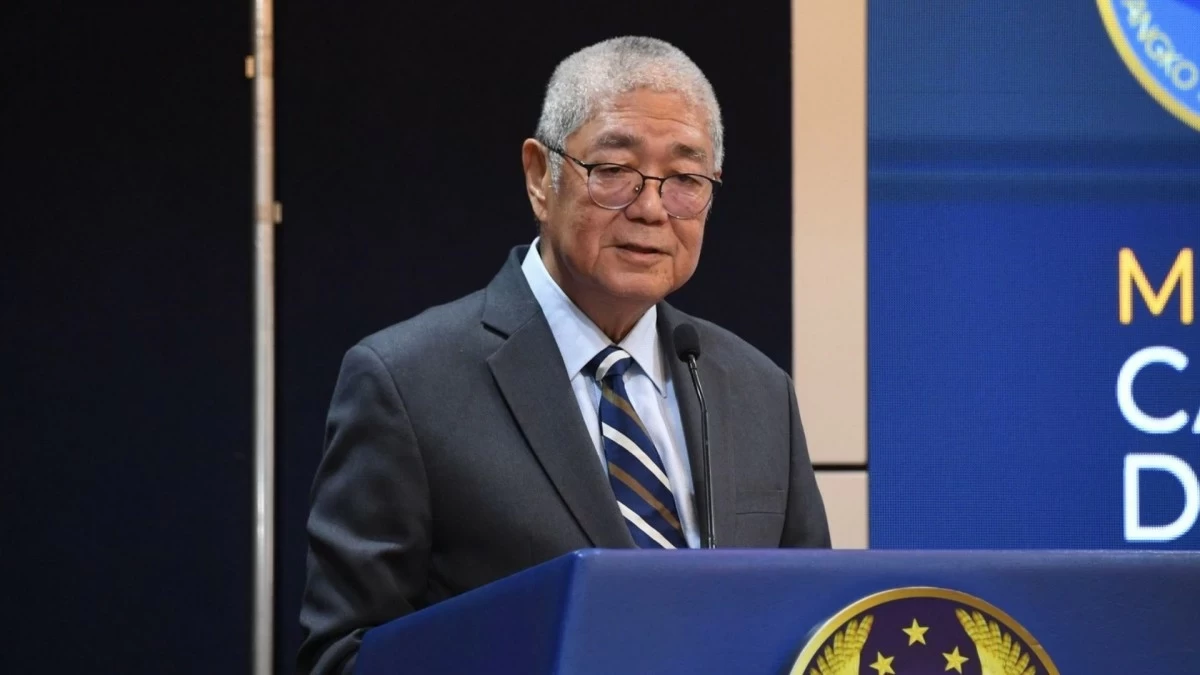
BSP Governor Eli M. Remolona Jr.
Even as the Philippine peso faces pressure from foreign fund outflows, the Bangko Sentral ng Pilipinas (BSP) refuses to defend the local currency unless its depreciation could lead to higher consumer prices.
According to the Bankers Association of the Philippines (BAP), the peso weakened by 28.5 centavos to the ₱58:$1 level on Thursday, Oct. 9, closing at ₱58.235 from ₱57.95 the previous Wednesday, October 8.
“There were a few days when the stock market was declining, and the peso was also declining in value. The peso was depreciating at the same time. Those were the episodes when we thought foreign investors were pulling out of the Philippines,” BSP Governor Eli M. Remolona Jr. told a press briefing.
“We’re not going to defend the peso against those flows. We will defend the peso when we think the depreciation is so sharp and so large that it could become inflationary,” Remolona said.
The local currency hit an intraday low of ₱58.32 and a high of ₱57.79, after opening at ₱57.875. Total trading volume declined to $1.922 billion from Wednesday’s $2.03 billion.
Rizal Commercial Banking Corp. chief economist Michael Ricafort said this peso slide followed the central bank’s surprise 25-basis-point (bp) rate cut to 4.75 percent, the lowest in three years.
MUFG Global Markets Research senior currency analyst Lloyd Chan said the recent depreciation of the Philippine peso has made the BSP more cautious about further policy easing.
The central bank’s policy-setting Monetary Board (MB) nonetheless proceeded with a 25-basis-point (bp) rate cut on Thursday, lowering the key interest rate to 4.75 percent.
Global investment banking giant Goldman Sachs earlier reported that the peso depreciated by around two percent in September following massive anti-corruption protests on Sept. 21.
To recall, the peso slipped to the ₱58:$1 level in September, closing the month at ₱58.17 from ₱57.12 in August.