ADVERTISEMENT

Marcos signs Expanded Philippine Science High School System Act

Published Oct 9, 2025 04:16 pm
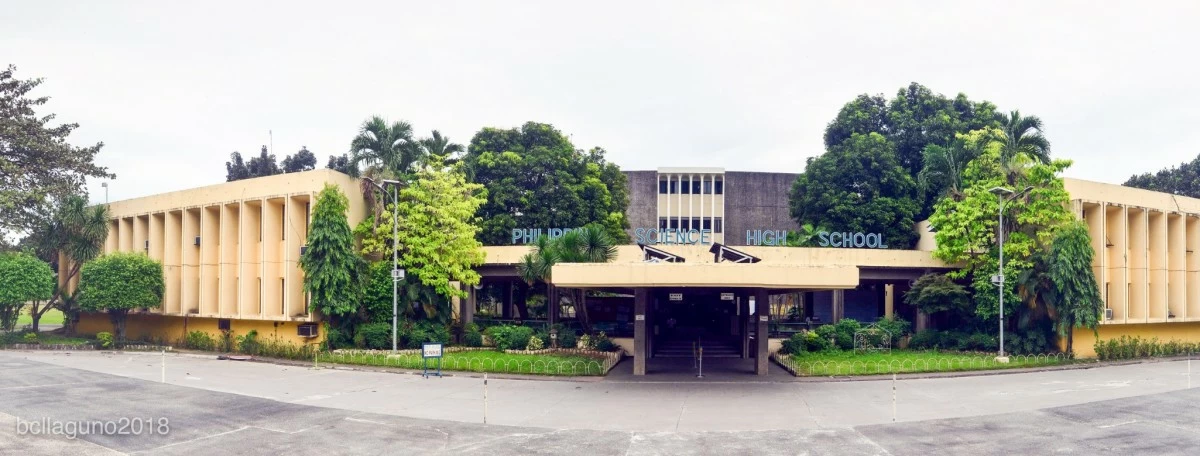
Philippine Science High School Main Campus
President Marcos has signed a law that aims to establish more Philippine Science high schools and increase the number of students pursuing Science, Technology, Engineering, and Mathematics (STEM) careers.
On Oct. 3, Marcos signed Republic Act (RA) No. 12310 or the “Expanded Philippine Science High School (PSHS) System Act,” further strengthening the governance and management of the country’s premier secondary science learning institution.
The new law provides for the establishment of additional PSHS campuses across the country to offer scholarship-based secondary education programs with special emphasis on Science, Technology, Engineering, and Mathematics (STEM) for students with exceptional aptitude in science and mathematics.
It sought to increase the number of high school graduates pursuing undergraduate studies or careers in STEM, ensure consistent quality standards and efficient operations in PSHS campuses, and support the holistic development of PSHS scholars, faculty, and staff.
“A PSHS System shall be established under the administrative supervision of the DOST (Department of Science and Technology) composed of at least two PSHS campuses in each administrative region of the country,” RA 12310 said.
PSHS campuses within the same region, however, shall not be situated in the same province or city in the case of the National Capital Region. The establishment of additional campuses will be subject to a comprehensive review conducted by the PSHS Board of Trustees.
PSHS currently has 16 campuses located in Quezon City, Baguio City, Ilocos Sur, Nueva Vizcaya, Clark Freeport Zone, Batangas City, Romblon, Camarines Sur, Iloilo City, Cebu, Leyte, Dipolog City, Lanao del Norte, Davao City, Koronadal City, and Butuan City.
The new law likewise mandated the establishment of an additional PSHS campus in the Negros Island Region.
For future campuses, the PSHS System Board of Trustees may consider the following locations: First District of Aklan; Polangui, Albay; Uba, Bohol; Laoag City, Ilocos Norte; Labangan Zamboanga del Sur; Third District of Cagayan; General Santos City, South Cotabato; and Bukidnon.
The PSHS Board of Trustees will serve as the highest policy- and decision-making body. It will be led by the DOST Secretary as ex officio chairperson and the Secretary of Education as ex officio vice chairperson.
Other board members include the President of the University of the Philippines, PSHS Executive Director, Director of the Science Education Institute, President of the PSHS National Alumni Association; Chairpersons of the Committees on Science and Technology of the Senate and the House of Representatives as ex officio members, and one representative each from the private sector representing higher education, child development professionals or practitioners, industry, agriculture, and new emerging technologies.
The private sector representatives will be appointed by the Board and will serve a term of four years.
The PSHS System will be headed by an Executive Director who will exercise academic and administrative supervision over all campuses and coordinate the implementation of policies and guidelines set by the Board of Trustees.
Supporting the Executive Director will be three Deputy Executive Directors who will be responsible for academic and student services, administration and finance, and research, innovation and linkages.
Meanwhile, each PSHS campus will be led by a Campus Director, tasked with overseeing day-to-day operations.
The Executive Director, Deputy Executive Directors and Campus Directors shall be appointed by the Board of Trustees for a term of six years and may be reappointed for another term of six years.
An Executive Committee will also be created, composed of the Executive Director (as chair), the Deputy Executive Directors, Campus Directors, and other senior PSHS officials or faculty appointed by the Board.
“The Executive Committee shall develop and conduct a periodic review the PSHS System curriculum and other training programs, and exercise such other functions, powers and duties as the Board may prescribe,” the law said.
The Philippine Science High School System was originally established through RA 3661, signed on June 22, 1963, with the goal of providing free scholarship-based secondary education with a strong focus on science, aimed at preparing students for careers in scientific fields.

Related Tags

Philippine Science High School RA 12310 Expanded Philippine Science High School System Act
ADVERTISEMENT
.most-popular .layout-ratio{ padding-bottom: 79.13%; } @media (min-width: 768px) and (max-width: 1024px) { .widget-title { font-size: 15px !important; } }

{{ articles_filter_1561_widget.title }}

.most-popular .layout-ratio{ padding-bottom: 79.13%; } @media (min-width: 768px) and (max-width: 1024px) { .widget-title { font-size: 15px !important; } }

{{ articles_filter_1562_widget.title }}

.most-popular .layout-ratio{ padding-bottom: 79.13%; } @media (min-width: 768px) and (max-width: 1024px) { .widget-title { font-size: 15px !important; } }

{{ articles_filter_1563_widget.title }}

{{ articles_filter_1564_widget.title }}

.mb-article-details { position: relative; } .mb-article-details .article-body-preview, .mb-article-details .article-body-summary{ font-size: 17px; line-height: 30px; font-family: "Libre Caslon Text", serif; color: #000; } .mb-article-details .article-body-preview iframe , .mb-article-details .article-body-summary iframe{ width: 100%; margin: auto; } .read-more-background { background: linear-gradient(180deg, color(display-p3 1.000 1.000 1.000 / 0) 13.75%, color(display-p3 1.000 1.000 1.000 / 0.8) 30.79%, color(display-p3 1.000 1.000 1.000) 72.5%); position: absolute; height: 200px; width: 100%; bottom: 0; display: flex; justify-content: center; align-items: center; padding: 0; } .read-more-background a{ color: #000; } .read-more-btn { padding: 17px 45px; font-family: Inter; font-weight: 700; font-size: 18px; line-height: 16px; text-align: center; vertical-align: middle; border: 1px solid black; background-color: white; } .hidden { display: none; }
function initializeAllSwipers() { // Get all hidden inputs with cms_article_id document.querySelectorAll('[id^="cms_article_id_"]').forEach(function (input) { const cmsArticleId = input.value; const articleSelector = '#article-' + cmsArticleId + ' .body_images'; const swiperElement = document.querySelector(articleSelector); if (swiperElement && !swiperElement.classList.contains('swiper-initialized')) { new Swiper(articleSelector, { loop: true, pagination: false, navigation: { nextEl: '#article-' + cmsArticleId + ' .swiper-button-next', prevEl: '#article-' + cmsArticleId + ' .swiper-button-prev', }, }); } }); } setTimeout(initializeAllSwipers, 3000); const intersectionObserver = new IntersectionObserver( (entries) => { entries.forEach((entry) => { if (entry.isIntersecting) { const newUrl = entry.target.getAttribute("data-url"); if (newUrl) { history.pushState(null, null, newUrl); let article = entry.target; // Extract metadata const author = article.querySelector('.author-section').textContent.replace('By', '').trim(); const section = article.querySelector('.section-info ').textContent.replace(' ', ' '); const title = article.querySelector('.article-title h1').textContent; // Parse URL for Chartbeat path format const parsedUrl = new URL(newUrl, window.location.origin); const cleanUrl = parsedUrl.host + parsedUrl.pathname; // Update Chartbeat configuration if (typeof window._sf_async_config !== 'undefined') { window._sf_async_config.path = cleanUrl; window._sf_async_config.sections = section; window._sf_async_config.authors = author; } // Track virtual page view with Chartbeat if (typeof pSUPERFLY !== 'undefined' && typeof pSUPERFLY.virtualPage === 'function') { try { pSUPERFLY.virtualPage({ path: cleanUrl, title: title, sections: section, authors: author }); } catch (error) { console.error('ping error', error); } } // Optional: Update document title if (title && title !== document.title) { document.title = title; } } } }); }, { threshold: 0.1 } ); function showArticleBody(button) { const article = button.closest("article"); const summary = article.querySelector(".article-body-summary"); const body = article.querySelector(".article-body-preview"); const readMoreSection = article.querySelector(".read-more-background"); // Hide summary and read-more section summary.style.display = "none"; readMoreSection.style.display = "none"; // Show the full article body body.classList.remove("hidden"); } document.addEventListener("DOMContentLoaded", () => { let loadCount = 0; // Track how many times articles are loaded const offset = [1, 2, 3, 4, 5, 6, 7, 8, 9, 10]; // Offset values const currentUrl = window.location.pathname.substring(1); let isLoading = false; // Prevent multiple calls if (!currentUrl) { console.log("Current URL is invalid."); return; } const sentinel = document.getElementById("load-more-sentinel"); if (!sentinel) { console.log("Sentinel element not found."); return; } function isSentinelVisible() { const rect = sentinel.getBoundingClientRect(); return ( rect.top < window.innerHeight && rect.bottom >= 0 ); } function onScroll() { if (isLoading) return; if (isSentinelVisible()) { if (loadCount >= offset.length) { console.log("Maximum load attempts reached."); window.removeEventListener("scroll", onScroll); return; } isLoading = true; const currentOffset = offset[loadCount]; window.loadMoreItems().then(() => { let article = document.querySelector('#widget_1690 > div:nth-last-of-type(2) article'); intersectionObserver.observe(article) loadCount++; }).catch(error => { console.error("Error loading more items:", error); }).finally(() => { isLoading = false; }); } } window.addEventListener("scroll", onScroll); });

Sign up by email to receive news.