






Manila Bulletin
 Business
The Economy
DEPDev chief Balisacan: ICC process streamlined, review of big-ticket projects made more robust
Business
The Economy
DEPDev chief Balisacan: ICC process streamlined, review of big-ticket projects made more robust
Business
The Economy
DEPDev chief Balisacan: ICC process streamlined, review of big-ticket projects made more robust
DEPDev chief Balisacan: ICC process streamlined, review of big-ticket projects made more robust
Published Oct 9, 2025 05:35 pm


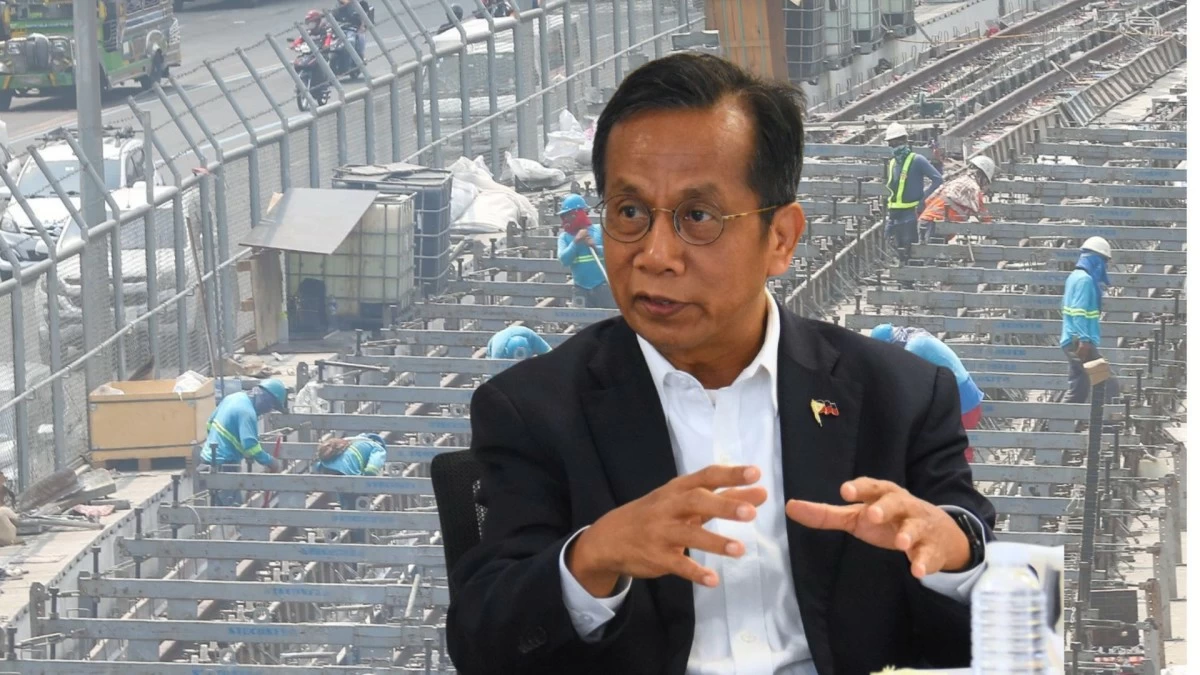
The Department of Economy, Planning, and Development (DEPDev) has issued updated guidelines for the evaluation and approval of major government programs and projects (PAPs) by the interagency Investment Coordination Committee (ICC), streamlining procedures while strengthening the rigor of review and monitoring.
“The changes in the guidelines are intended to further streamline our processes, while ensuring a more robust review and monitoring and evaluation (M&E) of projects,” DEPDev Secretary Arsenio Balisacan, who co-chairs the Cabinet-level ICC, told Manila Bulletin last Tuesday, Oct. 7.
Earlier, the Economy and Development (ED) Council—the highest approving body for government investments chaired by President Ferdinand R. Marcos Jr.—adopted revised procedures governing projects that require the council’s or the ICC’s action.
These updated guidelines apply to both new and ongoing PAPs, whether locally funded or foreign-assisted. The ICC, co-chaired by DEPDev and the Department of Finance (DOF), remains the main interagency body that vets the technical, financial, and policy aspects of investment proposals, according to documents seen by Manila Bulletin.
The higher cost threshold for locally funded projects for review by both the ED Council and the ICC, now at ₱5 billion from ₱2.5 billion previously, “takes into account inflation and the profile of projects that come to the ICC for approval,” Balisacan explained.
Prior to this, the threshold was last adjusted in 2017. The new ceiling effectively limits full-scale ICC and ED Council review to large-scale or complex undertakings, allowing smaller agencies to process mid-sized projects more efficiently.
According to the 14-page guidelines, agencies seeking approval for new PAPs must submit a standardized package of documents that will serve as the basis for ICC evaluation.
These include a feasibility (F/S) study with data not older than three years; a formal endorsement letter from the head of the implementing or parent agency; duly accomplished ICC project evaluation (PE), across eight forms covering financial, economic, and gender-responsiveness analyses; proof of inclusion in the public investment program (PIP) via the online PIPOL system; a comprehensive M&E plan consistent with the national evaluation policy (NEP) framework; a DOF review for projects undertaken by government-owned and/or -controlled corporations (GOCC) and government financial institutions (GFIs) to determine fiscal impact; Regional Development Council (RDC) endorsement or proof of application for such endorsement; as well as various environmental and social safeguard documents.
According to the revised guidelines, these detailed requirements ensure that only well-designed, properly costed, and environmentally sound projects move forward to ICC-Technical Board (TB) and ICC-Cabinet Committee (CC) review.
In this regard, proponents are required to file submissions at least six months before the target approval date, while the ICC Secretariat must complete its technical assessment within 30 working days after confirming completeness of documents.
To ensure discipline and avoid administrative backlogs, agencies that fail to respond to ICC comments within three months risk having their proposals delisted from the investment programming and appraisal monitor (IPAM).
Budget Secretary Amenah F. Pangandaman confirmed to Manila Bulletin last Monday, Oct. 6, that inclusion in the PIP is a new requirement for infrastructure flagship projects (IFPs) seeking ICC approval.
“Because in the recent past, some of these IFPs are not listed in the PIP,” Pangandaman noted.
The six-year PIP, updated annually ahead of each budget cycle, contains the rolling list of priority PAPs to be implemented by the national government (NG), GOCCs, and other national government offices during the medium term, coinciding with the current President’s term in office.
As Manila Bulletin reported earlier, the latest update to the PIP 2023-2028, as of March 2025, showed that 55 government offices and 225 attached agencies are seeking funding of as much as ₱19.7 trillion for 5,538 PAPs deemed priorities of the Marcos Jr. administration.
For the 2026 national budget proposal capped at ₱6.793 trillion, DEPDev had pitched to include 4,240 PAPs, with an investment requirement totaling about ₱4.71 trillion.
Just like for new PAPs, comprehensive standards also apply to ongoing PAPs that seek changes in scope, cost, implementation period, or financing through the ICC.
For instance, agencies requesting cost changes must submit updated loan allocation tables, revised disbursement schedules, and corresponding DOF reviews to validate fiscal sustainability.
Implementation extensions require explanations for delays, certifications of no cost increase, and detailed catch-up plans, documents showed.
The revised framework also institutionalizes active project oversight through an alert mechanism tool, which enables DEPDev to track progress, identify bottlenecks, and ensure that approved projects remain aligned with ICC directives.
This complements a more frequent meeting schedule—bi-monthly for the ICC-TB and monthly for the ICC-CC, with provisions for ad referendum actions—allowing faster decision-making and more timely policy feedback for major investments.
The new structure also strengthens coordination between the ICC-CC, the ICC-TB, and DEPDev’s ICC Secretariat, which acts as the technical and administrative hub for project review. The ICC-TB conducts the initial in-depth assessment, while the ICC-CC provides policy-level guidance and recommendations for ED Council approval.
In a statement last Oct. 6, DEPDev said the ED Council last Oct. 2 approved the updated ICC guidelines to ensure faster and more coordinated review of high-value public investments.
The revised policy also expands ICC coverage to include public-private partnership (PPP) projects and institutionalizes the ICC’s mandatory review of all foreign loan-assisted projects, regardless of total cost or loan amount, while excluding grant-assisted projects, which will be reviewed directly by DEPDev.
The new framework likewise aims to promote discipline among implementing agencies by requiring well-prepared, strategically aligned proposals backed by complete F/S, M&E plans, and fiscal impact assessments.
“As we work to ensure that every peso invested by the government delivers maximum value for Filipinos, streamlining the ICC process and clarifying its scope will make project evaluation more rigorous while minimizing delays,” said Balisacan, who is also ED Council vice-chair.
(With a report from Ricardo M. Austria)