






Manila Bulletin
 Philippines
National
DENR czar urges greater global support for climate-vulnerable nations
Philippines
National
DENR czar urges greater global support for climate-vulnerable nations
Philippines
National
DENR czar urges greater global support for climate-vulnerable nations
DENR czar urges greater global support for climate-vulnerable nations
By Jel Santos
Published Oct 9, 2025 01:45 pm


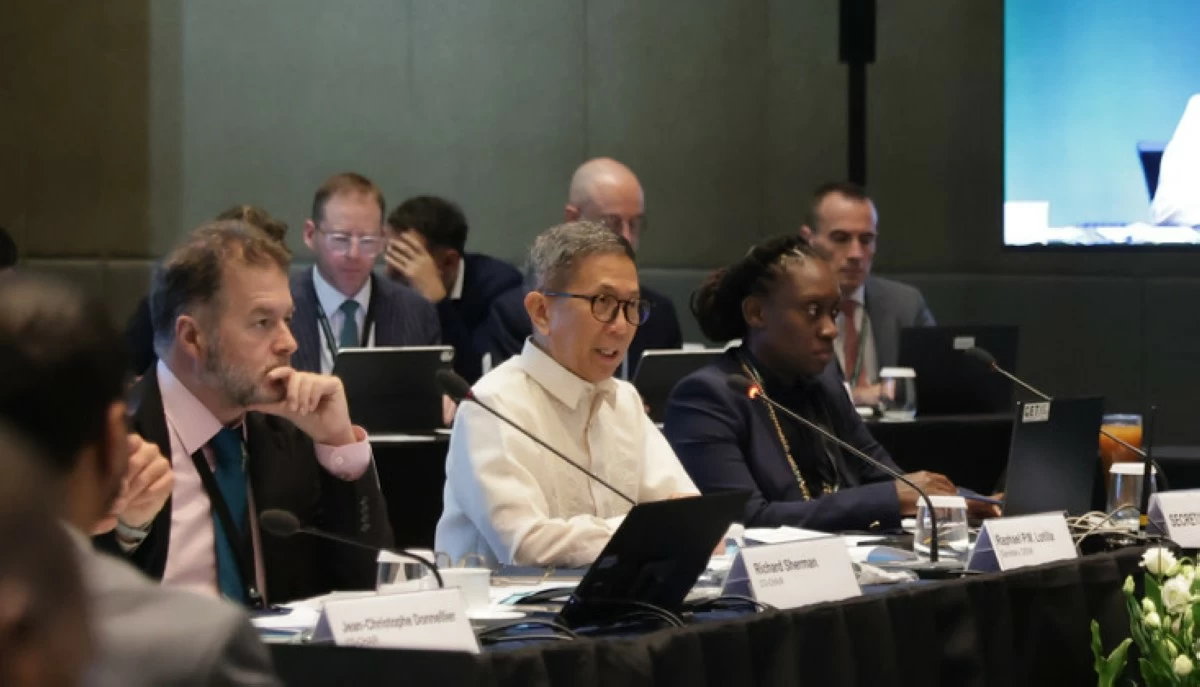
(DENR PHOTO)
Department of Environment and Natural Resources (DENR) Secretary Raphael Lotilla has called on the international community to scale up financial support for climate-vulnerable nations as he opened the 7th Meeting of the Board of the Fund for Responding to Loss and Damage (FrLD).
Addressing the 26-member FrLD Board in Pasay City on Monday, Oct. 7, Lotilla underscored that the Fund’s effectiveness will determine the survival and resilience of many nations already bearing the brunt of climate change.
“The ability of the Fund to deliver depends on its capitalization,” Lotilla said.
He noted that while pledges made so far are “encouraging,” they remain “a fraction of the US$200–400 billion in loss and damage projected annually by 2030.”
The DENR chief urged the Board to broaden and strengthen the Fund’s financial base, stressing that resources must be “commensurate with the scale of needs, predictable in availability, and responsive to the urgency of loss and damage.”
Lotilla also called for clearer mechanisms for access and implementation, particularly the operationalization of the Barbados Implementation Modalities, a framework ensuring that support is accessible, timely, and country-driven.
“The credibility of the Fund will rest on how quickly and effectively it can move resources where they are most urgently needed,” he said.
He added that a long-term resource mobilization strategy is indispensable, saying such a plan would provide “the stability and predictability needed to operate at scale” while diversifying financing sources.
“The world looks to this Fund with great expectation,” said Lotilla. “The Manila meeting must result in a Fund that is adequately resourced, fully operational, and effective where it matters most.”
The Philippines, among the world’s most climate-vulnerable nations, earlier secured a seat on the FrLD Board and has been instrumental in shaping its operational frameworks and priorities.
In July 2024, the country was selected as the host of the FrLD Board, leading to the passage of a law granting juridical personality to the Fund’s Board in the Philippines.
Lotilla reaffirmed the country’s commitment to effectively hosting the Board and working with member nations to advance the Fund’s mission.
“With this mandate, the Philippines now plays a central role in global efforts to turn the Fund into a working instrument of climate justice,” he said.
Private sector backs higher climate ambition
In parallel with government and multilateral initiatives, the private sector is ramping up efforts to cut emissions and strengthen resilience.
Unilever Philippines, one of the inaugural members of the Net Zero Carbon Alliance (NZCA), is answering the call for higher climate ambition through its Climate Transition Action Plan (CTAP), a science-based roadmap to reduce greenhouse-gas (GHG) emissions across its operations and value chain.
“Climate goals are ambitious, and with limited time and resources, the urgency to act has never been more pressing for the Philippines. Inaction risks lives, livelihoods, and long-term economic stability,” the company said in its statement at the Philippine Net Zero Conference 2025.
Since launching CTAP in 2021, Unilever said it has achieved significant reductions in operational emissions and laid foundations to decarbonize its value chain.
“That was the benefit of early action,” Rondell Torres, Unilever Sustainability Lead for the Philippines and Greater Asia, stated.
“In 2020, we fully fulfilled a key action in our Climate Transition Action Plan by completing the shift to renewable grid electricity for our operations. But then the next question was: What about our value chain?”
Through its partnership with First Gen Corporation, Unilever said it completed its transition to 100 percent geothermal power in 2020 and set its ambition to achieve net-zero emissions across its value chain by 2039, aligning its corporate sustainability goals with the Philippines’ broader push for climate justice and low-carbon development.