






Manila Bulletin
 Business
The Economy
Corruption scandal unrest likely to have limited impact on Philippine economy, says think tank
Business
The Economy
Corruption scandal unrest likely to have limited impact on Philippine economy, says think tank
Business
The Economy
Corruption scandal unrest likely to have limited impact on Philippine economy, says think tank
Corruption scandal unrest likely to have limited impact on Philippine economy, says think tank
Published Oct 9, 2025 04:29 pm


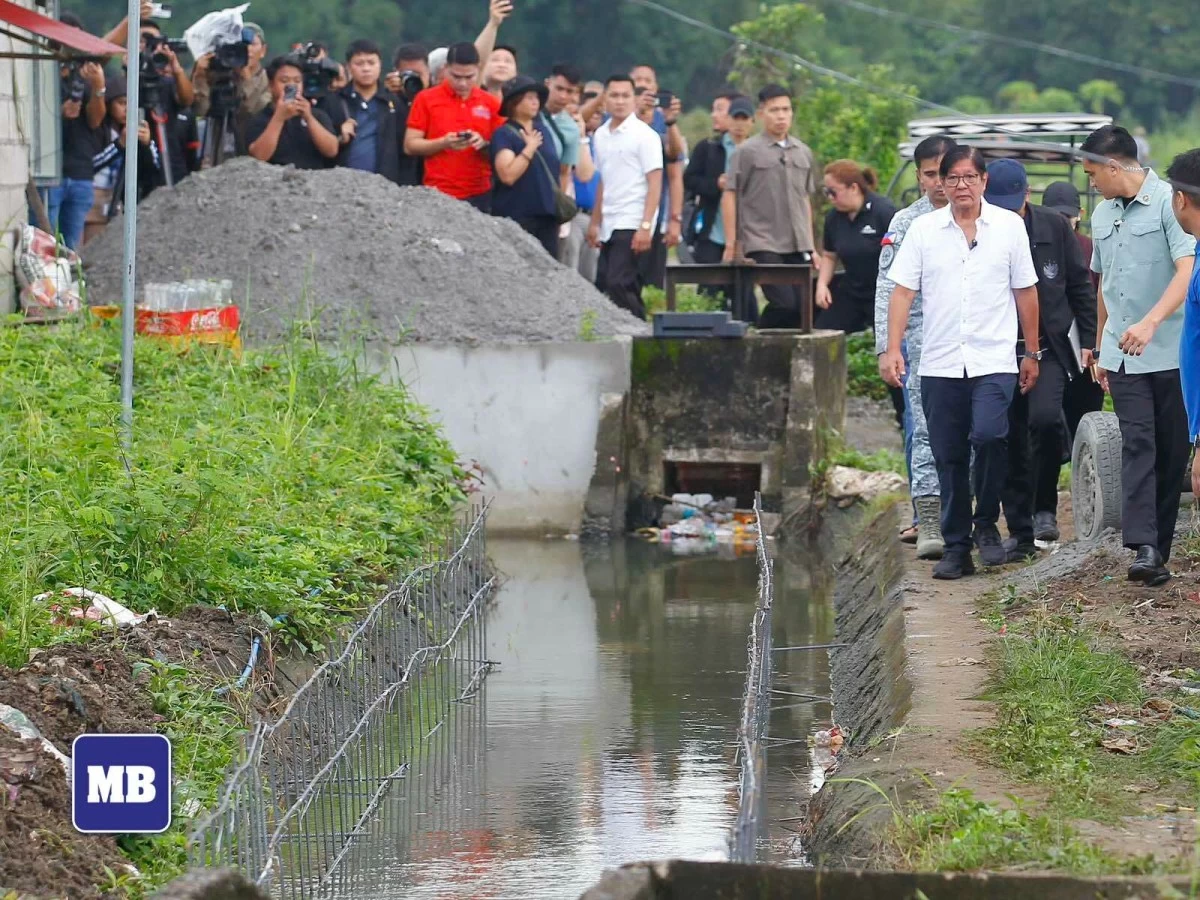
President Ferdinand R. Marcos Jr. leads the inspection of a riverwall in Barangay Piel, Baliuag, Bulacan which was tagged as a 'ghost project.' (Mark Balmores)
Despite the corruption scandal surrounding flood control projects and the possibility of further unrest in the coming months, the economic impact on the Philippines is expected to remain limited, according to think tank Capital Economics.
In an Oct. 8 report, Capital Economics deputy chief emerging markets (EMs) economist Jason Tuvey noted that while additional unrest could occur, it is unlikely to cause significant harm to the economy as long as it remains small and short-lived.
Economic and financial market effects are likely to be contained if any unrest is limited in scale and duration, the report said, adding that there is unlikely to be a lasting impact on gross domestic product (GDP).
The think tank noted that looser fiscal policy is not a major concern, with public debt, as measured by general government (GG) debt, below 60 percent of GDP and financial risks contained.
However, the widening current account deficit—now at about four percent of GDP—leaves the peso vulnerable if investor confidence weakens.
It also added that limited evidence indicates recent protests may have dampened economic activity in the Philippines, as the purchasing managers’ index (PMI) dropped sharply in July and remained below 50 in August. Retail and tourism could be affected—or even the broader economy—if key industries go on strike.
“A lot will depend on the government’s response to any further unrest,” Capital Economics warned. “The bigger risk is that, similar to Indonesia, the government turns to populist policies in a bid to appease protesters, resulting in higher risk premia on Filipino assets. The large current account deficit leaves the peso particularly vulnerable to downward pressure.”
The think tank highlighted that the Philippines has recently been shaken by a corruption scandal involving flood control projects, noting that “allegations of foul play around the projects have lingered for some time.”
It also added that protest organizers plan to hold more demonstrations on Nov. 30, which they describe as “louder.”
The think tank pointed out that following the severe floods in Luzon, including in the capital Manila, President Ferdinand R. Marcos Jr. used his annual State of the Nation Address (SONA) in July to promise a crackdown on corruption.
“Corruption is, of course, nothing new in the Philippines,” the think tank remarked, highlighting that the President’s parents, former President Ferdinand E. Marcos Sr. and Imelda Marcos, engaged in extensive corruption during their time in office from 1965 to 1986, earning them a Guinness world record for the “greatest robbery of a government.”
The think tank said, “Corruption is not an easy thing to measure and the indicators that are available give different messages on the scale of graft in the Philippines,” noting that while the country ranks low on Transparency International’s corruption perceptions index, the World Bank’s (WB) 2023 enterprise survey shows only eight percent of firms faced bribery requests—lower than elsewhere in Asia and in past years.
Capital Economics also noted that corruption affects firms, households, and the government by increasing costs, discouraging investment and entrepreneurial activity, and making public projects more expensive than necessary. In some cases, it also results in poor-quality infrastructure, such as in several flood control projects.
At the macro level, Capital Economics emphasized that corruption results in reduced investment, inefficient use of resources, and slower GDP growth than the country might otherwise attain.
“This was certainly evident in the Philippines prior to President [Benigno] Aquino [III] taking office in 2010. While many other factors were also at play, between 1980 and 2009, investment in the Philippines was much lower than in its peers in the region, at less than 20 percent of GDP. That resulted in poor infrastructure and, over the same period, real GDP per capita growth was the weakest in the region at less than one percent per annum,” Capital Economics added.
The think tank further noted that over the past 10 years, efforts to reduce corruption, according to the WB’s survey, have gone hand in hand with rising investment in the Philippines. This has led to significant improvements in the country’s road, rail, port, and digital infrastructure, along with stronger GDP per capita growth.
It added that, along with the ongoing investigation into the flood control projects, the Marcos Jr. administration has reformed the Bureau of Customs (BOC) and strengthened procurement laws.
However, concerns remain over the abolition of the Presidential Anti-Corruption Commission (PACC) and the lack of transparency in the recently established sovereign wealth fund (SWF) Maharlika Investment Corp. (MIC).
(Ricardo M. Austria)