






Manila Bulletin
 Business
Banking & Finance
Rice import ban may slash gov't revenues by up to ₱12 billion—BOC
Business
Banking & Finance
Rice import ban may slash gov't revenues by up to ₱12 billion—BOC
Business
Banking & Finance
Rice import ban may slash gov't revenues by up to ₱12 billion—BOC
Rice import ban may slash gov't revenues by up to ₱12 billion—BOC
By Derco Rosal
Published Oct 8, 2025 02:29 pm


At A Glance
- Bureau of Customs (BOC) Commissioner Ariel Nepomuceno said the government's foregone revenues from the implementation of the rice import ban could reach as much as ₱12 billion if the proposed one-month extension to the existing 60-day ban is approved.
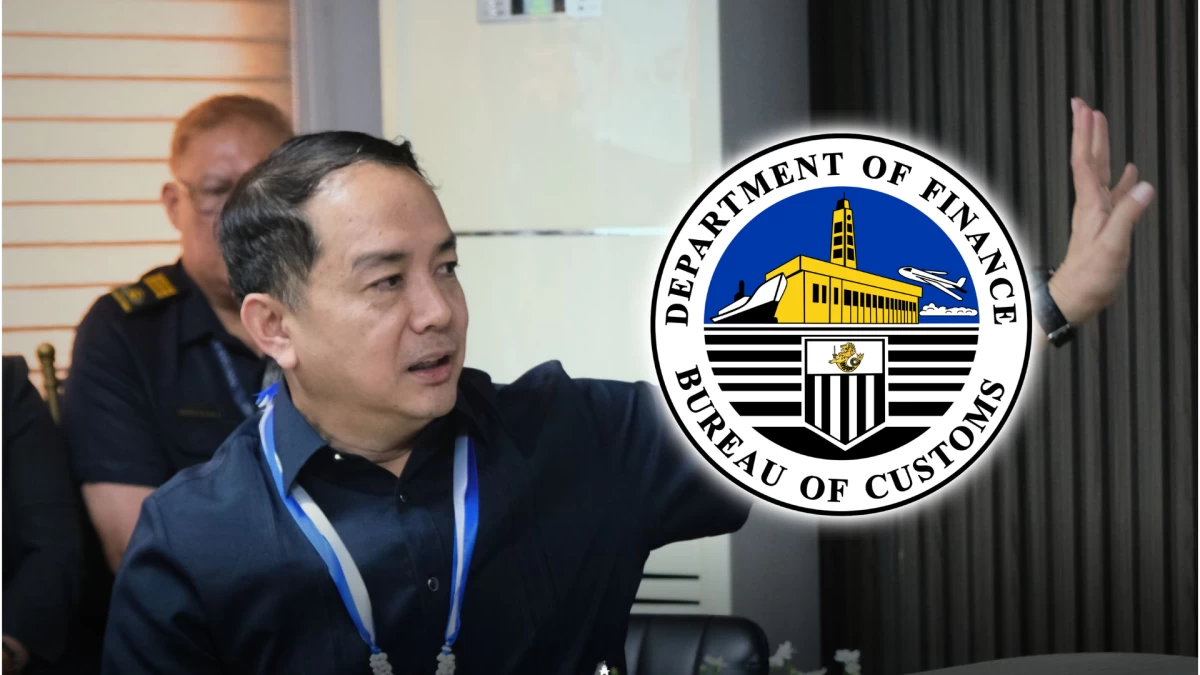
Bureau of Customs (BOC) Commissioner Ariel Nepomuceno said the government’s forgone revenues from the implementation of the rice import ban could reach as much as ₱12 billion if the proposed one-month extension to the ongoing 60-day suspension is approved.
“Our forgone revenues, assuming a 60-day period—though it might extend to 90 days, with a proposal to last until the end of the year—would amount to ₱6 billion to ₱8 billion over those two months,” Nepomuceno told reporters on the sidelines of the Federation of Philippine Industries Inc.’s (FPI) Business Summit 2025 on Wednesday, Oct. 8.
This translates to an average of ₱3 billion to ₱4 billion per month, which is projected to reach ₱12 billion by the end of the ban.
The latest data from the Bureau of the Treasury (BTr) showed that the BOC collected ₱621.4 billion from January to August, 1.1-percent higher than last year’s ₱614.4 billion.
However, based on the Cabinet-level Development Budget Coordination Committee’s (DBCC) 2025 Midyear Report published on Sept. 30, there were significant declines in the BOC’s collections of non-oil import duties as of end-June.
In particular, revenues from non-oil import tariffs fell by 22.3 percent to ₱45.9 billion in the first semester from ₱59 billion a year ago.
Further, while the 12-percent value-added tax (VAT) drove the agency’s revenues during the period, VAT on oil products also dropped by 10.2 percent to ₱60.6 billion from ₱67.4 billion a year earlier.
Meanwhile, Nepomuceno said it would sound like a joke to promise that smuggling will end under his leadership, “but I can definitely assure everyone that smuggling will be very difficult during my time.”
Among the efforts the BOC is undertaking to make this possible is the full digitalization of the agency’s processes. “Other countries are already doing that—we don’t have to invent this. Technologies are available for us to just adopt,” he said.
According to the BOC chief, the full digitalization effort will take around one and a half years. Given that the BOC has not secured a budget for digitalization for next year, Nepomuceno said they are looking to partner with private entities to finance its transition to fully digitalized processes.
This move aims to enhance transparency, curb corruption, and improve trade facilitation. “We will just have to make sure that the minimum capabilities and features of a fully digitalized processing system will be there,” he said.
The new customs processing system (CPS) will cover end-to-end automation—from digital submission of import entries and online assessments to payment and release of shipments.
Nepomuceno said the system aims to eliminate manual intervention and reduce opportunities for tampering, ensuring faster, more accurate, and accountable transactions.
Beyond CPS, the BOC also plans to deploy advanced technologies such as x-ray scanners, smart CCTVs, and a central operations monitoring hub to strengthen border control and detect smuggling.
The digital overhaul will be complemented by measures such as pre-shipment inspections, risk management analytics, and a forthcoming tracking app that will allow importers to monitor their shipments in real time.
Flood control probe
In a related development, Nepomuceno said the BOC has already submitted documents pertinent to the Independent Commission for Infrastructure’s (ICI) ongoing probe into alleged irregularities in flood-control projects and other related cases, including those involving the Discaya family.
Among the submitted documents are enforcement reports, copies of search warrants and warrants of seizure and detention (WSD), lists of importation records, and progress reports related to ongoing investigations.
Nepomuceno said the BOC “fully supports” ICI’s efforts to establish the facts in all pending inquiries.
He also ordered all concerned BOC offices to fully cooperate with ICI and other investigating agencies to ensure a fair and thorough evidence-based review process.