






Manila Bulletin
 Business
The Economy
Foreign banks see BSP's next rate cut in December after inflation hits six-month high
Business
The Economy
Foreign banks see BSP's next rate cut in December after inflation hits six-month high
Business
The Economy
Foreign banks see BSP's next rate cut in December after inflation hits six-month high
Foreign banks see BSP's next rate cut in December after inflation hits six-month high
By Derco Rosal
Published Oct 8, 2025 12:47 pm
|
Updated Oct 8, 2025 01:29 pm


At A Glance
- Foreign banking giants anticipate a pause in the Bangko Sentral ng Pilipinas' (BSP) easing cycle on Thursday, citing the latest inflation print, which accelerated to its highest level in six months.
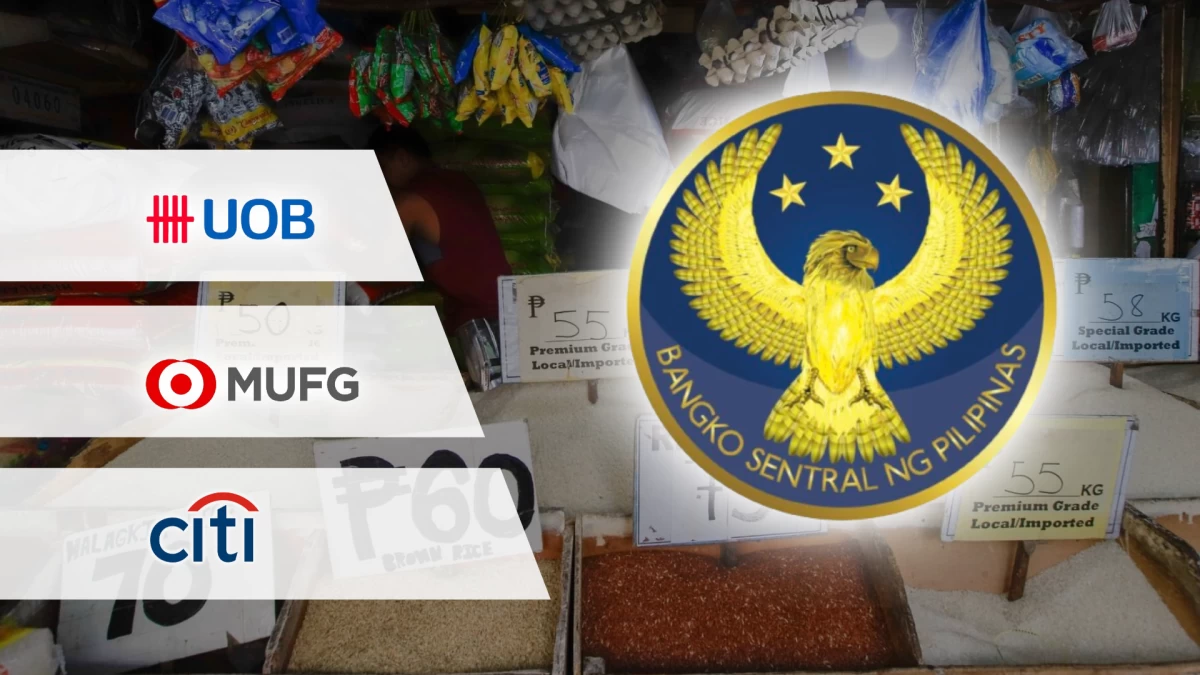
Foreign banking giants anticipate a pause in the Bangko Sentral ng Pilipinas’ (BSP) easing cycle on Thursday, Oct. 9, citing the latest inflation print, which accelerated to its highest level in six months.
United Overseas Bank (UOB) senior economist Julia Goh and economist Loke Siew Ting said in an Oct. 7 commentary that the September inflation rate of 1.7 percent provides the central bank “with scope to pause at the upcoming Monetary Board (MB) meeting.”
Their expectation comes against the backdrop of three interest rate cuts so far this year, which brought the policy rate down to five percent in August.
Singapore-based UOB argued that a pause will “allow the BSP to assess the cumulative impact of prior monetary policy actions on the domestic economy while continuing to monitor external developments.”
Japanese financial giant MUFG Bank Ltd., agreeing with UOB’s expectation, said in an Oct. 8 report that the central bank still has room for one more reduction in December as inflation is expected to remain subdued.
The BSP expects average inflation to fall below two percent in 2025, “primarily due to the easing of rice prices in previous months.” However, it also warned that the United States’ (US) protectionist policies could hurt the local economy.
MUFG Global Markets Research senior currency analyst Michael Wan said the BSP’s monetary policy direction for 2025 is “partially clouded by recent moves by the government to extend bans on rice imports.” The duration of the ban originally stretched for two months, from Sept. 1 to Nov. 2.
However, given the spending slowdown caused by the ongoing flood control corruption controversy, the country’s gross domestic product (GDP) growth could be affected, potentially leading to below-potential performance.
As such, Wan’s outlook by the second quarter of next year includes “at least” one more easing to 4.5 percent.
UOB’s less dovish outlook points to the key borrowing cost remaining steady at 4.75 percent following an expected easing resumption in December. It said these expectations are “backed by a modest inflation outlook and prevailing downside risks to growth.”
Similarly, Citi expects that “growth concerns could eventually resurface, leading to a cut before the end of the year,” concurring with the expectation of a pause on Thursday and a resumption in December.
“Philippine peso underperformance, and its potential inflation impact, may also be an additional hurdle to cut,” Citi noted in an Oct. 8 report.
In terms of price movement, Citi expects headline inflation to move sideways between 1.3 and two percent until the first quarter of 2026, before picking up to around three to 3.5 percent by end-2026.
Taking into account the expected one more rate cut by year-end, Citi anticipates the BSP to lower rates twice more by early next year.