

ADVERTISEMENT

DTI: Philippines must brace for influx of dumped goods

Published Oct 8, 2025 03:32 pm

At A Glance

  • Department of Trade and Industry (DTI) Secretary Cristina Roque said the government expects massive dumping happening soon due to the challenging trade environment caused by the United States (US).
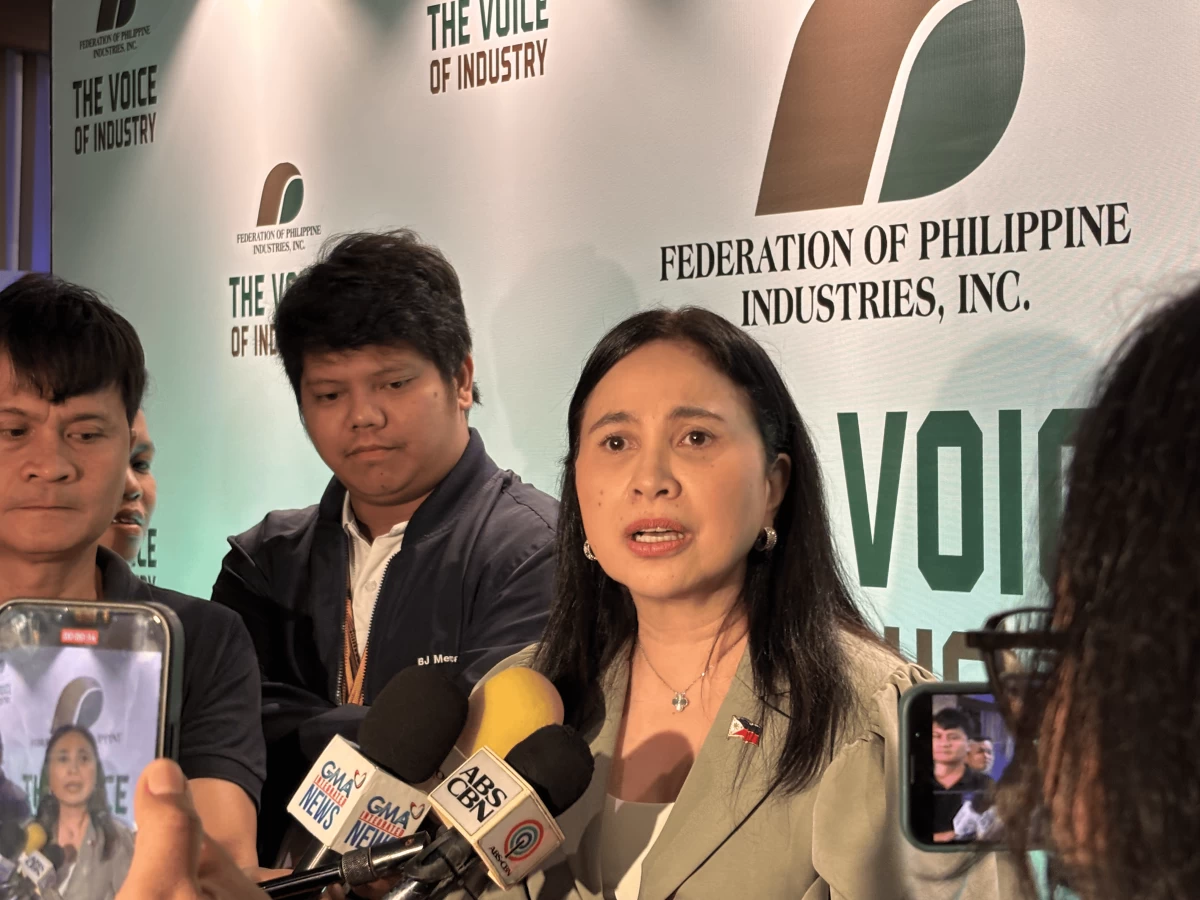
Trade Secretary Cristina Roque
Department of Trade and Industry (DTI) Secretary Cristina Roque said the government expects massive dumping to happen soon due to the challenging trade environment caused by the United States’ (US) tariffs.
“A lot of dumping is expected to happen, especially since the tariffs of the US are a bit challenging,” Reque said during the Federation of Philippine Industries Inc. (FPI) Business Summit 2025 on Wednesday, Oct. 8.
In trade, dumping refers to the practice of a country or company exporting goods to another country at prices lower than their normal value, typically below the cost of production or below the price charged in the domestic market.
It is often done to gain market share in the importing country, undercut local producers, or dispose of surplus goods.
Dumping is viewed as unfair trade under World Trade Organization (WTO) rules.
The importing country can impose anti-dumping duties, a form of special tariffs, to protect its local industries from injury caused by dumped imports.
“So we are expecting a lot of goods to be brought in, such as goods from China, Vietnam, and many other countries,” Roque further said. She told reporters that even at present, several goods are being dumped into the country.
Garments, school supplies, cement, substandard steel, and Christmas lights are among the products seen to be dumped into the Philippines amid the shifting trade environment.
As such, Roque is tapping the Bureau of Customs (BOC) to work closely with the DTI to put in place protectionist measures.
“I hope we can work together closely, Commissioner, to at least protect Philippine industries,” Roque told BOC Commissioner Ariel F. Nepomuceno, who, in response, committed to strengthening the BOC’s existing measures and introducing more efficient goods movement.
“We will really tighten [our efforts against] the usual problem of misdeclarations. Whatever the content should be, that is what we should see in the document. So that’s a big deterrent [to smuggling]—monitoring closely against misdeclared imported items,” Nepomuceno told reporters.
For its part, Roque said the DTI is focused on granting licenses only to legitimate construction firms, emphasizing the need to protect compliant companies that provide employment opportunities.
“We need to protect the manufacturing industry of the Philippines,” Roque said.
Nepomuceno further said that the approach to addressing the possibility of dumping and smuggling goods into the country should be tied back to digitalization. “Digital solutions are the main component to make sure smuggling won’t happen.”
According to the Customs chief, the full digitalization effort is expected to take around one and a half years. Given that the BOC has not secured a budget for digitalization for next year, Nepomuceno said they are looking to partner with private entities to finance its transition to fully digitalized processes.
This transition involves the creation of a new customs processing system (CPS), which will encompass end-to-end automation—from the digital submission of import entries and online assessments to payment and shipment release.
He stated that the system aims to eliminate manual intervention and reduce opportunities for tampering, thereby ensuring faster, more accurate, and accountable transactions.

Related Tags

Department of Trade and Industry (DTI) Trade Secretary Cristina Roque
ADVERTISEMENT
.most-popular .layout-ratio{ padding-bottom: 79.13%; } @media (min-width: 768px) and (max-width: 1024px) { .widget-title { font-size: 15px !important; } }

{{ articles_filter_1561_widget.title }}

.most-popular .layout-ratio{ padding-bottom: 79.13%; } @media (min-width: 768px) and (max-width: 1024px) { .widget-title { font-size: 15px !important; } }

{{ articles_filter_1562_widget.title }}

.most-popular .layout-ratio{ padding-bottom: 79.13%; } @media (min-width: 768px) and (max-width: 1024px) { .widget-title { font-size: 15px !important; } }

{{ articles_filter_1563_widget.title }}

{{ articles_filter_1564_widget.title }}

.mb-article-details { position: relative; } .mb-article-details .article-body-preview, .mb-article-details .article-body-summary{ font-size: 17px; line-height: 30px; font-family: "Libre Caslon Text", serif; color: #000; } .mb-article-details .article-body-preview iframe , .mb-article-details .article-body-summary iframe{ width: 100%; margin: auto; } .read-more-background { background: linear-gradient(180deg, color(display-p3 1.000 1.000 1.000 / 0) 13.75%, color(display-p3 1.000 1.000 1.000 / 0.8) 30.79%, color(display-p3 1.000 1.000 1.000) 72.5%); position: absolute; height: 200px; width: 100%; bottom: 0; display: flex; justify-content: center; align-items: center; padding: 0; } .read-more-background a{ color: #000; } .read-more-btn { padding: 17px 45px; font-family: Inter; font-weight: 700; font-size: 18px; line-height: 16px; text-align: center; vertical-align: middle; border: 1px solid black; background-color: white; } .hidden { display: none; }
function initializeAllSwipers() { // Get all hidden inputs with cms_article_id document.querySelectorAll('[id^="cms_article_id_"]').forEach(function (input) { const cmsArticleId = input.value; const articleSelector = '#article-' + cmsArticleId + ' .body_images'; const swiperElement = document.querySelector(articleSelector); if (swiperElement && !swiperElement.classList.contains('swiper-initialized')) { new Swiper(articleSelector, { loop: true, pagination: false, navigation: { nextEl: '#article-' + cmsArticleId + ' .swiper-button-next', prevEl: '#article-' + cmsArticleId + ' .swiper-button-prev', }, }); } }); } setTimeout(initializeAllSwipers, 3000); const intersectionObserver = new IntersectionObserver( (entries) => { entries.forEach((entry) => { if (entry.isIntersecting) { const newUrl = entry.target.getAttribute("data-url"); if (newUrl) { history.pushState(null, null, newUrl); let article = entry.target; // Extract metadata const author = article.querySelector('.author-section').textContent.replace('By', '').trim(); const section = article.querySelector('.section-info ').textContent.replace(' ', ' '); const title = article.querySelector('.article-title h1').textContent; // Parse URL for Chartbeat path format const parsedUrl = new URL(newUrl, window.location.origin); const cleanUrl = parsedUrl.host + parsedUrl.pathname; // Update Chartbeat configuration if (typeof window._sf_async_config !== 'undefined') { window._sf_async_config.path = cleanUrl; window._sf_async_config.sections = section; window._sf_async_config.authors = author; } // Track virtual page view with Chartbeat if (typeof pSUPERFLY !== 'undefined' && typeof pSUPERFLY.virtualPage === 'function') { try { pSUPERFLY.virtualPage({ path: cleanUrl, title: title, sections: section, authors: author }); } catch (error) { console.error('ping error', error); } } // Optional: Update document title if (title && title !== document.title) { document.title = title; } } } }); }, { threshold: 0.1 } ); function showArticleBody(button) { const article = button.closest("article"); const summary = article.querySelector(".article-body-summary"); const body = article.querySelector(".article-body-preview"); const readMoreSection = article.querySelector(".read-more-background"); // Hide summary and read-more section summary.style.display = "none"; readMoreSection.style.display = "none"; // Show the full article body body.classList.remove("hidden"); } document.addEventListener("DOMContentLoaded", () => { let loadCount = 0; // Track how many times articles are loaded const offset = [1, 2, 3, 4, 5, 6, 7, 8, 9, 10]; // Offset values const currentUrl = window.location.pathname.substring(1); let isLoading = false; // Prevent multiple calls if (!currentUrl) { console.log("Current URL is invalid."); return; } const sentinel = document.getElementById("load-more-sentinel"); if (!sentinel) { console.log("Sentinel element not found."); return; } function isSentinelVisible() { const rect = sentinel.getBoundingClientRect(); return ( rect.top < window.innerHeight && rect.bottom >= 0 ); } function onScroll() { if (isLoading) return; if (isSentinelVisible()) { if (loadCount >= offset.length) { console.log("Maximum load attempts reached."); window.removeEventListener("scroll", onScroll); return; } isLoading = true; const currentOffset = offset[loadCount]; window.loadMoreItems().then(() => { let article = document.querySelector('#widget_1690 > div:nth-last-of-type(2) article'); intersectionObserver.observe(article) loadCount++; }).catch(error => { console.error("Error loading more items:", error); }).finally(() => { isLoading = false; }); } } window.addEventListener("scroll", onScroll); });

Sign up by email to receive news.