






Manila Bulletin
 Business
PH medicine security gets a boost on assurances of enhanced public-private partnership
Business
PH medicine security gets a boost on assurances of enhanced public-private partnership
Business
PH medicine security gets a boost on assurances of enhanced public-private partnership
PH medicine security gets a boost on assurances of enhanced public-private partnership
By MBrand
Published Oct 7, 2025 06:04 am
|
Updated Oct 7, 2025 02:58 pm


At A Glance
- In a recent public forum hosted by the Philippine Chamber of Pharmaceutical Industries (PCPI), key stakeholders outlined specific reforms and partnerships that could reshape the country's approach to medicine security.
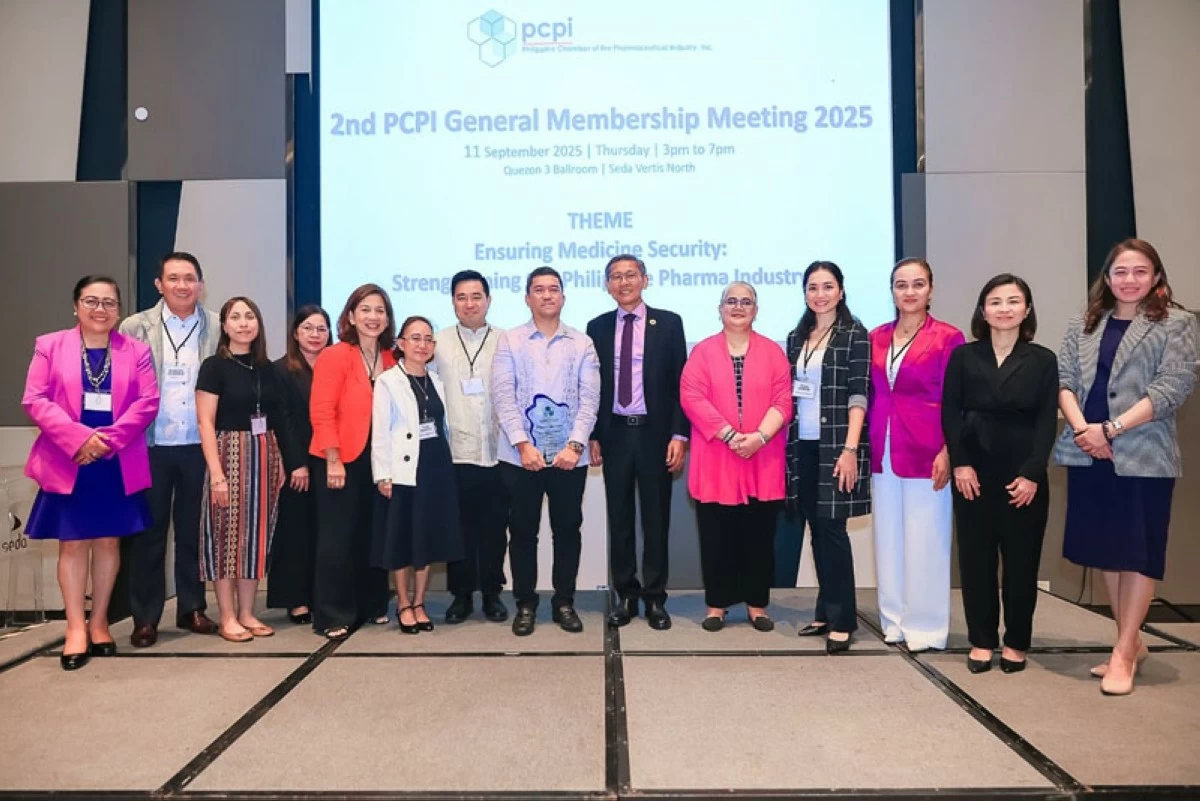
From left: Evangeline Orejola, Treasurer, Northfield Lab; Robert Eugenio, Head of External Affairs, Unilab, Inc.; MariKhris Villanueva, Director, Pascual Consumer; Zeny Esguerra, Director, La Croesus; Marilou Buensuceso, Director, EL Lab; Tess Montejo, PRO, Pascual Lab; Dr. Lloyd Balajadia, President, PCPI and Lloyd Lab; Atty. Paolo Teston, FDA Director General; Congressman Ciriaco B. Gato, Jr., chair of the House of Representatives’ Committee on Health; Corazon Halili- Dichosa, Director, DTI-BOI; Rosella Camua, VP for Manufacturing, Am Europharma; Jingle Diola, VP for Marketing, Firmlink Pharma; Grace dela Rosa, IQVIA and Dr. Charmaine Ann M. Rabago, FDA OIC, Center for Drug Regulation and Research.
The Philippines' post-pandemic vulnerability to medicine shortages is getting targeted attention through concrete commitments from Congress, regulatory agencies, and industry leaders to strengthen domestic pharmaceutical capacity and reduce import dependence.
In a recent public forum hosted by the Philippine Chamber of Pharmaceutical Industries (PCPI) focused on the theme “Ensuring Medicine Security; Strengthening the Philippine Pharma Industry”, key stakeholders outlined specific reforms and partnerships that could reshape the country's approach to medicine security.
Congressman Ciriaco Gato, chair of the House of Representatives’ Committee on Health, spoke about a whole of government and whole of society approach to address systemic industry barriers. “We in Congress are cognizant of the numerous concerns that plague the local pharma industry. Regulatory bottlenecks, the prevalence of counterfeits, the high cost of production, reliance on and apparent bias for imports are among issues that must be addressed in the exercise of Congress’ legislative oversight powers,” Gato said.
“We at the Committee on Health and other relevant committees commit itself to reviewing executive issuances that restrict or even prohibit the local pharma industry from effectively functioning in the delivery of medicines that will satisfy the health needs of the population.”
In the same forum, DTI-Board of Investments Executive Director Corazon Dichosa presented market data highlighting both opportunity and structural imbalance. The local pharmaceutical industry is valued at US$4.5 billion with projected 4.1% annual growth until 2029, yet remains critically dependent on imports with government statistics showing only 46 manufacturers compared to 650 importers. Philippine export of medicines to other countries is virtually non-existent.
Medicine security became a pressing issue during the COVID pandemic when countries restricted exports to prioritize domestic needs. Despite this wake-up call, significant strides to promote local pharmaceutical manufacturing had been limited until these recent commitments.
For his part, Food and Drug Administration (FDA) Director General Paolo Teston framed medicine security as both a public health imperative and national resilience strategy, drawing lessons from recent global health crises.
"Medicine security is not only a public health concern but a matter of national resilience. We have learned from recent global health crises that ensuring access to safe, effective and affordable medicines are as critical as safeguarding our food supply or securing our borders," Teston emphasized.
However, Teston clarified that supply availability must be balanced with quality standards: "For the FDA, it is also about the safety, efficacy and quality of every health product that reaches the Filipino people. We will ensure that every tablet, capsule or vial that reaches the Filipino people have undergone the most rigorous scientific review and uncompromising evaluation."
Teston vowed to ease regulatory barriers without compromising safety to strengthen the competitiveness of the local pharma industry. Other FDA initiatives include digitalization, reliance mechanisms with strict regulatory authorities, and hiring of additional personnel to help reduce backlog applications.
PCPI President Dr. Lloyd Balajadia assured government officials of the private sector’s support for the reform agenda.
“Only private-public partnership can drive progress and with new leaders coming in, it is possible,” Balajadia stated, positioning industry collaboration as essential for meaningful change.
Balajadia outlined an ambitious vision connecting pharmaceutical development to broader economic diplomacy: "In the same way that Filipino nurses are driving a positive image of the Philippines abroad, the healthcare industry can likewise be an offensive tool for economic growth and diplomacy."
The PCPI president specifically highlighted mutual recognition agreements (MRAs) as strategic pathways for Philippine pharmaceutical companies to enter foreign markets. These agreements could enable streamlined regulatory approval processes across ASEAN and other regions, potentially transforming the Philippines from an import-dependent market to a regional pharmaceutical hub.
PCPI is the largest association of pharmaceutical firms composed mostly of Filipino-owned companies.