ADVERTISEMENT

Marcos: My priority is education, not legacy

Published Oct 7, 2025 12:00 pm
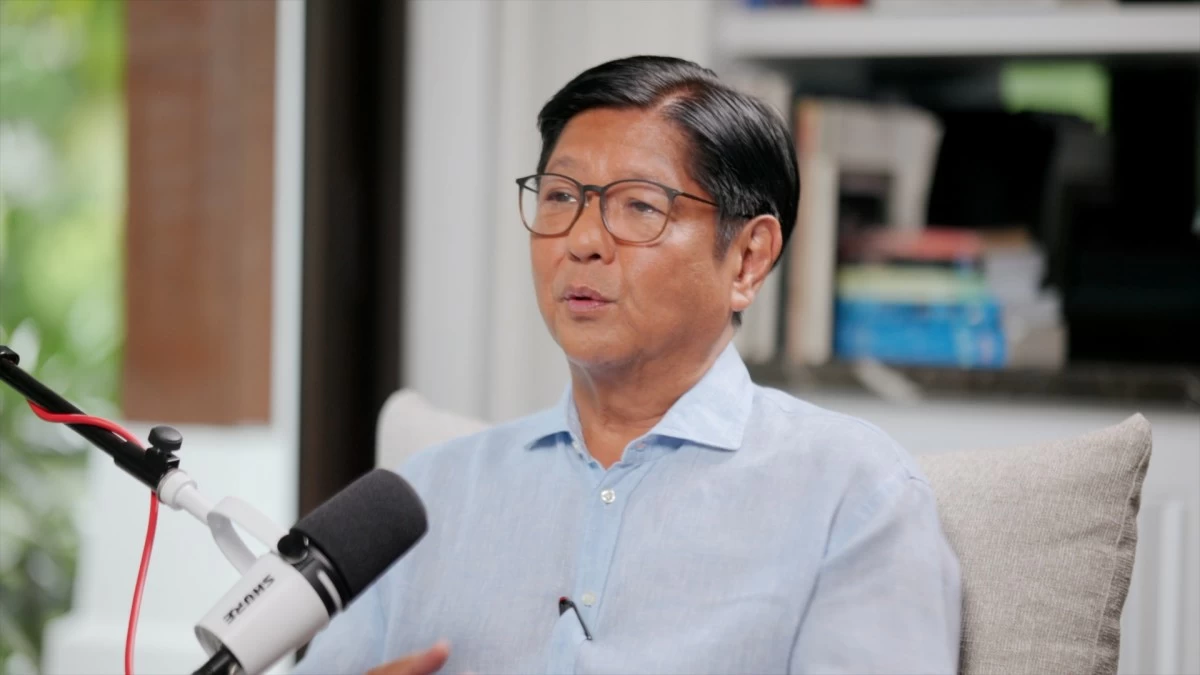
President Ferdinand 'Bongbong' Marcos Jr. (Manila Bulletin/PCO/RTVM)
President Marcos said he is not focused on building a legacy but on strengthening education, calling it the foundation of a successful and competitive society.
In an interview with the Manila Bulletin’s “The Sit Down,” which aired Tuesday, Oct. 7, the President said he does not dwell on how he will be remembered after his term.
“This question of legacy keeps coming up. It’s not something that I think about, quite frankly. Because legacy is when you die, right? I’m not about to die. At least that’s not my plan,” Marcos said with a laugh.
He instead outlined what he described as his “long-term direction” — ensuring every Filipino has access to food, shelter, healthcare, and above all, quality education.
“People have to have a good healthcare system. People have to have food to eat. People have to have shelter as much as possible. They must be able to survive,” Marcos said.
“Once you’ve achieved that, for me, the next thing you should do is education. So I’m putting a great deal of my attention and the government’s focus on education. That is the most important thing that we can do,” he added.
The Chief Executive said the Philippines must rebuild its reputation as one of Asia’s most educated nations, noting on the sidelines of the interview that it pains him to see how far the country’s educational system has deteriorated.
“Remember when we were the best English speakers in Asia? We had the highest literacy rate in Asia. Let’s get back there. We need to get back there,” he said.
President Marcos said he wants to restore confidence in Filipino talent by ensuring that learners are trained and competitive both at home and abroad.
“There are so many good people here. They just don’t have the means, they don’t have the support, they don’t have the funding,” he said.
“We have to make sure that the generations to come are well-educated. They are well able to compete amongst themselves in the Philippines and internationally because kaya naman na Pilipino ’yan (Filipinos can definitely do it),” he added.
Marcos pointed to the strong performance of overseas Filipino workers (OFWs) as proof that Filipinos can excel when given proper training and institutional support.
“Look how well we’re doing when we go abroad, when they’re well-trained. Look at how wonderful the reviews that come back to us [are]. Kayang-kaya ng Pilipino ’yan (Filipinos are more than capable), but they have to be trained,” he said.
He said the government aims to establish a system that empowers citizens to pursue skills and professions that match their potential.
“’Yan ang gusto mong gawin? Halika, dito ka, tuturuan ka namin (That’s what you want to do? Come here, we’ll train you). That’s what we need. We have to have that system there,” the President said.
In a speech on Monday, President Marcos said the government’s “moral and economic compass” should always point toward improving the lives of Filipinos, starting with education.
For Fiscal Year 2026, Marcos said the Department of Education (DepEd) will receive the largest proposed budget among all departments, underscoring his belief that education is central to national progress.
“Every classroom built, every teacher trained, every child supported is a seed towards real, lasting progress,” he said.
He said he had directed the DepEd and the Department of Public Works and Highways (DPWH) to fast-track the construction and rehabilitation of thousands of classrooms by 2028, and urged the Public-Private Partnership Center to speed up the review of PPP proposals for school infrastructure.
“No child should be forced to learn in makeshift spaces, and no teacher should be burdened by a system that does not support them,” Marcos said.

Related Tags

President Marcos Bongbong Marcos THE SIT DOWN Education legacy
ADVERTISEMENT
.most-popular .layout-ratio{ padding-bottom: 79.13%; } @media (min-width: 768px) and (max-width: 1024px) { .widget-title { font-size: 15px !important; } }

{{ articles_filter_1561_widget.title }}

.most-popular .layout-ratio{ padding-bottom: 79.13%; } @media (min-width: 768px) and (max-width: 1024px) { .widget-title { font-size: 15px !important; } }

{{ articles_filter_1562_widget.title }}

.most-popular .layout-ratio{ padding-bottom: 79.13%; } @media (min-width: 768px) and (max-width: 1024px) { .widget-title { font-size: 15px !important; } }

{{ articles_filter_1563_widget.title }}

{{ articles_filter_1564_widget.title }}

.mb-article-details { position: relative; } .mb-article-details .article-body-preview, .mb-article-details .article-body-summary{ font-size: 17px; line-height: 30px; font-family: "Libre Caslon Text", serif; color: #000; } .mb-article-details .article-body-preview iframe , .mb-article-details .article-body-summary iframe{ width: 100%; margin: auto; } .read-more-background { background: linear-gradient(180deg, color(display-p3 1.000 1.000 1.000 / 0) 13.75%, color(display-p3 1.000 1.000 1.000 / 0.8) 30.79%, color(display-p3 1.000 1.000 1.000) 72.5%); position: absolute; height: 200px; width: 100%; bottom: 0; display: flex; justify-content: center; align-items: center; padding: 0; } .read-more-background a{ color: #000; } .read-more-btn { padding: 17px 45px; font-family: Inter; font-weight: 700; font-size: 18px; line-height: 16px; text-align: center; vertical-align: middle; border: 1px solid black; background-color: white; } .hidden { display: none; }
function initializeAllSwipers() { // Get all hidden inputs with cms_article_id document.querySelectorAll('[id^="cms_article_id_"]').forEach(function (input) { const cmsArticleId = input.value; const articleSelector = '#article-' + cmsArticleId + ' .body_images'; const swiperElement = document.querySelector(articleSelector); if (swiperElement && !swiperElement.classList.contains('swiper-initialized')) { new Swiper(articleSelector, { loop: true, pagination: false, navigation: { nextEl: '#article-' + cmsArticleId + ' .swiper-button-next', prevEl: '#article-' + cmsArticleId + ' .swiper-button-prev', }, }); } }); } setTimeout(initializeAllSwipers, 3000); const intersectionObserver = new IntersectionObserver( (entries) => { entries.forEach((entry) => { if (entry.isIntersecting) { const newUrl = entry.target.getAttribute("data-url"); if (newUrl) { history.pushState(null, null, newUrl); let article = entry.target; // Extract metadata const author = article.querySelector('.author-section').textContent.replace('By', '').trim(); const section = article.querySelector('.section-info ').textContent.replace(' ', ' '); const title = article.querySelector('.article-title h1').textContent; // Parse URL for Chartbeat path format const parsedUrl = new URL(newUrl, window.location.origin); const cleanUrl = parsedUrl.host + parsedUrl.pathname; // Update Chartbeat configuration if (typeof window._sf_async_config !== 'undefined') { window._sf_async_config.path = cleanUrl; window._sf_async_config.sections = section; window._sf_async_config.authors = author; } // Track virtual page view with Chartbeat if (typeof pSUPERFLY !== 'undefined' && typeof pSUPERFLY.virtualPage === 'function') { try { pSUPERFLY.virtualPage({ path: cleanUrl, title: title, sections: section, authors: author }); } catch (error) { console.error('ping error', error); } } // Optional: Update document title if (title && title !== document.title) { document.title = title; } } } }); }, { threshold: 0.1 } ); function showArticleBody(button) { const article = button.closest("article"); const summary = article.querySelector(".article-body-summary"); const body = article.querySelector(".article-body-preview"); const readMoreSection = article.querySelector(".read-more-background"); // Hide summary and read-more section summary.style.display = "none"; readMoreSection.style.display = "none"; // Show the full article body body.classList.remove("hidden"); } document.addEventListener("DOMContentLoaded", () => { let loadCount = 0; // Track how many times articles are loaded const offset = [1, 2, 3, 4, 5, 6, 7, 8, 9, 10]; // Offset values const currentUrl = window.location.pathname.substring(1); let isLoading = false; // Prevent multiple calls if (!currentUrl) { console.log("Current URL is invalid."); return; } const sentinel = document.getElementById("load-more-sentinel"); if (!sentinel) { console.log("Sentinel element not found."); return; } function isSentinelVisible() { const rect = sentinel.getBoundingClientRect(); return ( rect.top < window.innerHeight && rect.bottom >= 0 ); } function onScroll() { if (isLoading) return; if (isSentinelVisible()) { if (loadCount >= offset.length) { console.log("Maximum load attempts reached."); window.removeEventListener("scroll", onScroll); return; } isLoading = true; const currentOffset = offset[loadCount]; window.loadMoreItems().then(() => { let article = document.querySelector('#widget_1690 > div:nth-last-of-type(2) article'); intersectionObserver.observe(article) loadCount++; }).catch(error => { console.error("Error loading more items:", error); }).finally(() => { isLoading = false; }); } } window.addEventListener("scroll", onScroll); });

Sign up by email to receive news.