

ADVERTISEMENT

Philippine export outlook dims as trade woes, 'lagging' competitiveness persist

Published Oct 6, 2025 01:44 pm

At A Glance

  • Due to lingering global trade uncertainty, coupled with the Philippines' weaker competitiveness, the Marcos administration's economic team has cautioned that the country's goods exports could come under massive pressure this year.
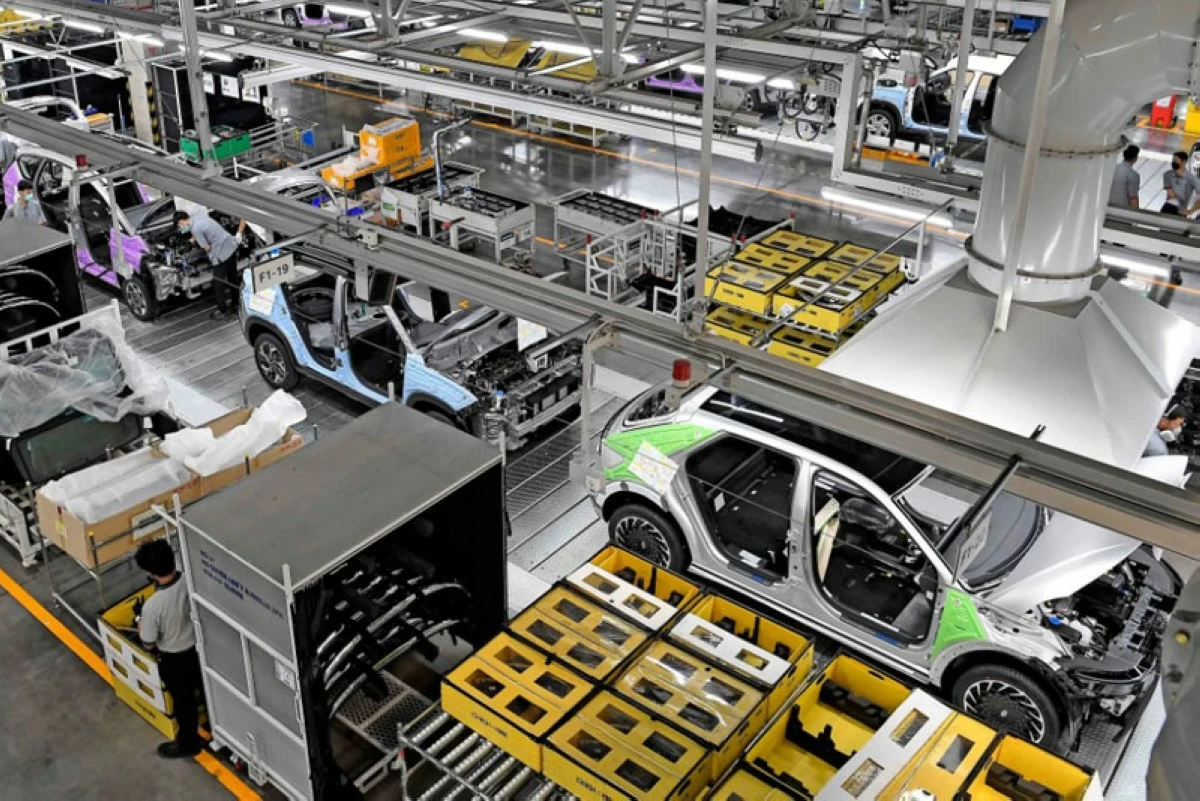
Due to lingering global trade uncertainty, coupled with the Philippines’ weaker competitiveness, the Marcos administration’s economic team has cautioned that the country’s goods exports could face significant pressure this year.
“Philippine goods exports face significant risks in 2025 from rising global trade uncertainty and lagging competitiveness,” the Cabinet-level Development Budget Coordination Committee (DBCC) Midyear Report, published on Sept. 30, read.
In particular, the DBCC said tighter trade rules are prompting cautiousness among companies, slowing investments and expansion, especially in manufacturing.
“The semiconductor industry remains weighed down by inventory corrections, weak product mix, and high operational costs,” it said.
To note, the Philippine manufacturing sector slipped back into contraction in September as its purchasing managers’ index (PMI) fell to 49.9, the lowest in six months and only the third decline in more than four years. This was blamed on rainy weather, higher tariffs, and an import ban.
S&P Global Market Intelligence’s Philippines manufacturing PMI for September marked the second straight monthly drop after 50.8 in August and was weaker than the 53.7 recorded in September a year ago.
Goods exports, according to the Bangko Sentral ng Pilipinas (BSP), are seen to expand by one percent in 2025 from its earlier forecast of a one-percent contraction. However, this growth is expected to move at a slower pace, to one percent in 2026 from two percent.
Investments in infrastructure, possible trade shifts, and moves to broaden export and import markets could help absorb external risks, the BSP said, but added that long-standing issues, such as poor logistics, labor skill gaps, and high production costs, still drag down export competitiveness.
Jonathan Ravelas, senior adviser at Reyes Tacandong & Co., urged quick action from the government, beginning with fixing the basics such as power, ports, and permits.
John Paolo Rivera, senior research fellow at the state policy think tank Philippine Institute for Development Studies (PIDS), also emphasized the importance of improving “trade infrastructure and logistics—ports, cold chains, and transport corridors—to reduce costs and enhance export readiness.”
“Trade facilitation reforms, such as digitizing customs and expanding free trade agreements (FTAs), would help diversify markets and reduce overdependence on traditional partners,” Rivera added.
Oikonomia Advisory and Research Inc. economist Reinielle Matt Erece also said "pursuing trade agreements with favorable terms for Philippine exporters will greatly help in expanding the sector’s global reach.”  
For Erece, the country also needs economic and political reforms to attract foreign investors and technology. These include offering incentives and government support to export industries, particularly those in high-value-added sectors like manufacturing.
“Anti-corruption measures should also be pursued to restore confidence in the country and further invite FDIs [foreign direct investments] and other investments,” Erece further said. 
Ravelas suggested shifting to high-value exports like electronics and agri-technology,  adding that real-time intelligence should be established “so MSMEs [micro, small and medium enterprises] can pivot quickly.”
“Overall, the Philippines must align trade, industrial, and innovation strategies to future-proof its export base and remain competitive in a rapidly shifting global economy,” Rivera said.

Related Tags

Development Budget Coordination Committee (DBCC)
ADVERTISEMENT
.most-popular .layout-ratio{ padding-bottom: 79.13%; } @media (min-width: 768px) and (max-width: 1024px) { .widget-title { font-size: 15px !important; } }

{{ articles_filter_1561_widget.title }}

.most-popular .layout-ratio{ padding-bottom: 79.13%; } @media (min-width: 768px) and (max-width: 1024px) { .widget-title { font-size: 15px !important; } }

{{ articles_filter_1562_widget.title }}

.most-popular .layout-ratio{ padding-bottom: 79.13%; } @media (min-width: 768px) and (max-width: 1024px) { .widget-title { font-size: 15px !important; } }

{{ articles_filter_1563_widget.title }}

{{ articles_filter_1564_widget.title }}

.mb-article-details { position: relative; } .mb-article-details .article-body-preview, .mb-article-details .article-body-summary{ font-size: 17px; line-height: 30px; font-family: "Libre Caslon Text", serif; color: #000; } .mb-article-details .article-body-preview iframe , .mb-article-details .article-body-summary iframe{ width: 100%; margin: auto; } .read-more-background { background: linear-gradient(180deg, color(display-p3 1.000 1.000 1.000 / 0) 13.75%, color(display-p3 1.000 1.000 1.000 / 0.8) 30.79%, color(display-p3 1.000 1.000 1.000) 72.5%); position: absolute; height: 200px; width: 100%; bottom: 0; display: flex; justify-content: center; align-items: center; padding: 0; } .read-more-background a{ color: #000; } .read-more-btn { padding: 17px 45px; font-family: Inter; font-weight: 700; font-size: 18px; line-height: 16px; text-align: center; vertical-align: middle; border: 1px solid black; background-color: white; } .hidden { display: none; }
function initializeAllSwipers() { // Get all hidden inputs with cms_article_id document.querySelectorAll('[id^="cms_article_id_"]').forEach(function (input) { const cmsArticleId = input.value; const articleSelector = '#article-' + cmsArticleId + ' .body_images'; const swiperElement = document.querySelector(articleSelector); if (swiperElement && !swiperElement.classList.contains('swiper-initialized')) { new Swiper(articleSelector, { loop: true, pagination: false, navigation: { nextEl: '#article-' + cmsArticleId + ' .swiper-button-next', prevEl: '#article-' + cmsArticleId + ' .swiper-button-prev', }, }); } }); } setTimeout(initializeAllSwipers, 3000); const intersectionObserver = new IntersectionObserver( (entries) => { entries.forEach((entry) => { if (entry.isIntersecting) { const newUrl = entry.target.getAttribute("data-url"); if (newUrl) { history.pushState(null, null, newUrl); let article = entry.target; // Extract metadata const author = article.querySelector('.author-section').textContent.replace('By', '').trim(); const section = article.querySelector('.section-info ').textContent.replace(' ', ' '); const title = article.querySelector('.article-title h1').textContent; // Parse URL for Chartbeat path format const parsedUrl = new URL(newUrl, window.location.origin); const cleanUrl = parsedUrl.host + parsedUrl.pathname; // Update Chartbeat configuration if (typeof window._sf_async_config !== 'undefined') { window._sf_async_config.path = cleanUrl; window._sf_async_config.sections = section; window._sf_async_config.authors = author; } // Track virtual page view with Chartbeat if (typeof pSUPERFLY !== 'undefined' && typeof pSUPERFLY.virtualPage === 'function') { try { pSUPERFLY.virtualPage({ path: cleanUrl, title: title, sections: section, authors: author }); } catch (error) { console.error('ping error', error); } } // Optional: Update document title if (title && title !== document.title) { document.title = title; } } } }); }, { threshold: 0.1 } ); function showArticleBody(button) { const article = button.closest("article"); const summary = article.querySelector(".article-body-summary"); const body = article.querySelector(".article-body-preview"); const readMoreSection = article.querySelector(".read-more-background"); // Hide summary and read-more section summary.style.display = "none"; readMoreSection.style.display = "none"; // Show the full article body body.classList.remove("hidden"); } document.addEventListener("DOMContentLoaded", () => { let loadCount = 0; // Track how many times articles are loaded const offset = [1, 2, 3, 4, 5, 6, 7, 8, 9, 10]; // Offset values const currentUrl = window.location.pathname.substring(1); let isLoading = false; // Prevent multiple calls if (!currentUrl) { console.log("Current URL is invalid."); return; } const sentinel = document.getElementById("load-more-sentinel"); if (!sentinel) { console.log("Sentinel element not found."); return; } function isSentinelVisible() { const rect = sentinel.getBoundingClientRect(); return ( rect.top < window.innerHeight && rect.bottom >= 0 ); } function onScroll() { if (isLoading) return; if (isSentinelVisible()) { if (loadCount >= offset.length) { console.log("Maximum load attempts reached."); window.removeEventListener("scroll", onScroll); return; } isLoading = true; const currentOffset = offset[loadCount]; window.loadMoreItems().then(() => { let article = document.querySelector('#widget_1690 > div:nth-last-of-type(2) article'); intersectionObserver.observe(article) loadCount++; }).catch(error => { console.error("Error loading more items:", error); }).finally(() => { isLoading = false; }); } } window.addEventListener("scroll", onScroll); });

Sign up by email to receive news.