ADVERTISEMENT

Marcos urges public: Give ICI a chance as probe into alleged anomalies continues

Published Oct 6, 2025 12:00 pm  |  Updated Oct 6, 2025 03:02 pm
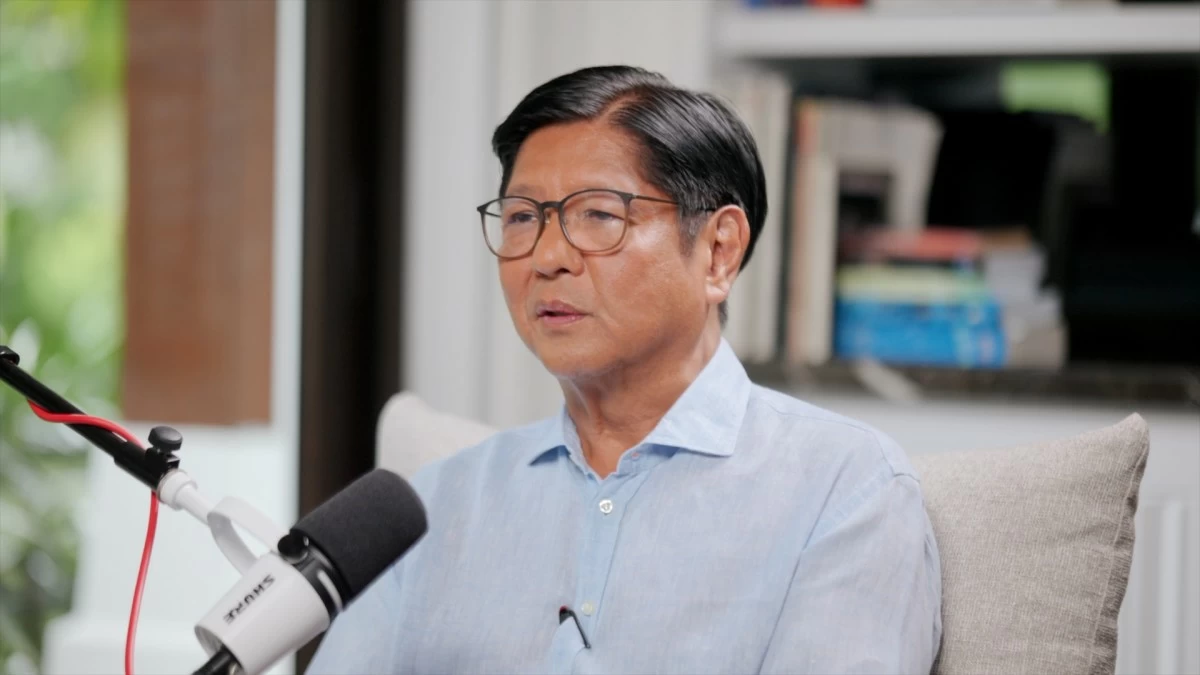
President Ferdinand 'Bongbong' Marcos Jr. (Manila Bulletin/PCO/RTVM)
President Marcos has appealed for patience and due process as the Independent Commission on Infrastructure (ICI) investigates allegations of large-scale anomalies in public works, saying the commission must be allowed to build airtight cases before anyone is prosecuted.
The President’s remarks come as the ICI continues fact-finding into alleged irregularities in infrastructure spending, particularly flood control projects, amid the public’s growing demand for accountability.
In an interview with Manila Bulletin’s “The Sit Down,” the President defended the ICI’s work and warned against rushing prosecutions based on incomplete evidence.
“This is a process. Much of what we've heard are allegations… We have to prove it. We don't want to go after people who are innocent,” he said in the video uploaded to Manila Bulletin’s online platforms on Monday, Oct. 6.
According to the President, while many suspects are likely guilty, the state must present strong legal cases.
“Now, we know many of these people are not innocent. But if you're going to bring them to court, you must have a very strong case,” he said.
Marcos cautioned that hasty prosecutions with weak or incomplete evidence could lead to losing cases in court — an outcome he described as worse than doing nothing.
“Look, ano'ng mangyayari — minadali natin, hindi kumpleto ang ebidensya natin, malabo yung ebidensya natin, pero pinilit natin, natalo yung kaso (Look, what will happen — we rushed it, our evidence was incomplete, our evidence was weak, but we forced it, and we lost the case). Can you imagine? I think that will be much, much, much worse,” he said.
The Chief Executive stressed that the rule of law must guide the campaign against corruption.
“We have to follow the law. Otherwise, whatever we do is not legitimate,” he said, warning that convictions must rest on clear proof to avoid miscarriages of justice.

Why he raised the issue

Asked why he put alleged ghost and substandard projects at the center of the national discourse, Marcos said he could not accept the systemic crisis he uncovered and that exposing it was necessary to move the country forward.
“If it kept going — I suddenly discovered how deeply in crisis the entire system was — the economy will never grow properly; people are not going to get help, schools will not get better, hospitals will not get better,” he said, arguing that exposing corruption was aimed at preventing long-term national decay.
The President acknowledged public frustration over what he called “sins,” but said anger does not replace the need for methodical investigations.
“I understand that. But we are a nation — a people of laws,” he said.
At the same time, the President reaffirmed the administration’s resolve to pursue only those proven guilty.
“We have to be thorough, also. If we are actually going to punish these people, we have to be very, very clear about what we are doing. And we have to be very, very clear that we go after the guilty ones,” he said.
Marcos warned of diversionary tactics by some suspects.
“Because some of the guilty ones they're trying to derail the system. 'Hindi ako 'yan, si ganito 'yan.' Eh baka mapunta tayo doon? Let's make sure that we get yung talagang guilty (Because some of the guilty ones, they're trying to derail the system. 'It's not me, it's that other person.' We might fall into that. Let's make sure we get the truly guilty),” he said.
President Marcos is the recent personality to be featured in Manila Bulletin's "The Sit Down," the publication's podcast that serves as an "open window for the public to get a better, nuanced glimpse of the personalities and issues of today."
The podcast is available on different platforms, including Facebook, TikTok, and YouTube.

Related Tags

President Marcos Bongbong Marcos ICI flood control THE SIT DOWN
ADVERTISEMENT
.most-popular .layout-ratio{ padding-bottom: 79.13%; } @media (min-width: 768px) and (max-width: 1024px) { .widget-title { font-size: 15px !important; } }

{{ articles_filter_1561_widget.title }}

.most-popular .layout-ratio{ padding-bottom: 79.13%; } @media (min-width: 768px) and (max-width: 1024px) { .widget-title { font-size: 15px !important; } }

{{ articles_filter_1562_widget.title }}

.most-popular .layout-ratio{ padding-bottom: 79.13%; } @media (min-width: 768px) and (max-width: 1024px) { .widget-title { font-size: 15px !important; } }

{{ articles_filter_1563_widget.title }}

{{ articles_filter_1564_widget.title }}

.mb-article-details { position: relative; } .mb-article-details .article-body-preview, .mb-article-details .article-body-summary{ font-size: 17px; line-height: 30px; font-family: "Libre Caslon Text", serif; color: #000; } .mb-article-details .article-body-preview iframe , .mb-article-details .article-body-summary iframe{ width: 100%; margin: auto; } .read-more-background { background: linear-gradient(180deg, color(display-p3 1.000 1.000 1.000 / 0) 13.75%, color(display-p3 1.000 1.000 1.000 / 0.8) 30.79%, color(display-p3 1.000 1.000 1.000) 72.5%); position: absolute; height: 200px; width: 100%; bottom: 0; display: flex; justify-content: center; align-items: center; padding: 0; } .read-more-background a{ color: #000; } .read-more-btn { padding: 17px 45px; font-family: Inter; font-weight: 700; font-size: 18px; line-height: 16px; text-align: center; vertical-align: middle; border: 1px solid black; background-color: white; } .hidden { display: none; }
function initializeAllSwipers() { // Get all hidden inputs with cms_article_id document.querySelectorAll('[id^="cms_article_id_"]').forEach(function (input) { const cmsArticleId = input.value; const articleSelector = '#article-' + cmsArticleId + ' .body_images'; const swiperElement = document.querySelector(articleSelector); if (swiperElement && !swiperElement.classList.contains('swiper-initialized')) { new Swiper(articleSelector, { loop: true, pagination: false, navigation: { nextEl: '#article-' + cmsArticleId + ' .swiper-button-next', prevEl: '#article-' + cmsArticleId + ' .swiper-button-prev', }, }); } }); } setTimeout(initializeAllSwipers, 3000); const intersectionObserver = new IntersectionObserver( (entries) => { entries.forEach((entry) => { if (entry.isIntersecting) { const newUrl = entry.target.getAttribute("data-url"); if (newUrl) { history.pushState(null, null, newUrl); let article = entry.target; // Extract metadata const author = article.querySelector('.author-section').textContent.replace('By', '').trim(); const section = article.querySelector('.section-info ').textContent.replace(' ', ' '); const title = article.querySelector('.article-title h1').textContent; // Parse URL for Chartbeat path format const parsedUrl = new URL(newUrl, window.location.origin); const cleanUrl = parsedUrl.host + parsedUrl.pathname; // Update Chartbeat configuration if (typeof window._sf_async_config !== 'undefined') { window._sf_async_config.path = cleanUrl; window._sf_async_config.sections = section; window._sf_async_config.authors = author; } // Track virtual page view with Chartbeat if (typeof pSUPERFLY !== 'undefined' && typeof pSUPERFLY.virtualPage === 'function') { try { pSUPERFLY.virtualPage({ path: cleanUrl, title: title, sections: section, authors: author }); } catch (error) { console.error('ping error', error); } } // Optional: Update document title if (title && title !== document.title) { document.title = title; } } } }); }, { threshold: 0.1 } ); function showArticleBody(button) { const article = button.closest("article"); const summary = article.querySelector(".article-body-summary"); const body = article.querySelector(".article-body-preview"); const readMoreSection = article.querySelector(".read-more-background"); // Hide summary and read-more section summary.style.display = "none"; readMoreSection.style.display = "none"; // Show the full article body body.classList.remove("hidden"); } document.addEventListener("DOMContentLoaded", () => { let loadCount = 0; // Track how many times articles are loaded const offset = [1, 2, 3, 4, 5, 6, 7, 8, 9, 10]; // Offset values const currentUrl = window.location.pathname.substring(1); let isLoading = false; // Prevent multiple calls if (!currentUrl) { console.log("Current URL is invalid."); return; } const sentinel = document.getElementById("load-more-sentinel"); if (!sentinel) { console.log("Sentinel element not found."); return; } function isSentinelVisible() { const rect = sentinel.getBoundingClientRect(); return ( rect.top < window.innerHeight && rect.bottom >= 0 ); } function onScroll() { if (isLoading) return; if (isSentinelVisible()) { if (loadCount >= offset.length) { console.log("Maximum load attempts reached."); window.removeEventListener("scroll", onScroll); return; } isLoading = true; const currentOffset = offset[loadCount]; window.loadMoreItems().then(() => { let article = document.querySelector('#widget_1690 > div:nth-last-of-type(2) article'); intersectionObserver.observe(article) loadCount++; }).catch(error => { console.error("Error loading more items:", error); }).finally(() => { isLoading = false; }); } } window.addEventListener("scroll", onScroll); });

Sign up by email to receive news.