






Manila Bulletin
 Business
Trade & Industry
Manila offers concessions to Tokyo for lower banana tariffs
Business
Trade & Industry
Manila offers concessions to Tokyo for lower banana tariffs
Business
Trade & Industry
Manila offers concessions to Tokyo for lower banana tariffs
Manila offers concessions to Tokyo for lower banana tariffs
Published Oct 6, 2025 12:01 am
|
Updated Oct 4, 2025 01:58 pm


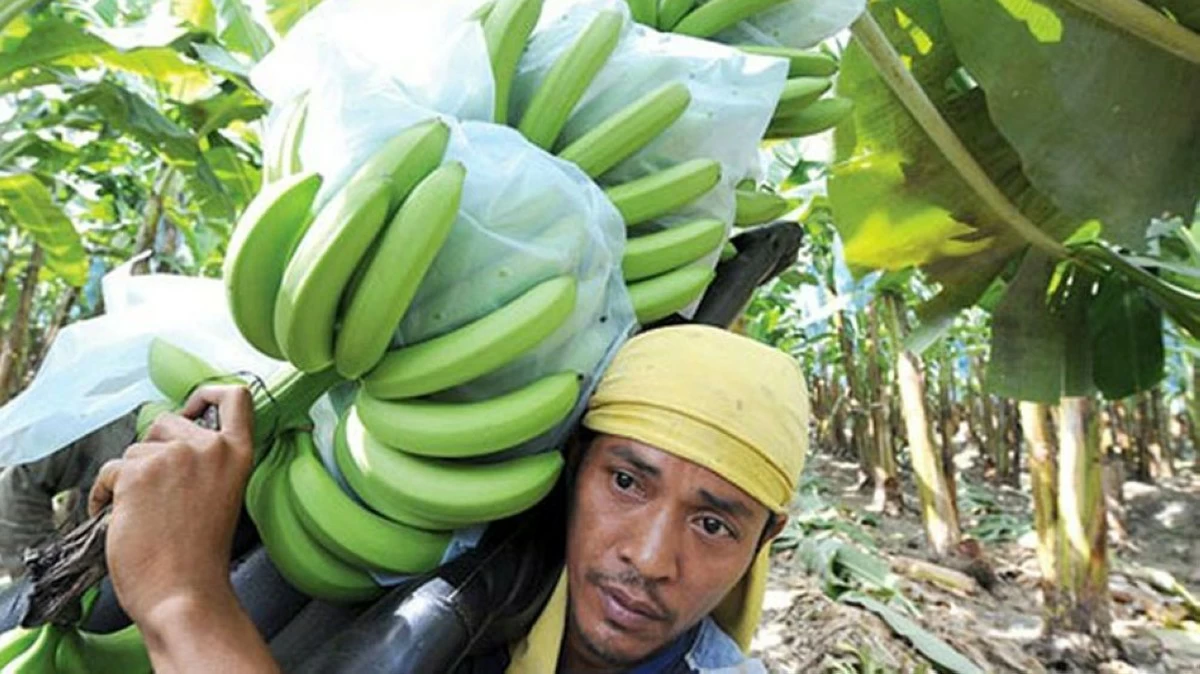
The Philippine government is willing to grant concessions to Japan in the hope of introducing reforms to the Japan-Philippines Economic Partnership Agreement (JPEPA), particularly to address high tariffs on its banana exports—a market stronghold under threat from countries with lower tariffs.
Department of Agriculture (DA) Secretary Francisco Tiu Laurel said the government has long urged Japan to review the JPEPA, but to no avail.
However, he said Japan has recently shown openness to hold discussions on possible revisions to the agreement in exchange for certain concessions.
“They mentioned that it can be possible if we have something to offer,” Tiu Laurel told reporters last week.
“So I'll have to talk to DTI (Department of Trade and Industry) and our partner agencies in the Philippines to come up with a package that we can offer to them so that they can reopen the JPEPA bilaterals,” he added.
While he did not offer other details on potential concessions, Tiu Laurel said one of the main reasons the government is seeking reforms to JPEPA is to reduce the tariffs on the country’s banana exports.
Under JPEPA, Japan imposes an 18 percent tariff on bananas exported by the Philippines from April to September and a lower eight percent tariff from October to March.
Japan is the largest market for Philippine bananas, holding a substantial 75 percent market share in exports last year.
That said, the Philippines is steadily losing this market dominance to countries with lower or no tariffs. A decade ago, the country held as much as a 90 percent share of Japan’s banana market.
Japan currently imposes zero tariffs on South American nations, Mexico and Peru, while implementing lower tariffs on Southeast Asian countries, Cambodia, Laos, and Vietnam.
Vietnam, which faces a 5.4 percent tariff rate, recently increased its market share in Japan to 3.2 percent last year from 0.2 percent six years ago.
Vietnam is scheduled to face zero tariffs on its banana exports to Japan by 2028, thanks to both countries’ membership in the Comprehensive and Progressive Agreement for Trans-Pacific Partnership (CPTPP).
The Philippines is not a party to the CPTPP, but DTI Secretary Cristina Roque earlier stated that the government is now preparing to submit its application to join the 12-member bloc, thereby further expanding the country’s access to vital markets.
Apart from Japan and Vietnam, the CPTPP comprises Australia, Brunei, Canada, Chile, Malaysia, Mexico, New Zealand, Peru, Singapore, and the United Kingdom.
With CPTPP membership still on the horizon, Tiu Laurel said that pushing for JPEPA reforms is critical to speeding up the process of lowering tariffs.
Tiu Laurel said he had a meeting with Japan Agriculture Minister Shinjiro Koizumi over this matter, noting that they both agreed to “work together to find an amicable solution.”
“The Philippines will be preparing a position paper on that so that hopefully Japan can consider our request,” the official said.
“The minister promised to look into it,” he said. “The Philippines, I told him, would persistently pursue this, and I really hope that we can resolve this issue as soon as possible.”
Similar to Vietnam’s preferential tariff scheme, the Philippines will push for a gradual reduction of tariffs, leading to an eventual phaseout.
During his meeting with Koizumi, Tiu Laurel said they also explored the potential of providing wider market access to agricultural goods.
Japan, he said, is seeking to expand the reach of its grape shipments to the Philippines, while the Philippines aims to broaden the market for its pomelo exports in Japan.
The two agriculture officials also discuss prospective trade deals in the livestock and fisheries sectors.
“Both parties agreed to work on this as soon as possible so that we can increase trade,” Tiu Laurel said.