







BDO open to financing new coal plants, nuclear projects
Published Oct 6, 2025 12:50 pm


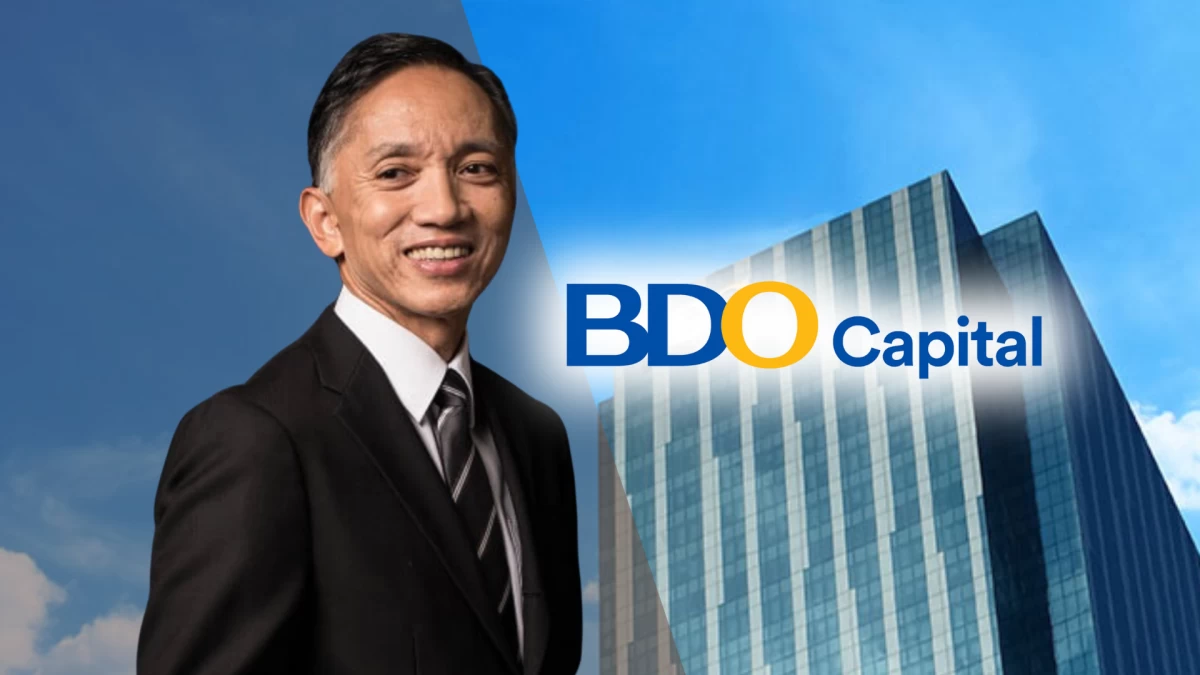
Eduardo V. Francisco
While most of its domestic and global peer banks shy away from the heat, BDO Capital and Investment Corp. is stepping into the flames, publicly declaring its readiness and openness to bankroll new coal plant projects.
In his remarks at the Powertrends 2025, BDO Capital President Eduardo V. Francisco forthrightly stated that “we’re open to coal, but then there has to be DOE (Department of Energy) exemption” – that is in reference to the non-coverage of the project under the ongoing coal moratorium policy.
He qualified that as the country’s major local bank, “we also have our concern to the shareholders, but we need public support and the DOE support for that because these projects are needed by the country and still part of the energy mix – there are still coal plants that need to be built.”
When asked separately in an interview if BDO is willing to extend funding to the 1,200-megawatt Atimonan coal-fired project of Meralco PowerGen or the 150MW Therma Visayas coal plant expansion of Aboitiz Power in Cebu, Francisco responded in the affirmative, but firmly asserted that these proposed facilities must be clearly exempted from the DOE-enforced moratorium before any financing deal could be on the table.
Beyond its welcoming stance to coal, BDO is similarly casting a wide financing net across the energy spectrum; as it likewise signaled its willingness to underwrite major emerging technologies like nuclear and offshore wind; although the bank admitted that these are still unfamiliar territories to it compared to the other technologies – the likes of solar and onshore wind; liquefied natural gas (LNG) facilities, energy storage systems and real estate investment trust (REIT) for renewable energy projects; where the bank has already established its solid financial footing.
Francisco thus emphasized that financing for next-generation technologies, such as nuclear and offshore wind, remains under the bank’s microscope, especially since key gaps in their commercial viability have yet to be filled by industry players working to turn these prospective ventures into actual infrastructure.
“Aside from green and non-green technologies, we’re open to look at nuclear – we’re excited to look at it over a year ago, but then they’re all drawing for now – even the US companies are not ready, so it looks like it would be another five years…even the SMRs (small modular reactors) are not yet there,” he stressed.
Francisco narrated, “I’ve invested time to talk to Congressman (Mark) Cojuango and Director (Carlo) Arcilla of PNRI (Philippine Nuclear Research Institute) and to meet with their people – but the total program has yet to be made, we’re still at initial steps – it’s like going through a needle’s hole.”
He noted “the banks are ready to finance nuclear, but then we have to be ready to take care of all the required steps – like managing used fuel, how to ensure that the facility is safe, and what are the safeguards being developed.”
For offshore wind, Francisco expounded that while they're not writing the checks just yet, BDO is keeping a sharp eye on the buildout of critical infrastructure like port facilities and grid connections, knowing full well that without these foundations, even the most hyped front-runner projects could be risked being dead in the water.
“We’re now looking at offshore wind, we’re trying to understand – at least the two concessions for Copenhagen Infrastructure, including their San Miguel Bay project, we’re looking into that,” he specified.
The bank executive further indicated that BDO is keen on throwing its weight also on financing waste-to-energy projects that will likely be awarded in the targeted 6th green energy auction (GEA) to be administered by the DOE.
Francisco highlighted that for all the loans they are extending to energy projects, the gold standard that they will require from developers will be long-term power contracts – so that could either be a power supply agreement (PSA), the 20-year contracts awarded under the DOE-underpinned GEAs or bilateral contracts; because these would serve as assurance that the bank’s money won’t be gambled on uncertain returns.
“At least from BDO’s part, what we are still comfortable with would be long-term contracts – they could be PPAs, GEAs, or even bilateral agreements. We do not finance 100% percent merchant,” he said.
The flexibility that BDO could allow for project sponsor-firms seeking funding will be at least long-term contract covering two-thirds of their capacities, because that is regarded as the non-negotiable threshold to meet debt service obligations.
“In general, if you have long-term contracts for at least 2/3, that’s the rule of thumb to cover your debt service, we’ll allow you to do merchant for the balance – this is from BDO side,” he pointed out.