







To witness, and help shape, history
Published Oct 5, 2025 12:05 am
|
Updated Oct 4, 2025 03:12 pm


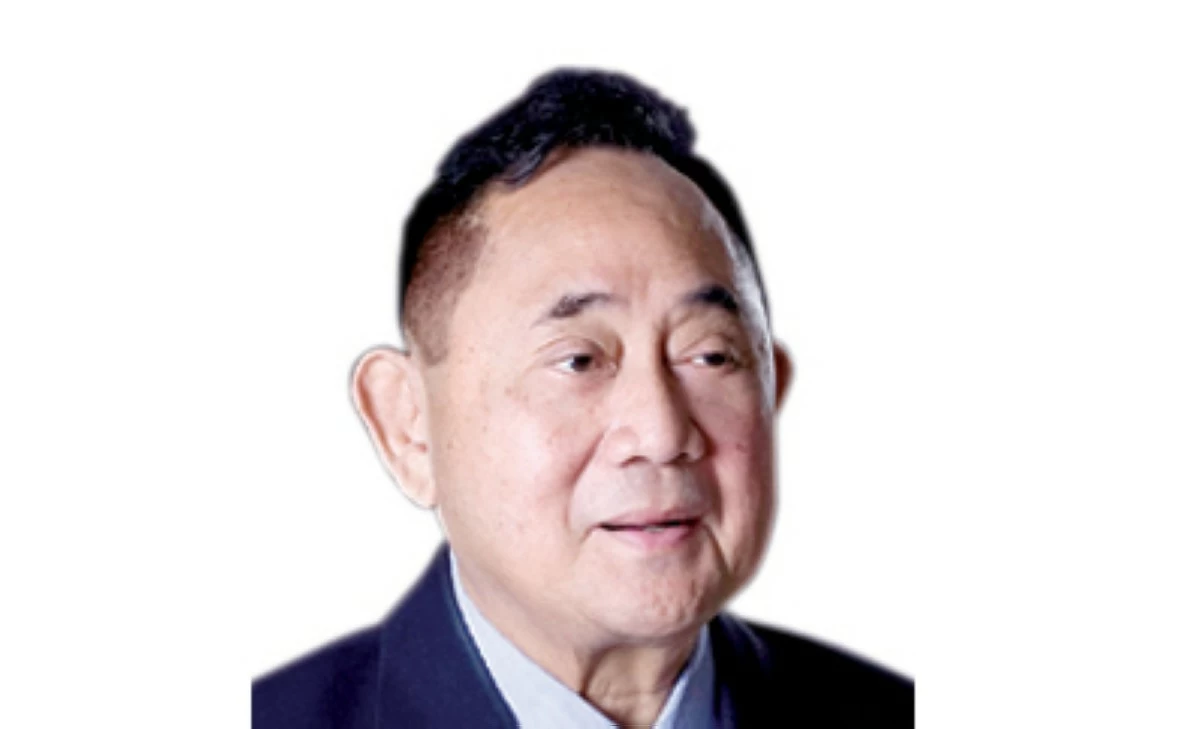
PEACE-MAKER
At 19, we were handed a passport to the world. Not through privilege, but through ink and paper—through journalism. We became a foreign correspondent and, soon after, Manila bureau chief of the first Asian news agency, the Pan-Asia Newspaper Alliance, founded by the late Norman Soong, General Douglas MacArthur’s favorite war correspondent during World War II.
Those were heady days. We had a weekly column in the Philippines Herald, a newspaper that in earlier years was edited by none other than Carlos P. Romulo, Pulitzer Prize laureate, President of the United Nations General Assembly, and later, our Minister of Foreign Affairs.
We believe our destiny was forged much earlier, in the quiet hours we spent in our father’s library, leafing through history books, biographies, and periodicals. The elegance of writing, the power of the printed word, the lives of great men and women who changed the course of nations—all of these planted in us a longing to witness history and, in our own small way, to record it.
By 1956, at just 19, we were on a plane to Saigon, capital of South Vietnam, to cover the visit of then Vice President Carlos P. Garcia, who was also Foreign Affairs Secretary. It was a time of fragile hope, with the proclamation of the Vietnamese Constitution and the first anniversary of the Republic of Vietnam, carved out after the French defeat at Dien Bien Phu.
We returned to Vietnam in 1959, as a 22-year-old journalist, this time sailing down the Saigon River aboard the presidential yacht of South Vietnam’s leader, Ngo Dinh Diem, together with President Garcia. We spoke of the future, but history had other plans. Diem would later be assassinated, and in 1975, Saigon itself would fall, marking the end of a war that claimed millions of lives.
President Garcia, in his kindness, once offered us a position as Press Attaché in Vietnam or in Europe. We declined, humbled and grateful, but still captivated by the adventure and calling of journalism. Seven years later, history would bring us back to Saigon, no longer as a correspondent, but as Minister and Press Counselor at our Philippine Embassy, in the midst of an escalating war that had drawn in the United States under President Lyndon B. Johnson.
Those years shaped us profoundly. Journalism was more than a profession, it was a passport to understanding the world, its tragedies, and its triumphs. It opened the doors to international affairs and, in time, inspired us to found and lead organizations that sought peace and cooperation across Asia and beyond: the International Conference of Asian Political Parties (ICAPP), the Asian Parliamentary Assembly (APA), the Centrist Asia Pacific Democrats International (CAPDI), the Asian Peace and Reconciliation Council (APRC), and the International Association of Parliamentarians for Peace (IAPP).
Looking back now, we see how the turbulence of the past mirrors our world today. Wars once confined to Vietnam now echo in Ukraine, Gaza, and beyond. Geopolitical rivalries then framed by the Cold War are now seen in the tense struggles for influence in the Asia-Pacific and the contested waters of the West Philippine Sea. The same questions remain—how do nations choose between war and peace, between confrontation and cooperation, between the narrow interests of the few and the larger destiny of humanity?
As a young journalist, we saw history unfolding before our eyes. Today, we see history repeating itself, but we also see the possibility of new choices, new leaders, and new paths to peace. If those of us who once chronicled history can now help shape it, then perhaps the struggles of yesterday were not in vain.
Because in the end, whether in the newsroom or in the halls of parliaments, the mission is the same—to tell the truth, to build bridges, and to keep alive the hope that humanity, even in its darkest hours, can still find the light.