







Pilots, crew champion Filipino craftsmanship in flight
Handmade for every Juan:
Published Oct 4, 2025 07:21 am


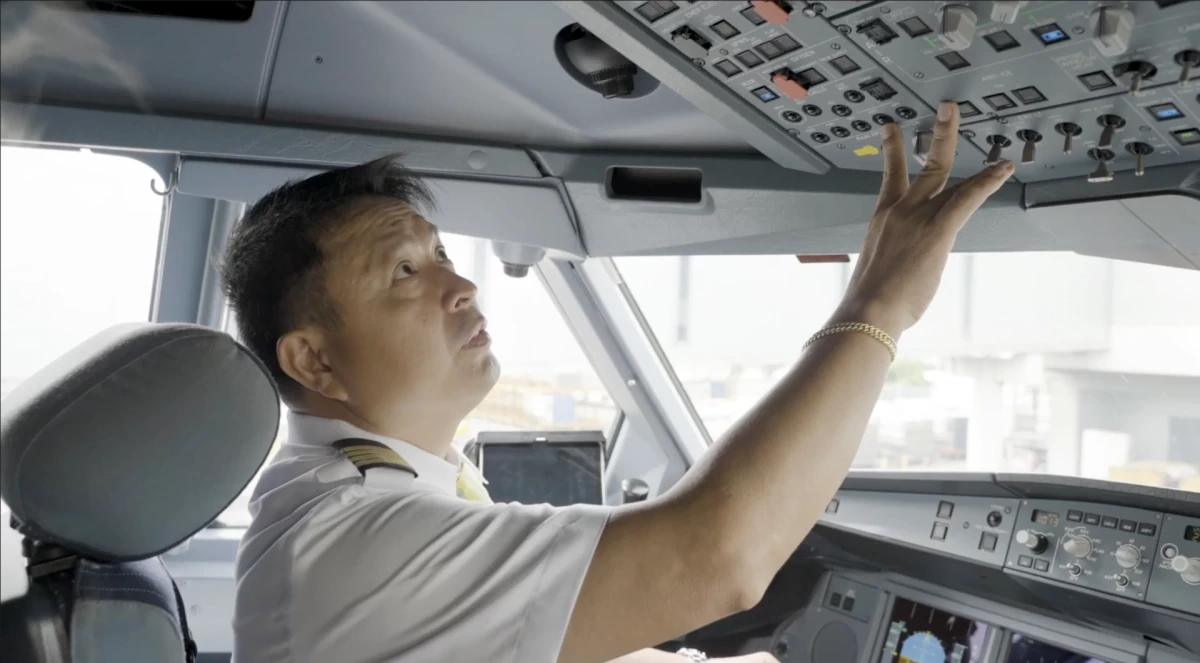
Captain Niel Siñel, one of the nation's top pilots, wears the Binakol tie—a symbol of the meticulous precision and Filipino pride he weaves into every flight's safety.
Every weave tells a story. For generations of Filipino artisans, each strand on the loom has carried history, identity, and pride. These weavers rise before dawn, letting their hands speak in color and thread—each pattern a meticulous reflection of cultures that refuse to fade.
Like the weaver whose craft demands patience and an eye for detail, Captain Niel Siñel follows his own intricate sequence in the cockpit. Where the weaver guides yarn through the loom, Siñel moves through switches and levers with the same deliberate attention. It’s a routine the Cebu Pacific pilot lives by, knowing that this precision keeps every flight safe.
“Before any aircraft is dispatched for flight, it has to meet stringent regulatory requirements to ensure the highest level of safety is met in all aspects,” Siñel explains, detailing his pre-flight checklist. “Part of which also is to assess the weather if it satisfies the prescribed conditions, including that of the alternate airports.”
For this commitment to safety, Siñel was recognized as one of Cebu Pacific’s top-performing pilots—a distinction given to those who go above and beyond for their passengers. As a symbol of honor, he and his fellow honorees received a special tie crafted in the Binakol weaving tradition of Ilocos Norte. Once reserved for important occasions, the geometric-patterned Binakol tie now serves as a badge of excellence and inspiration for all other pilots of the airline.
Though their worlds rarely intersect, Filipino weavers and Cebu Pacific’s flight crew share a profound devotion: to create meaningful stories and lasting memories for others. One weaves fabric; the other weaves journeys. Both do so with hands refined by craftsmanship and hearts dedicated to service for every Filipino traveler, or “Juan.”
Keeping traditions alive in-flight
Inside the cabin, Cezzye Basa moves through her own essential ritual. She checks safety equipment, briefs her team, and straightens her scarf—a small gesture that signals she’s ready to welcome hundreds of passengers on board.
“I’ve been with CEB for 11 wonderful years,” Basa says, her smile reflecting the ease and confidence that come from a decade of service.
Like Siñel, Basa is one of Cebu Pacific’s top-performing cabin crew. Her honor was a Ramit scarf featuring the traditional weave of Occidental Mindoro, adorned with nature-inspired patterns. Just as the Ramit’s distinctive bands signify continuity, Basa’s service is marked by care—values she actively passes on to junior crew members.
“At CEB, we also have our own culture. We want to hand it down to our colleagues,” she says. “The service we provide our passengers is like how they make the weaves—meticulous, hindi lang nila binabara-bara (they don’t just rush it).”
Siñel sees his Binakol tie's unique patterns as a reflection of the threads that bind their identity together. “From how they make the weaves, it shows unity. It symbolizes pride, not only for me but also for my coworkers,” he shares.
Like the Ramit and the Binakol, the skills and mindsets of Cebu Pacific’s flight crew are rooted in tradition but adapted for today. Each flight is a new pattern, each journey a fresh weave.
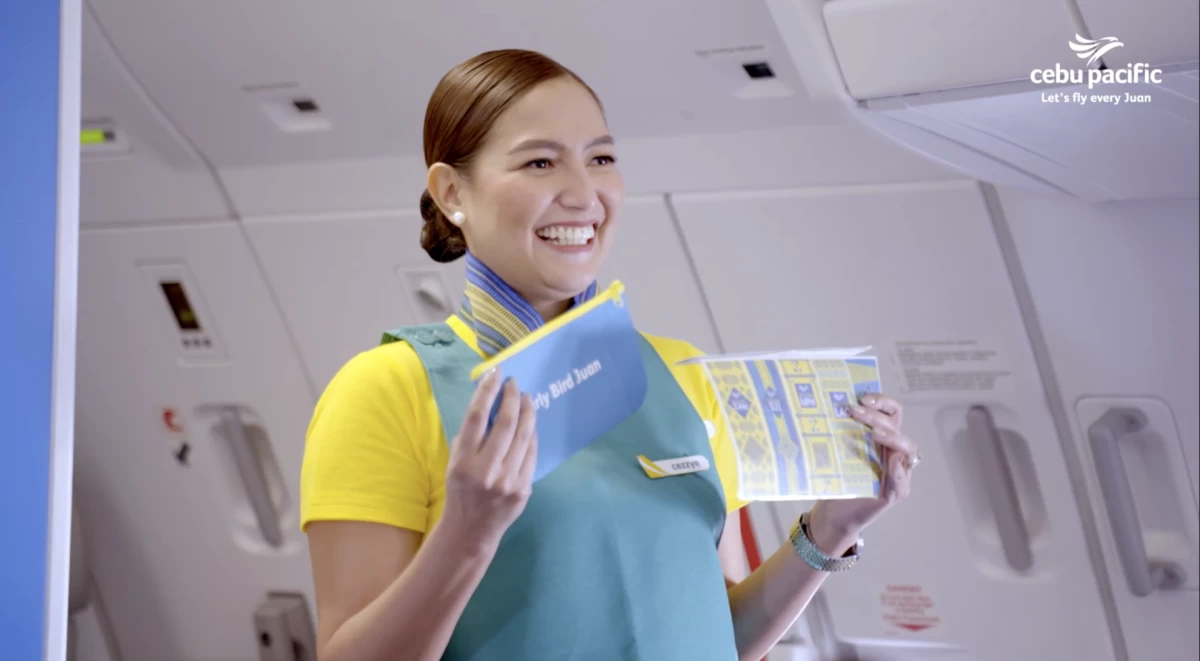
Cabin Crew member Cezzye Basa wears the Ramit scarf, symbolizing the meticulous care and continuity she brings to every flight. Service, she says, is like weaving—never rushed.
Weaving safety and service
That sense of shared responsibility begins long before the doors close. In every pre-flight briefing, pilots and cabin crew align their goals, review safety measures, and check on one another.
“From the perspective of a pilot, first we have to check ourselves. Not only me, but also our crew—we ask them if they’re ready to fly,” Siñel says. “Even though we have different jobs, we should be aligned on our intention. And it’s important for everybody.”
Basa believes in creating a safe and open environment where her team can thrive. “During our briefing, I like to create a fun environment,” she explains. “Personally, if I feel na takot sila sa'yo (that they’re afraid of you), they’ll be rattled throughout the flight. So, I try to be friendly and approachable to my colleagues. But at the end of the day, safety is still the priority.”
Though they work in different spaces—Siñel in the cockpit and Basa in the cabin—their craft runs parallel. Both began their journeys for different reasons, but they are bound by the same discipline and purpose.
This unity becomes most visible during disruptions—storms and diversions—moments when training and empathy are tested. Basa recalls a tense international flight when severe weather forced a diversion. Resources were limited and passengers were upset. “I felt helpless,” she remembers. “But now, we’ve become more innovative and adaptive. We have more resources, and we’re better at managing situations.”
For Siñel, these moments define professionalism. “Whatever happens in your flight, you must take it positively. We were trained for this, and we are ready in case something happens,” he states. “Most of the passengers are understanding, just let them know what is happening.”
Both also see themselves as custodians of Cebu Pacific’s culture—one woven from openness, service, and resilience. Wearing the uniform, Basa says, feels like carrying that culture visibly. “One quote that stuck to me... is, ‘I am you, you are me.’ We represent each other. Whenever I’m in uniform, it’s not just me. We represent the company.”
For Siñel, the ultimate lesson came early on from a senior captain: “Before you go to the flight line, you have to be 101% ready, because the life of your crew and the life of the passengers are entrusted to you—so you must be ready.”
This sense of duty inspires crew members not just to be ready, but to go above and beyond. “I don’t take it as a job that I have to do,” Basa concludes. “I go above and beyond because giving customer service is more than a job—it’s leaving a positive mark on our guests.”
Just as every weave tells a story, every flight carries hundreds of hopes and memories. In recognizing its top-performing pilots and cabin crew with these traditional weaves, Cebu Pacific is celebrating not only exceptional service but also the artistry and culture behind it. From Ilocos Norte to Occidental Mindoro, from the loom to the sky, these weaves echo a shared commitment to skill, care, and continuity, carrying the Filipino story forward.