ADVERTISEMENT

PNP hails US recognition of PH anti-trafficking efforts

Published Oct 3, 2025 03:03 pm
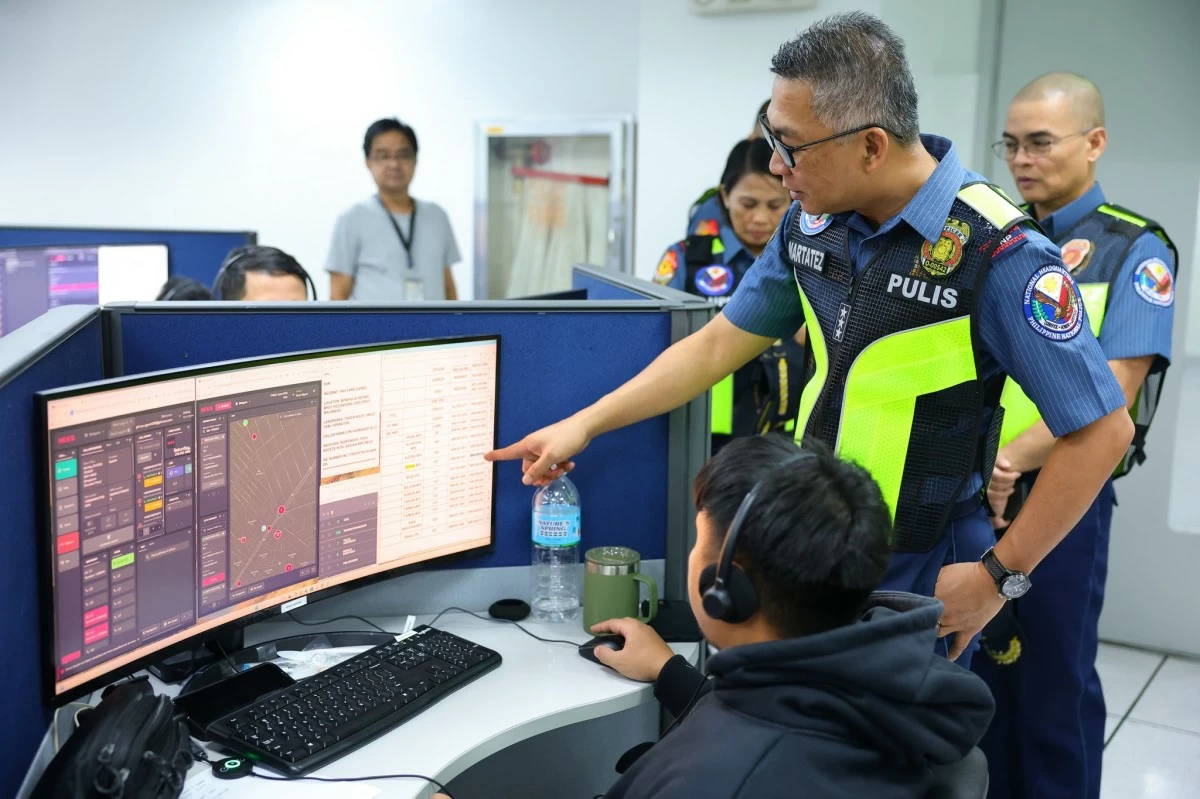
Acting Philippine National Police (PNP) Chief Police Lt. Gen. Jose Melencio Nartatez Jr. (File photo: PNP)
The Philippine National Police (PNP) welcomed on Friday, Oct. 3, the United States’ recognition of the country’s sustained progress in combating human trafficking.
The US Department of State released early this week the 2025 Trafficking in Persons (TIP) report which showed that the Philippines was placed under the Tier 1 status, the highest rank, for the 10th consecutive year as it fully meets the minimum international standards to eliminate human trafficking.
“The U.S. report is not only an affirmation of our progress, it also challenges us to do more. We cannot afford to be complacent. Your PNP will continue to strengthen its capabilities, build stronger partnerships, and push harder to ensure that traffickers are stopped and victims are protected,” acting PNP Chief Police Lt. Gen. Jose Melencio Nartatez Jr. said.
The TIP report highlighted the role of the PNP in leading anti-trafficking investigations together with the National Bureau of Investigation (NBI).
During the reporting period, authorities investigated 500 trafficking cases, an increase from 417 the previous year, the report said. Of these, the PNP handled a significant number, particularly cases tied to online sexual abuse and exploitation of children (OSAEC) and cyber-facilitated trafficking.
Nartatez said that the Women and Children Protection Center (WCPC) and the Anti-Cybercrime Group (ACG) are at the forefront of the PNP’s campaign against trafficking.
The WCPC has spearheaded rescue operations nationwide, often in partnership with the Department of Social Welfare and Development (DSWD). WCPC regional cyber protection units were recognized as being at the center of OSAEC case investigations, where victims are often children exploited by family members or trusted adults.
Meanwhile, the Anti-Cybercrime Group (ACG) expanded digital forensics and cyber-patrols to detect trafficking activities in social media, messaging platforms, and online scam hubs, often disguised as Philippine Offshore Gaming Operators (POGO)-related operations. Authorities prosecuted at least 43 traffickers linked to scam hubs, many of whom were operators and incorporators of POGOs, the report said.
The report, however, noted persistent challenges which include corruption and complicity among some public officials. In 2024, it said that the government continued to prosecute two law enforcers, including one police officer allegedly involved in cyber-facilitated sex trafficking and another accused of shielding a trafficker.
The PNP emphasized that such cases do not represent the police organization as a whole and vowed that accountability will be pursued under the “one-strike policy” against erring personnel.
According to the TIP report, the Philippines also prosecuted 446 alleged traffickers (213 for sex trafficking, 233 for labor trafficking), compared with 264 the year before. Courts convicted 143 traffickers, up from 80 convictions the previous year. Sentences ranged from one year to life imprisonment, with courts increasingly adopting plea bargaining in OSAEC cases to protect child victims from retraumatization.
The PNP’s coordination with the Department of Social Welfare and Development (DSWD) under the Recovery and Reintegration Program for Trafficked Persons (RRPTP) also ensured that victims of trafficking were provided shelter, medical assistance, psychosocial counseling, and reintegration services, the report said. In 2024, authorities assisted more than 2,193 victims, with hundreds of rescues attributed to joint PNP-DSWD operations.
It further shared that police also helped facilitate witness protection and legal support for victims who participated in the prosecution of traffickers. In 2024, 51 trafficking victims entered the witness protection program, compared to 28 the previous year. The use of recorded child victim testimonies also helped minimize retraumatization during trial.
The PNP, according to the report, has also been actively collaborating with foreign counterparts through the Philippines Internet Crimes Against Children Center (PICACC), a joint initiative involving WCPC, the NBI, and international non-government organizations. The partnerships have been crucial in tracking down foreign offenders involved in OSAEC and in dismantling transnational trafficking networks.
However, the TIP report also flagged the need for more digital forensics capacity, personnel, and logistical support to keep up with the complexity of online-enabled trafficking crimes. The PNP acknowledged this challenge and is pushing for more funding to enhance cybercrime capabilities.
“The fight against human trafficking is a fight for human dignity. The PNP remains fully committed to safeguarding every Filipino from exploitation and abuse,” Nartatez stressed.

Related Tags

PNP trafficking US Department of State Trafficking in Persons Report 2025
ADVERTISEMENT
.most-popular .layout-ratio{ padding-bottom: 79.13%; } @media (min-width: 768px) and (max-width: 1024px) { .widget-title { font-size: 15px !important; } }

{{ articles_filter_1561_widget.title }}

.most-popular .layout-ratio{ padding-bottom: 79.13%; } @media (min-width: 768px) and (max-width: 1024px) { .widget-title { font-size: 15px !important; } }

{{ articles_filter_1562_widget.title }}

.most-popular .layout-ratio{ padding-bottom: 79.13%; } @media (min-width: 768px) and (max-width: 1024px) { .widget-title { font-size: 15px !important; } }

{{ articles_filter_1563_widget.title }}

{{ articles_filter_1564_widget.title }}

.mb-article-details { position: relative; } .mb-article-details .article-body-preview, .mb-article-details .article-body-summary{ font-size: 17px; line-height: 30px; font-family: "Libre Caslon Text", serif; color: #000; } .mb-article-details .article-body-preview iframe , .mb-article-details .article-body-summary iframe{ width: 100%; margin: auto; } .read-more-background { background: linear-gradient(180deg, color(display-p3 1.000 1.000 1.000 / 0) 13.75%, color(display-p3 1.000 1.000 1.000 / 0.8) 30.79%, color(display-p3 1.000 1.000 1.000) 72.5%); position: absolute; height: 200px; width: 100%; bottom: 0; display: flex; justify-content: center; align-items: center; padding: 0; } .read-more-background a{ color: #000; } .read-more-btn { padding: 17px 45px; font-family: Inter; font-weight: 700; font-size: 18px; line-height: 16px; text-align: center; vertical-align: middle; border: 1px solid black; background-color: white; } .hidden { display: none; }
function initializeAllSwipers() { // Get all hidden inputs with cms_article_id document.querySelectorAll('[id^="cms_article_id_"]').forEach(function (input) { const cmsArticleId = input.value; const articleSelector = '#article-' + cmsArticleId + ' .body_images'; const swiperElement = document.querySelector(articleSelector); if (swiperElement && !swiperElement.classList.contains('swiper-initialized')) { new Swiper(articleSelector, { loop: true, pagination: false, navigation: { nextEl: '#article-' + cmsArticleId + ' .swiper-button-next', prevEl: '#article-' + cmsArticleId + ' .swiper-button-prev', }, }); } }); } setTimeout(initializeAllSwipers, 3000); const intersectionObserver = new IntersectionObserver( (entries) => { entries.forEach((entry) => { if (entry.isIntersecting) { const newUrl = entry.target.getAttribute("data-url"); if (newUrl) { history.pushState(null, null, newUrl); let article = entry.target; // Extract metadata const author = article.querySelector('.author-section').textContent.replace('By', '').trim(); const section = article.querySelector('.section-info ').textContent.replace(' ', ' '); const title = article.querySelector('.article-title h1').textContent; // Parse URL for Chartbeat path format const parsedUrl = new URL(newUrl, window.location.origin); const cleanUrl = parsedUrl.host + parsedUrl.pathname; // Update Chartbeat configuration if (typeof window._sf_async_config !== 'undefined') { window._sf_async_config.path = cleanUrl; window._sf_async_config.sections = section; window._sf_async_config.authors = author; } // Track virtual page view with Chartbeat if (typeof pSUPERFLY !== 'undefined' && typeof pSUPERFLY.virtualPage === 'function') { try { pSUPERFLY.virtualPage({ path: cleanUrl, title: title, sections: section, authors: author }); } catch (error) { console.error('ping error', error); } } // Optional: Update document title if (title && title !== document.title) { document.title = title; } } } }); }, { threshold: 0.1 } ); function showArticleBody(button) { const article = button.closest("article"); const summary = article.querySelector(".article-body-summary"); const body = article.querySelector(".article-body-preview"); const readMoreSection = article.querySelector(".read-more-background"); // Hide summary and read-more section summary.style.display = "none"; readMoreSection.style.display = "none"; // Show the full article body body.classList.remove("hidden"); } document.addEventListener("DOMContentLoaded", () => { let loadCount = 0; // Track how many times articles are loaded const offset = [1, 2, 3, 4, 5, 6, 7, 8, 9, 10]; // Offset values const currentUrl = window.location.pathname.substring(1); let isLoading = false; // Prevent multiple calls if (!currentUrl) { console.log("Current URL is invalid."); return; } const sentinel = document.getElementById("load-more-sentinel"); if (!sentinel) { console.log("Sentinel element not found."); return; } function isSentinelVisible() { const rect = sentinel.getBoundingClientRect(); return ( rect.top < window.innerHeight && rect.bottom >= 0 ); } function onScroll() { if (isLoading) return; if (isSentinelVisible()) { if (loadCount >= offset.length) { console.log("Maximum load attempts reached."); window.removeEventListener("scroll", onScroll); return; } isLoading = true; const currentOffset = offset[loadCount]; window.loadMoreItems().then(() => { let article = document.querySelector('#widget_1690 > div:nth-last-of-type(2) article'); intersectionObserver.observe(article) loadCount++; }).catch(error => { console.error("Error loading more items:", error); }).finally(() => { isLoading = false; }); } } window.addEventListener("scroll", onScroll); });

Sign up by email to receive news.