

ADVERTISEMENT

Munich Airport temporarily shut after drone sightings, another mysterious overflight in EU airspace

Published Oct 3, 2025 08:08 pm
MUNICH (AP) — Munich Airport was temporarily shut down overnight after several drone sightings in the area, the latest mysterious drone overflights in the airspace of European Union member countries, officials said.
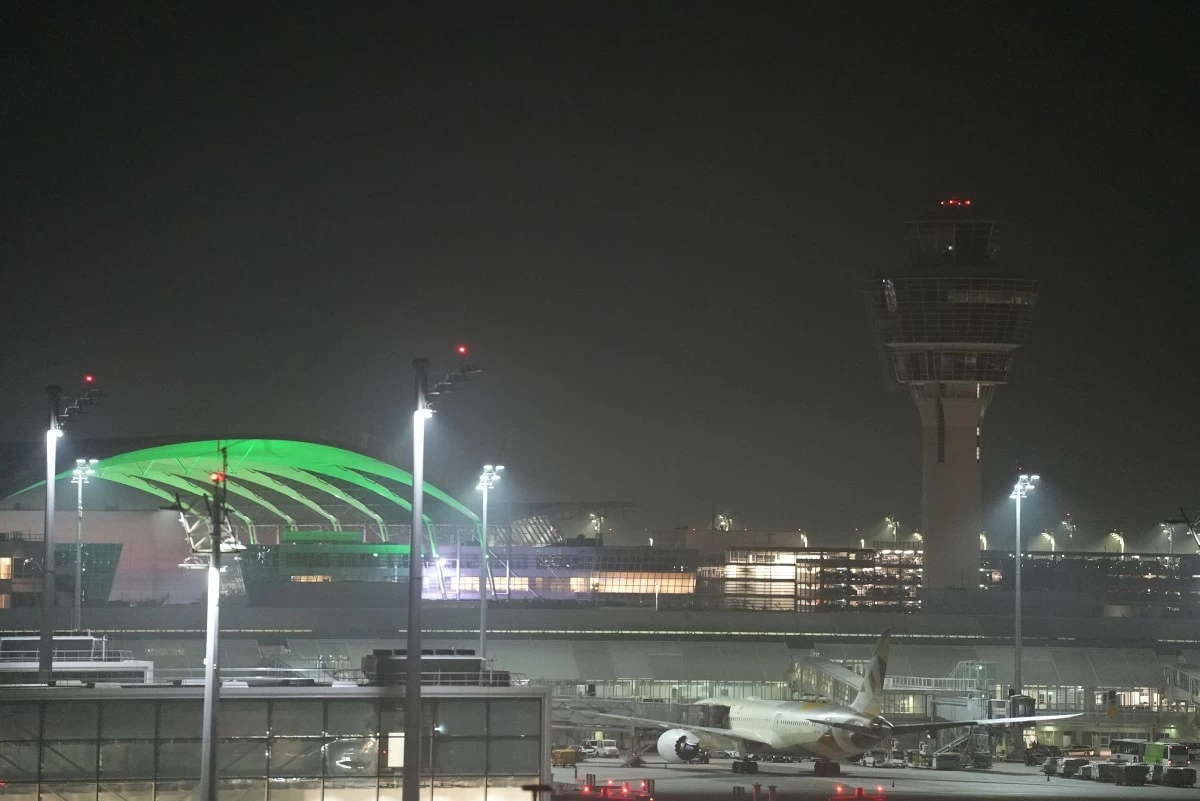
This photo shows Munich Airport, Germany Friday, Oct. 3, 2025. (Ehsan Monajati/dpa via AP)
Germany's air traffic control restricted flights at the airport shortly after 10 p.m. on Thursday and then halted them altogether, airport operators said in a statement. Seventeen flights were unable to take off, affecting almost 3,000 passengers, while 15 arriving flights were diverted to three other airports in Germany and one in Vienna, Austria.
Flights in and out of the airport resumed at 5 a.m. (0300 GMT), said Stefan Bayer, a spokesman for Germany's federal police at Munich airport. Authorities were not immediately able to provide any information about who was responsible for the overflights.
A statement from the airport early Friday said there had been "several drone sightings," without elaborating. Bayer said it wasn't immediately clear how many drones might have been involved. He said police, airline employees and "regular people around the airport" were among witnesses who reported the drone sightings.
After the closure of the runways, federal police deployed helicopters and other means to try to track down the drones, but no signs of them could be found, Bayer said.
Hundreds of stranded passengers spent the night in cots set up in terminals or were taken to hotels and blankets, drinks and snacks were distributed to them, the German news agency dpa reported.
The incident was the latest in a series of incidents of mysterious drone sightings over airports as well as other critical infrastructure sites in the EU in several European Union member countries. A drone incident in Oslo, the capital of Norway, which is a NATO member but not part of the EU, also affected flights there late last month.
It wasn't immediately clear who has been behind the flyovers, but European authorities have expressed concerns Russia could be behind them. Russian authorities have rejected claims of involvement in recent drone incidents in Denmark.
Officials in Russia and close ally Belarus acknowledged last month that some drones used as part of Russia's war in Ukraine had entered the territory of EU and NATO member Poland, prompting a scramble by Polish and NATO allies in which fighter jets were deployed to shoot them down.
The drone overflights were major focus of a summit of EU and European leaders in Copenhagen, Denmark, this week. Authorities have vowed to step up measures to minimize and thwart the threat posed by drones.
Separately, a Russia-linked oil tanker that authorities in France detained — and which had been suspected of possible involvement in the drone incursions over Denmark — was back at sea on Friday.
A thorough search by French Navy commandos that boarded the ship found no drones, no drone-launching equipment and no evidence that drones had taken off from the vessel, according to an official with knowledge of the investigation who spoke on condition of anonymity because they weren't authorized to discuss it publicly.
The ship-tracking website Marine Traffic showed that the tanker was navigating at sea again on Friday morning, heading southwest from the French Atlantic coast where it was detained and apparently bound for the Suez Canal.
French authorities said before it departed that the tanker's captain will go on trial in February over the crew's alleged refusal to cooperate when French authorities stopped and boarded it.
An investigation led by the French Navy concluded that the ship, coming from Russia and heading to India with a "large oil shipment," was flying no flag, French prosecutor Stéphane Kellenberger.
The tanker's name has changed several times and it's now known as "Pushpa" or "Boracay." Its route from a Russian oil terminal into the Atlantic took it past the coast of Denmark.

Related Tags

World news European Union
ADVERTISEMENT
.most-popular .layout-ratio{ padding-bottom: 79.13%; } @media (min-width: 768px) and (max-width: 1024px) { .widget-title { font-size: 15px !important; } }

{{ articles_filter_1561_widget.title }}

.most-popular .layout-ratio{ padding-bottom: 79.13%; } @media (min-width: 768px) and (max-width: 1024px) { .widget-title { font-size: 15px !important; } }

{{ articles_filter_1562_widget.title }}

.most-popular .layout-ratio{ padding-bottom: 79.13%; } @media (min-width: 768px) and (max-width: 1024px) { .widget-title { font-size: 15px !important; } }

{{ articles_filter_1563_widget.title }}

{{ articles_filter_1564_widget.title }}

.mb-article-details { position: relative; } .mb-article-details .article-body-preview, .mb-article-details .article-body-summary{ font-size: 17px; line-height: 30px; font-family: "Libre Caslon Text", serif; color: #000; } .mb-article-details .article-body-preview iframe , .mb-article-details .article-body-summary iframe{ width: 100%; margin: auto; } .read-more-background { background: linear-gradient(180deg, color(display-p3 1.000 1.000 1.000 / 0) 13.75%, color(display-p3 1.000 1.000 1.000 / 0.8) 30.79%, color(display-p3 1.000 1.000 1.000) 72.5%); position: absolute; height: 200px; width: 100%; bottom: 0; display: flex; justify-content: center; align-items: center; padding: 0; } .read-more-background a{ color: #000; } .read-more-btn { padding: 17px 45px; font-family: Inter; font-weight: 700; font-size: 18px; line-height: 16px; text-align: center; vertical-align: middle; border: 1px solid black; background-color: white; } .hidden { display: none; }
function initializeAllSwipers() { // Get all hidden inputs with cms_article_id document.querySelectorAll('[id^="cms_article_id_"]').forEach(function (input) { const cmsArticleId = input.value; const articleSelector = '#article-' + cmsArticleId + ' .body_images'; const swiperElement = document.querySelector(articleSelector); if (swiperElement && !swiperElement.classList.contains('swiper-initialized')) { new Swiper(articleSelector, { loop: true, pagination: false, navigation: { nextEl: '#article-' + cmsArticleId + ' .swiper-button-next', prevEl: '#article-' + cmsArticleId + ' .swiper-button-prev', }, }); } }); } setTimeout(initializeAllSwipers, 3000); const intersectionObserver = new IntersectionObserver( (entries) => { entries.forEach((entry) => { if (entry.isIntersecting) { const newUrl = entry.target.getAttribute("data-url"); if (newUrl) { history.pushState(null, null, newUrl); let article = entry.target; // Extract metadata const author = article.querySelector('.author-section').textContent.replace('By', '').trim(); const section = article.querySelector('.section-info ').textContent.replace(' ', ' '); const title = article.querySelector('.article-title h1').textContent; // Parse URL for Chartbeat path format const parsedUrl = new URL(newUrl, window.location.origin); const cleanUrl = parsedUrl.host + parsedUrl.pathname; // Update Chartbeat configuration if (typeof window._sf_async_config !== 'undefined') { window._sf_async_config.path = cleanUrl; window._sf_async_config.sections = section; window._sf_async_config.authors = author; } // Track virtual page view with Chartbeat if (typeof pSUPERFLY !== 'undefined' && typeof pSUPERFLY.virtualPage === 'function') { try { pSUPERFLY.virtualPage({ path: cleanUrl, title: title, sections: section, authors: author }); } catch (error) { console.error('ping error', error); } } // Optional: Update document title if (title && title !== document.title) { document.title = title; } } } }); }, { threshold: 0.1 } ); function showArticleBody(button) { const article = button.closest("article"); const summary = article.querySelector(".article-body-summary"); const body = article.querySelector(".article-body-preview"); const readMoreSection = article.querySelector(".read-more-background"); // Hide summary and read-more section summary.style.display = "none"; readMoreSection.style.display = "none"; // Show the full article body body.classList.remove("hidden"); } document.addEventListener("DOMContentLoaded", () => { let loadCount = 0; // Track how many times articles are loaded const offset = [1, 2, 3, 4, 5, 6, 7, 8, 9, 10]; // Offset values const currentUrl = window.location.pathname.substring(1); let isLoading = false; // Prevent multiple calls if (!currentUrl) { console.log("Current URL is invalid."); return; } const sentinel = document.getElementById("load-more-sentinel"); if (!sentinel) { console.log("Sentinel element not found."); return; } function isSentinelVisible() { const rect = sentinel.getBoundingClientRect(); return ( rect.top < window.innerHeight && rect.bottom >= 0 ); } function onScroll() { if (isLoading) return; if (isSentinelVisible()) { if (loadCount >= offset.length) { console.log("Maximum load attempts reached."); window.removeEventListener("scroll", onScroll); return; } isLoading = true; const currentOffset = offset[loadCount]; window.loadMoreItems().then(() => { let article = document.querySelector('#widget_1690 > div:nth-last-of-type(2) article'); intersectionObserver.observe(article) loadCount++; }).catch(error => { console.error("Error loading more items:", error); }).finally(() => { isLoading = false; }); } } window.addEventListener("scroll", onScroll); });

Sign up by email to receive news.