







DA: New livestock law will bring pork prices down
Published Oct 3, 2025 02:40 pm


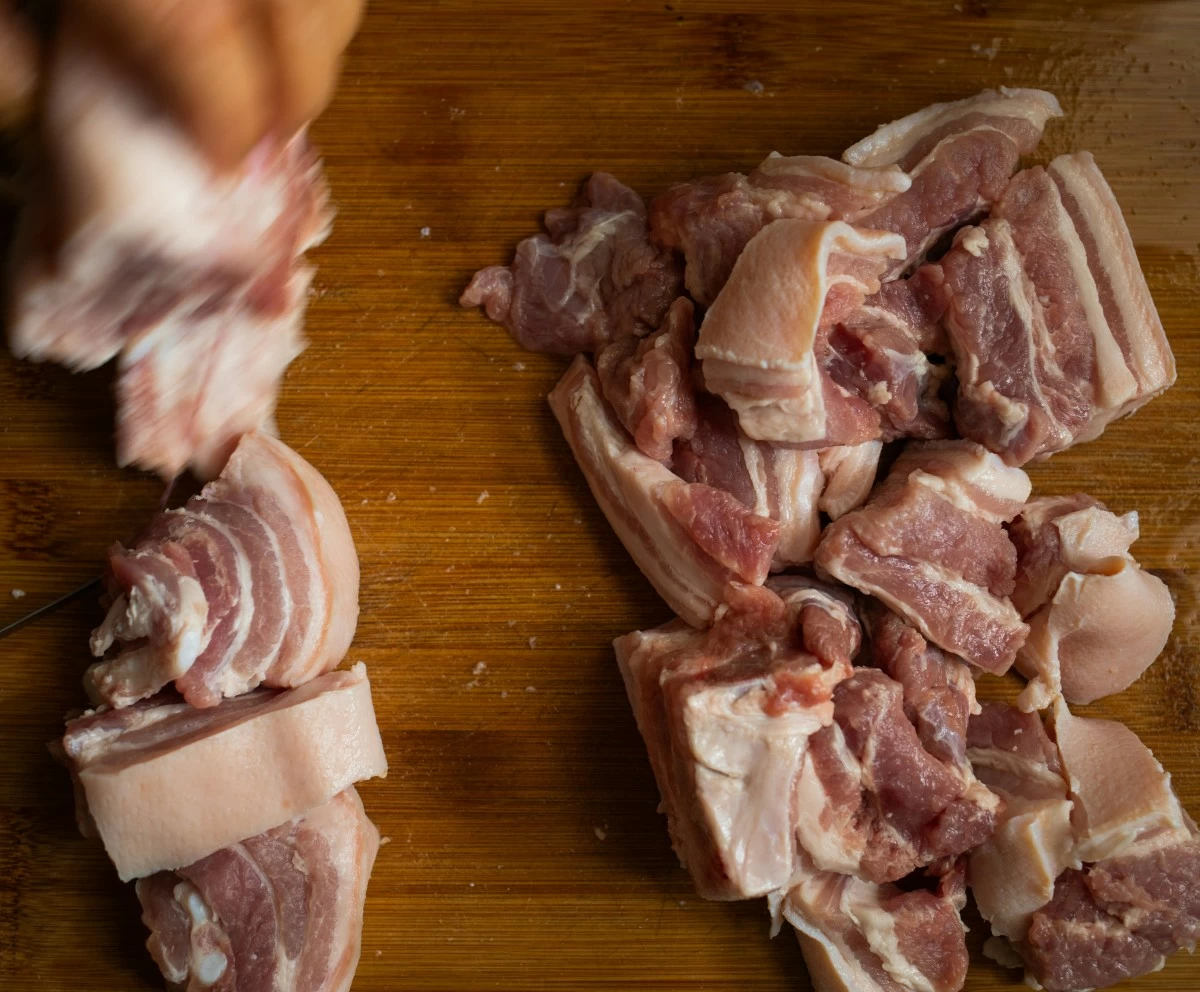
(Unsplash)
The newly signed law creating an annual ₱20-billion fund to strengthen the competitiveness of the local livestock and poultry sectors is expected to curb the soaring prices of pork, according to Agriculture Secretary Francisco Tiu Laurel.
Three days before it was expected to lapse into law, President Ferdinand “Bongbong” Marcos Jr. signed Republic Act (RA) No. 12308, or the Animal Industry Development and Competitiveness Act (AIDCA), on Sept. 25.
The law will take effect by mid-October upon its publication in the Official Gazette.
Tiu Laurel said industry stakeholders have long clamored for such a measure following the outbreak of the African swine fever (ASF), which slashed the country’s hog population by around six million heads.
AIDCA establishes the Animal Competitiveness Enhancement Fund (AnCEF), which will have an annual budget of ₱20 billion, funded by tariff collections from imported livestock, poultry, and dairy products.
“That will be used for repopulation, especially of our pigs. We lost six million heads of hogs. And the government will want to repopulate with three million. Then hopefully, the private sector will get the other 3 million,” said Tiu Laurel in a chance interview.
Tiu Laurel said this repopulation effort comes at a critical juncture as the government heads towards the commercial rollout of a vaccine against ASF, which could help calm the nerves of hog raisers wary of potential risks.
“So that finally the price of our pork will go down again and return to normal, including liempo (pork belly), kasim (pork shoulder), and pigue (ham),” he explained.
Based on the latest DA monitoring in Metro Manila markets, the prevailing prices of liempo and kasim are ₱ 405 and ₱356 per kilo, respectively.
Taking into account inflationary pressures, the average price of liempo stood at ₱232 per kilo and kasim at ₱202 per kilo before the first outbreak of ASF in 2019.
Under the law, 26 percent of the ₱20-billion AnCEF will go to repopulation, herd build-up, as well as improvement and accreditation of established breeding centers or stock farms.
Of this, 70 percent is earmarked for hog repopulation, 20 percent for poultry, and 5 percent each for native and other animals.
AnCEF also aims to bolster funding for dairy herd development, credit assistance, post-harvest development and mechanization, food safety and extension services, animal health and welfare, and animal feed development, among others.
Under AIDCA, if tariff collections exceed ₱20 billion, the additional revenue shall be allocated towards direct financial support programs for farmers, including recovery and compensation programs to those affected by animal diseases.
“This law is more than a funding mechanism—it is a bold commitment to the people who feed our country,” said Tiu Laurel.
“The future development of these sectors will not only enhance food security, but also attract new investments, improve farmer incomes, and generate more jobs,” he added.
The law also elevates the Bureau of Animal Industry (BAI) to a line agency of the Department of Agriculture (DA), granting it greater authority to implement programs.
It also strengthens the Philippine Carabao Center (PCC) and National Dairy Authority (NDA) by assigning them expanded mandates, including in biotechnology and vaccine development.
The law also promotes the local development of vaccines and response protocols for animal health threats, such as ASF, Newcastle Disease, and Avian Influenza, thereby reducing reliance on foreign supplies.