

ADVERTISEMENT

What is that? Bam Aquino pushes for blockchain technology in the national budget

Published Oct 2, 2025 04:06 pm

At A Glance

  • Senator Bam Aquino pushed for Senate Bill (SB) No. 1330 in order to place the national budget on a blockchain system for the sake of transparency and accountability. Experts and officials like Baguio City Mayor Benjamin Magalong highlighted the system's tamper-proof, traceable records as a safeguard against manipulation and corruption.
Amid the continuous investigation into the flood control project scandal, Senator Bam Aquino is pushing for a bill that seeks the tap blockchain technology in the national budget as a means to curb corruption.
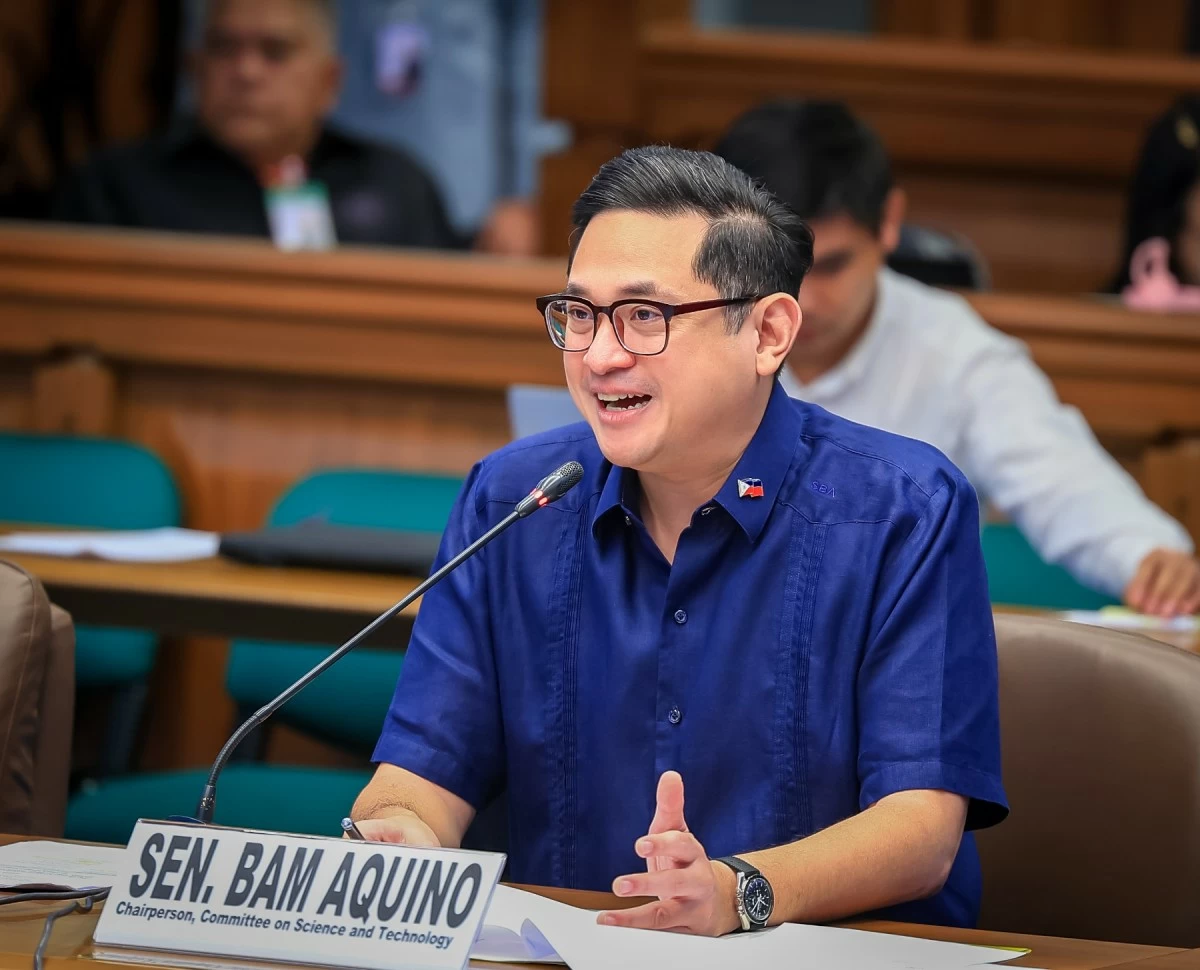
Sen. Bam Aquino seeks to modernize budget transparency and accountability through the use of “blockchain technology” in a bid to make the national budget publicly available, ensure accessibility, easy to understand, and open for citizen engagement. (Senate PRIB photo)
Tacklec during a hearing of the Senate Committee on Science and Technology presided by Aquino was Senate Bill (SB) No. 1330--a measure mandating the creation of a National Budget Blockchain System to strengthen transparency, accountability, and public participation in the country's budget process.
The public hearing shed light on what blockchain technology does.
Jiro Louis Reyes of Bitskwela described blockchain as a notebook where transactions, records, data, and payments can be written on. But the thing with this notebook according to Reyes is that everyone has a copy of it; meaning that anyone from around the world can check its contents, anytime, anywhere.
He added that the blockchain was "tamper-proof", or something that cannot be deleted or altered, even by the President.
"No one party can destroy the blockchain and that is the whole beauty of it right now," he said.
In short, blockchain is a shared digital record that is secure, transparent, and very hard to cheat, says Reyes.
Aquino wondered if records in the blockchain truly can't be altered.
"Let's say na may scam na na-uncover, tapos gustong pagtakpan...gusto nilang baguhin, di nila kayang baguhin? (Let's say a scam was uncovered and then they want to cover it up…they want to change it, but they can’t, right?)" Aquino asked.
Reyes said that there's accountability in the blockchain; if there's such anomalous activity, it can be tracked from the source.
Lawyer Daniel John Fordan of the Philippine Association of Fintech Lawyers explains that with the use of blockchain, there are multiple synchronized copies held by different community members that make manipulation virtually impossible.
With the traditional system, he said there might be just one official record keeper maintaining the books.
"Pag nagkamali siya (If he makes a mistake) or worse, if he deliberately manipulates the records, it can be extremely difficult to detect."
Baguio City Mayor Benjamin Magalong, who also attended the hearing, said that as part of their commitment to the Open Government Partnership, they entered into a memorandum of agreement (MOA) with BayaniChain Tech Inc., a company that specializes in enterprise and government blockchain solutions, last month.
"BayaniChain gave us a complimentary subscription of one year. This partnership aims to strengthen public accountability, provide permanent audit trails, and promote participatory governance," he said.
Magalong said that with their GoodGovChain platform, they will work on digitally recording infrastructure documents, procurement records, and city ordinances for permanent traceability and auditability, enable citizens to access and view all records through their dashboards, and provide an interactive feature where the public may submit feedback, raise clarifications, and report anomalies.
Aquino says that placing the national budget on the blockchain answers many concerns and issues with the current system. Where the budget process has been opaque, blockchain can make it transparent.
"Kung saan may mga insertions at kumpleto kuno na mga projects, makikita kung kailan at gaano katagal ang bidding, awarding, ang disbursement of funds. Lahat ng mga kontrata, bill of materials, lahat ‘yan, maaring makita pag natupad po ang batas na ito (Where there are insertions and supposedly completed projects, one will be able to see when and how long the bidding and awarding took, as well as the disbursement of funds. All contracts, bills of materials, everything can be accessed once this law is implemented)," he added.

Related Tags

Bam Aquino blockchain national budget
ADVERTISEMENT
.most-popular .layout-ratio{ padding-bottom: 79.13%; } @media (min-width: 768px) and (max-width: 1024px) { .widget-title { font-size: 15px !important; } }

{{ articles_filter_1561_widget.title }}

.most-popular .layout-ratio{ padding-bottom: 79.13%; } @media (min-width: 768px) and (max-width: 1024px) { .widget-title { font-size: 15px !important; } }

{{ articles_filter_1562_widget.title }}

.most-popular .layout-ratio{ padding-bottom: 79.13%; } @media (min-width: 768px) and (max-width: 1024px) { .widget-title { font-size: 15px !important; } }

{{ articles_filter_1563_widget.title }}

{{ articles_filter_1564_widget.title }}

.mb-article-details { position: relative; } .mb-article-details .article-body-preview, .mb-article-details .article-body-summary{ font-size: 17px; line-height: 30px; font-family: "Libre Caslon Text", serif; color: #000; } .mb-article-details .article-body-preview iframe , .mb-article-details .article-body-summary iframe{ width: 100%; margin: auto; } .read-more-background { background: linear-gradient(180deg, color(display-p3 1.000 1.000 1.000 / 0) 13.75%, color(display-p3 1.000 1.000 1.000 / 0.8) 30.79%, color(display-p3 1.000 1.000 1.000) 72.5%); position: absolute; height: 200px; width: 100%; bottom: 0; display: flex; justify-content: center; align-items: center; padding: 0; } .read-more-background a{ color: #000; } .read-more-btn { padding: 17px 45px; font-family: Inter; font-weight: 700; font-size: 18px; line-height: 16px; text-align: center; vertical-align: middle; border: 1px solid black; background-color: white; } .hidden { display: none; }
function initializeAllSwipers() { // Get all hidden inputs with cms_article_id document.querySelectorAll('[id^="cms_article_id_"]').forEach(function (input) { const cmsArticleId = input.value; const articleSelector = '#article-' + cmsArticleId + ' .body_images'; const swiperElement = document.querySelector(articleSelector); if (swiperElement && !swiperElement.classList.contains('swiper-initialized')) { new Swiper(articleSelector, { loop: true, pagination: false, navigation: { nextEl: '#article-' + cmsArticleId + ' .swiper-button-next', prevEl: '#article-' + cmsArticleId + ' .swiper-button-prev', }, }); } }); } setTimeout(initializeAllSwipers, 3000); const intersectionObserver = new IntersectionObserver( (entries) => { entries.forEach((entry) => { if (entry.isIntersecting) { const newUrl = entry.target.getAttribute("data-url"); if (newUrl) { history.pushState(null, null, newUrl); let article = entry.target; // Extract metadata const author = article.querySelector('.author-section').textContent.replace('By', '').trim(); const section = article.querySelector('.section-info ').textContent.replace(' ', ' '); const title = article.querySelector('.article-title h1').textContent; // Parse URL for Chartbeat path format const parsedUrl = new URL(newUrl, window.location.origin); const cleanUrl = parsedUrl.host + parsedUrl.pathname; // Update Chartbeat configuration if (typeof window._sf_async_config !== 'undefined') { window._sf_async_config.path = cleanUrl; window._sf_async_config.sections = section; window._sf_async_config.authors = author; } // Track virtual page view with Chartbeat if (typeof pSUPERFLY !== 'undefined' && typeof pSUPERFLY.virtualPage === 'function') { try { pSUPERFLY.virtualPage({ path: cleanUrl, title: title, sections: section, authors: author }); } catch (error) { console.error('ping error', error); } } // Optional: Update document title if (title && title !== document.title) { document.title = title; } } } }); }, { threshold: 0.1 } ); function showArticleBody(button) { const article = button.closest("article"); const summary = article.querySelector(".article-body-summary"); const body = article.querySelector(".article-body-preview"); const readMoreSection = article.querySelector(".read-more-background"); // Hide summary and read-more section summary.style.display = "none"; readMoreSection.style.display = "none"; // Show the full article body body.classList.remove("hidden"); } document.addEventListener("DOMContentLoaded", () => { let loadCount = 0; // Track how many times articles are loaded const offset = [1, 2, 3, 4, 5, 6, 7, 8, 9, 10]; // Offset values const currentUrl = window.location.pathname.substring(1); let isLoading = false; // Prevent multiple calls if (!currentUrl) { console.log("Current URL is invalid."); return; } const sentinel = document.getElementById("load-more-sentinel"); if (!sentinel) { console.log("Sentinel element not found."); return; } function isSentinelVisible() { const rect = sentinel.getBoundingClientRect(); return ( rect.top < window.innerHeight && rect.bottom >= 0 ); } function onScroll() { if (isLoading) return; if (isSentinelVisible()) { if (loadCount >= offset.length) { console.log("Maximum load attempts reached."); window.removeEventListener("scroll", onScroll); return; } isLoading = true; const currentOffset = offset[loadCount]; window.loadMoreItems().then(() => { let article = document.querySelector('#widget_1690 > div:nth-last-of-type(2) article'); intersectionObserver.observe(article) loadCount++; }).catch(error => { console.error("Error loading more items:", error); }).finally(() => { isLoading = false; }); } } window.addEventListener("scroll", onScroll); });

Sign up by email to receive news.