






Manila Bulletin
 Philippines
National
Villar bill seeks mandatory drone monitoring of all gov't construction projects before payment
Philippines
National
Villar bill seeks mandatory drone monitoring of all gov't construction projects before payment
Philippines
National
Villar bill seeks mandatory drone monitoring of all gov't construction projects before payment
Villar bill seeks mandatory drone monitoring of all gov't construction projects before payment
By Dhel Nazario
Published Oct 2, 2025 02:56 pm


At A Glance
- Senator Mark Villar filed Senate Bill (SB) No. 1438 , which mandated third-party drone monitoring of all government construction projects. This seeks to make payments contingent on verified aerial documentation to ensure transparency, accountability, and public access to project data.
Senator Mark Villar has filed a bill mandating comprehensive drone monitoring of all government construction projects as a requirement before any payments can be processed.
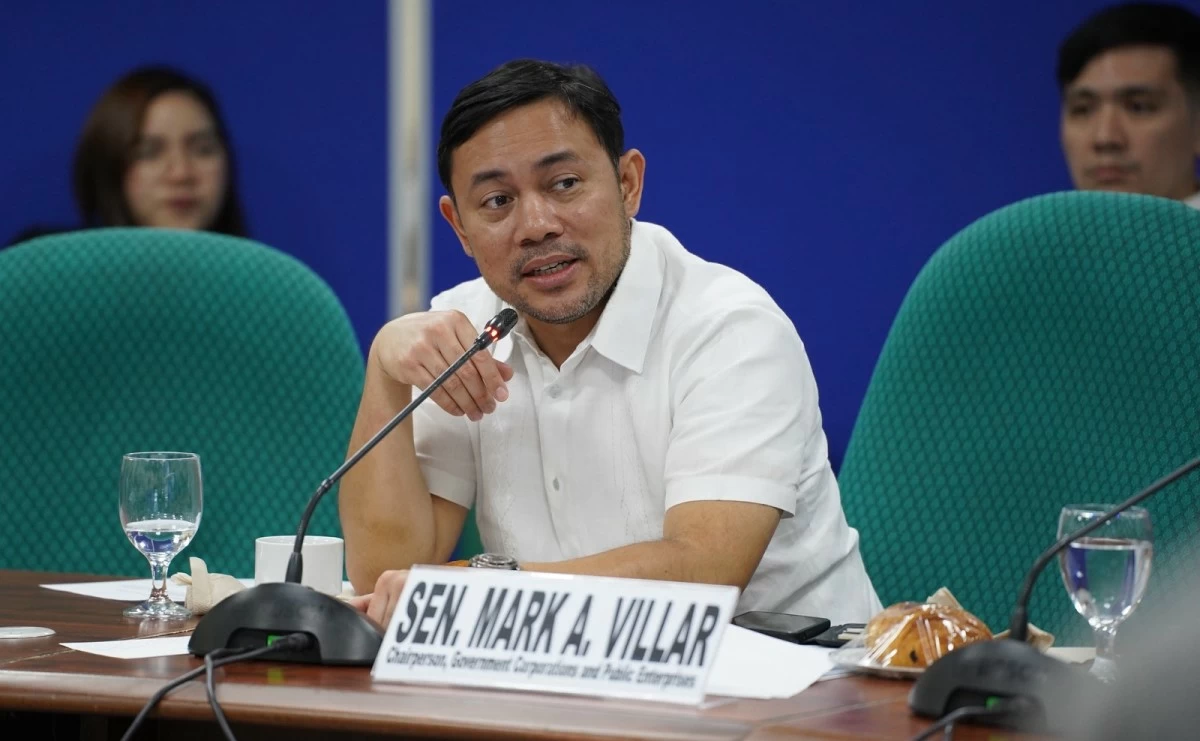
Senator Mark Villar (Photo from the Office of Senator Mark Villar)
Senate Bill (SB) No. 1438, titled the "Government Construction Project Transparency and Accountability Act of 2025”, proposes a comprehensive approach to oversight. It applies to all national government agencies and government-owned and controlled corporations (GOCC) involved in construction.
This includes key infrastructure bodies such as the Department of Public Works and Highways (DPWH), Department of Transportation (DOTr), and Bases Conversion and Development Authority (BCDA). It seeks to ensure widespread coverage across the government's infrastructure portfolio.
"Persistent challenges including project delays, quality issues, and financial irregularities in public works demand innovative solutions. This legislation harnesses modern technology to establish an unwavering standard of accountability for every peso of public funds invested in infrastructure," said Villar, who emphasized the critical need for this reform.
The proposed measure requires systematic aerial documentation through unmanned aerial vehicles, to be conducted by independent accredited third-party entities.
It establishes a framework for capturing detailed project progress through high-resolution geotagged imagery, comprehensive video footage, and orthomosaic mapping. All collected data will be made accessible to citizens through a centralized public transparency portal, thus creating unprecedented visibility into government project execution.
The legislation includes strong enforcement mechanisms, specifically prohibiting any payment processing without the required drone verification documentation. It also stipulates serious penalties for both contractors and government personnel involved in submitting or approving falsified monitoring data, with violations being prosecuted under the Anti-Graft and Corrupt Practices Act.
"This initiative transforms how we monitor and manage public infrastructure projects," the senator said.
"It empowers citizens with tangible evidence of project progress while ensuring that government expenditures correspond directly to actual, verified accomplishments. We are committed to restoring public confidence in how infrastructure projects are implemented and delivered," he added.
The bill provides for a coordinated implementation timeline, with relevant agencies required to establish accreditation standards for monitoring entities within sixty days of enactment.
The Department of Science and Technology (DOST) and Department of Information and Communications Technology (DICT) will provide technical support in developing the implementing rules and regulations.