







US companies poised to inject capital into Clark Food Hub
Published Oct 2, 2025 11:42 pm


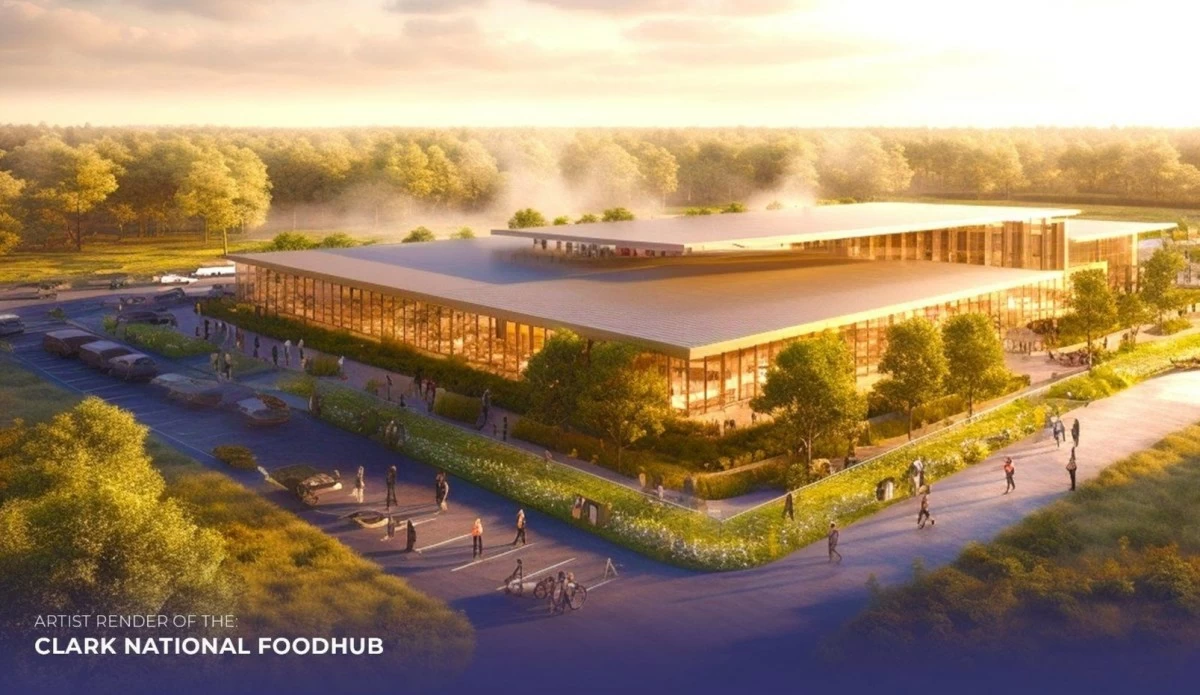
(CIAC photo)
The Philippines’ plan to build a national agricultural food hub in Clark, Pampanga, is expected to attract American companies interested in investing in food security, infrastructure, and technology, according to the International Trade Administration (ITA).
In a market intelligence report, the ITA stated that the proposed Clark National Food Hub presents significant opportunities for United States (US)-based agribusiness and logistics firms seeking to expand their presence in the Philippines.
The ITA said that investors could utilize the food hub to “expand market presence, modernize infrastructure, and introduce global best practices in food handling, processing, and supply chain management.”
Among the investment opportunities cited in the report are the development of agro-industrial and logistics infrastructure, cold chain and cold storage facilities, halal-certified food processing facilities, transport and warehousing solutions, and supply of technology and equipment.
It also identified prospects in food handling and processing equipment, food safety and traceability technologies, smart agricultural logistics solutions, and capacity building and technical assistance.
The ITA added that American companies could also look into partnerships in agricultural education, food safety training, and post-harvest management, alongside supporting the adoption of international best practices for standardized transactions within the food hub.
Explaining the food hub’s concept to American investors, the foreign agency noted that the Philippines frequently faces challenges in ensuring equal access to affordable food across its islands.
The ITA said that many rural areas rely on “bagsakan centers,” or drop-off centers for agricultural goods, to meet their daily food needs.
“However, these bagsakan centers often lead to high consumer prices, low profit margins for farmers, and inefficiencies due to intermediaries and transaction irregularities; thus, lack of transparency also compromises food quality and safety,” it said.
The ITA noted that the Clark National Food Hub is an upgraded version of this cultural practice, envisioned as a modern, centralized facility for the storage, processing, and distribution of agricultural commodities.
The food hub, according to the agency, is modeled after international benchmarks such as France’s Rungis International Market, Spain’s Mercabarna Food Hub, and Japan’s Tsukiji Fish Market.
A flagship project in the Marcos administration's food security agenda, the Clark National Food Hub will serve as a central venue for farmers to directly sell their produce to consumers.
Department of Agriculture (DA) Secretary Francisco Tiu Laurel said in April that around 47 hectares of land owned by the Clark International Airport Corp. (CIAC) have already been identified for the food hub.
Tiu Laurel said the development of the initial 12-hectare section will cost approximately ₱2 billion.
Under the proposed national budget for next year, the government has earmarked ₱2.1 billion for the project.
Besides Clark, the DA is also looking at other sites across the country to establish similar food hubs.
Among the potential sites is in Quezon province, which is seen as a location to produce goods from Southern Luzon and the Bicol region.
In a related development, the ITA said that franchising remains an attractive sector for US investors, driven by growth fueled by high consumer spending, brand consciousness, and a growing middle class.
“Food, retail, education, home and lifestyle, health, and wellness are popular franchise concepts, with food franchises remaining the most significant segment,” the report read.
“Service franchises are also on the rise, addressing evolving consumer needs in areas like education, health and wellness, automotive repair, and pet care,” it added.
The foreign agency said American franchises that are looking to expand into the Philippines should consider adapting their products to the local environment, while also investing in robust marketing campaigns, especially on social media.
Likewise, it recommended that franchises be established in high-traffic areas, such as malls and central business districts, including Makati, Bonifacio Global City, and Ortigas.
The ITA stated that consistent standards, along with regular employee training, should be maintained to ensure the service is world-class and that standard operating procedures are in place.