







PIDS urges lawmakers to expand Blue Economy Act
Published Oct 2, 2025 12:21 pm


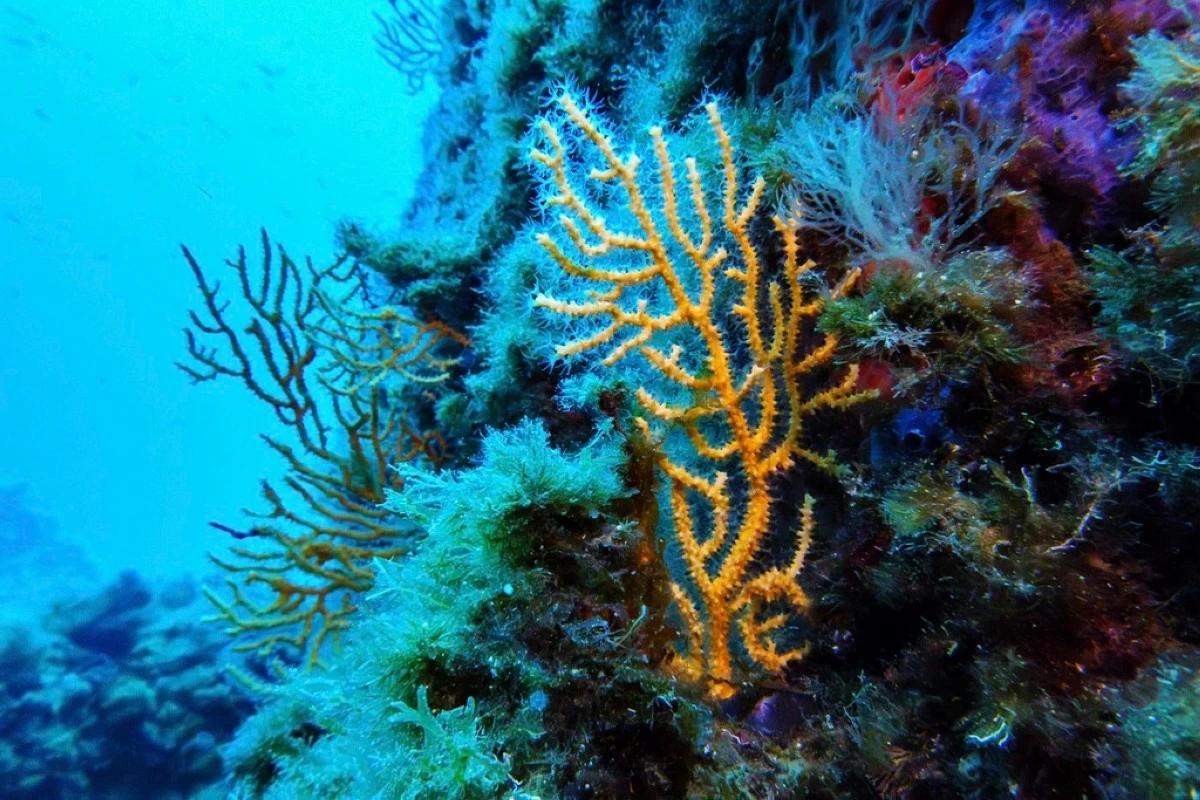
FILE - Coral is visible in the protected area of France's Porquerolles National Park ahead of the U.N. Ocean Conference on June 6, 2025. (AP Photo/Annika Hammerschlag, File)
State-run think tank Philippine Institute for Development Studies (PIDS) is urging lawmakers to strengthen and expand the proposed Blue Economy Act, citing its potential to protect the country’s coastal and marine resources while promoting sustainable economic growth.
In a Sept. 29 comment on House Bill (HB) Nos. 1158, 1553, 4139, 3254, 2807, 2101, 2284, 2324, 2683, 3819, and 2250, PIDS senior research fellow Sonny N. Domingo and research analyst Roselle F. Guadalupe highlighted the relevance of the proposed framework, which aims to promote stewardship of marine and coastal ecosystems in line with the Philippine Development Plan (PDP) and the United Nations’ (UN) Sustainable Development Goals (SDGs).
“The Philippine blue economy has tremendous potential as it spans a rich and expansive maritime domain,” the PIDS position paper read, adding that sustainable management of fisheries, aquaculture, marine tourism, shipping, and offshore energy could boost livelihoods, economic growth, and environmental well-being.
“The enactment of a blue economy legislation would guide the development and protection of the country’s vast archipelagic coastline and marine resources for sustained benefits,” PIDS said.
While the HBs vary in institutional design, environmental provisions, and financing, PIDS noted that they share a common thrust: promoting an integrated and inclusive approach to the sustainable use of coastal and marine resources. This includes advancing green technologies, developing innovative financing mechanisms, ensuring biodiversity protection, and reducing environmental risks while addressing social equity.
PIDS said that HBs 2250 and 2480, for example, highlight ocean-based models designed to both protect marine and coastal areas and harness their potential for sustainable development and community well-being.
According to PIDS, the proposed HBs seek to strengthen maritime governance, uphold local and global policy commitments, promote natural resource management, enhance coastal and marine protection, and integrate blue economy principles into national and local development plans.
PIDS emphasized that priority interventions under the proposed blue economy measures include improving marine transport and safety, exploring and mapping the Philippines’ exclusive economic zone (EEZ), strengthening coastal resilience, expanding marine tourism, boosting marine-related industries, protecting biodiversity, addressing ocean pollution, and enhancing policy enforcement.
PIDS recommended more progressive provisions on ecological integrity and waste management, especially on plastic and microplastic pollution, noting that the Philippines is the world’s third-largest contributor due to weak implementation of waste management laws and poor enforcement by industries and local governments.
The think tank also emphasized the need for a strong and well-equipped governing body to oversee blue economy initiatives, noting that most HBs propose renaming the National Coast Watch Council and its secretariat under Executive Order (EO) No. 57, series of 2011, as the National Maritime Council and Secretariat, with expanded functions and membership.
Alternatively, PIDS further recommended that HBs 3819 and 2250 call for the establishment of a Blue Economy Council composed of Cabinet secretaries, with the Department of Economy, Planning, and Development (DEPDev) serving as secretariat.
However, PIDS warned that simply renaming existing institutions would not suffice. It stressed the need for a consolidated bill that provides for the appointment of competent technical personnel in both the council and the secretariat to effectively coordinate with government agencies, industry stakeholders, and external partners.
PIDS said that proponents may explore an alternative governance model with a strengthened leadership platform, as the current HBs rely on an ad hoc structure through the interagency National Maritime Council and its supporting bodies.
Finally, PIDS noted that the HBs’ design for the blue economy mirrors Republic Act (RA) No. 10121, with the National Maritime Secretariat serving the National Maritime Council like the Office of Civil Defense (OCD) supports the National Disaster Risk Reduction and Management Council (NDRRMC). However, the secretariat’s governance must be strengthened to take on leadership roles rather than merely acting as support to an ad hoc body.
To recall, President Ferdinand “Bongbong” Marcos Jr. has expressed support for the Blue Economy Act and is backing another effort to advance the legislation, aimed at protecting the country’s coastal and marine ecosystems and resources.
Senators Loren Legarda and Risa Hontiveros have refiled the Blue Economy Act, aiming to promote sustainable management and protection of coastal and marine resources. The measure, approved by the Senate in August 2024 and previously passed by the House during the 19th Congress, stalled as both chambers failed to ratify a reconciled version.
(Ricardo M. Austria)