ADVERTISEMENT

Yesterday once more: Timeless pop fun with The Bloomfields

Published Oct 1, 2025 05:01 pm
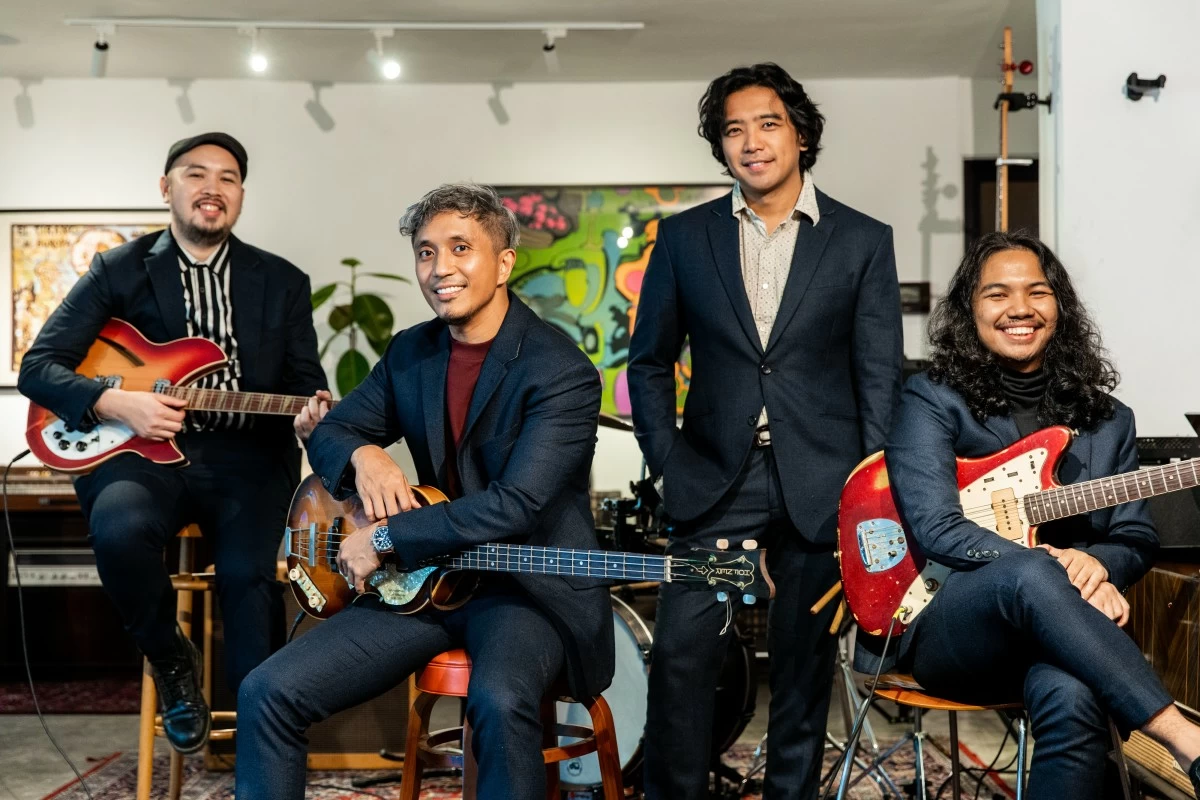
THE BLOOMFIELDS (from left): Lakan Hilla, Louie Poco, Rocky Callado, and Nathan Abella.
In an industry obsessed with reinvention, The Bloomfields are a rare case of a band that thrives by looking back. Their music is a time machine, not a relic, and if you’ve ever stumbled into one of their shows, you’d know why. The sound is familiar, joyful, even comforting—yet it carries the energy of something happening right now.
Formed in 2002, The Bloomfields—Rocky Collado (drums, vocals), Lakan Hila (guitars, vocals), Louie Poco (bass, vocals), and Nathan Abella (guitars, vocals)—built their identity around an unlikely idea: Beatles covers. At the time, the local scene was awash with emo, nu-metal, and the angsty edge of the early 2000s. The Bloomfields decided to zag while everyone else zigged.
“It was meant to make us different,” recalls bassist and founding member Louie Poco. “Everybody was heavy, loud, or dark. We figured, why not go the other way? Bring back something bright, melodic, and surprising.”
The gamble worked. Almost immediately, they were booking gigs across the metro, their clean harmonies and vintage pop sensibilities setting them apart.
By 2008, they had their first major breakthrough with a cover of Bodjie Dasig’s “Ale (Nasa Langit Na Ba Ako),” which shot up the charts. The Bloomfields looked poised to become more than a novelty act—they seemed set for longevity.
But as with many bands, internal tensions caught up. By 2009, creative differences caused them to split.
“It happens,” Louie admits matter-of-factly. “We just weren’t seeing eye to eye.”
The story could’ve ended there, another promising act derailed by artistic conflict. Instead, The Bloomfields found their way back to each other.
More than that, they struck gold again in 2011, this time with their playful cover of Randy Santiago’s “Babaero.”
The hit re-energized the band, proving they weren’t just a nostalgia act. They were a band that knew how to translate yesterday into today.
“It was something we didn’t expect,” Louie admits. “But it gave us a renewed sense of purpose. We knew then we weren’t just a band stuck in the past—we had more to say.”
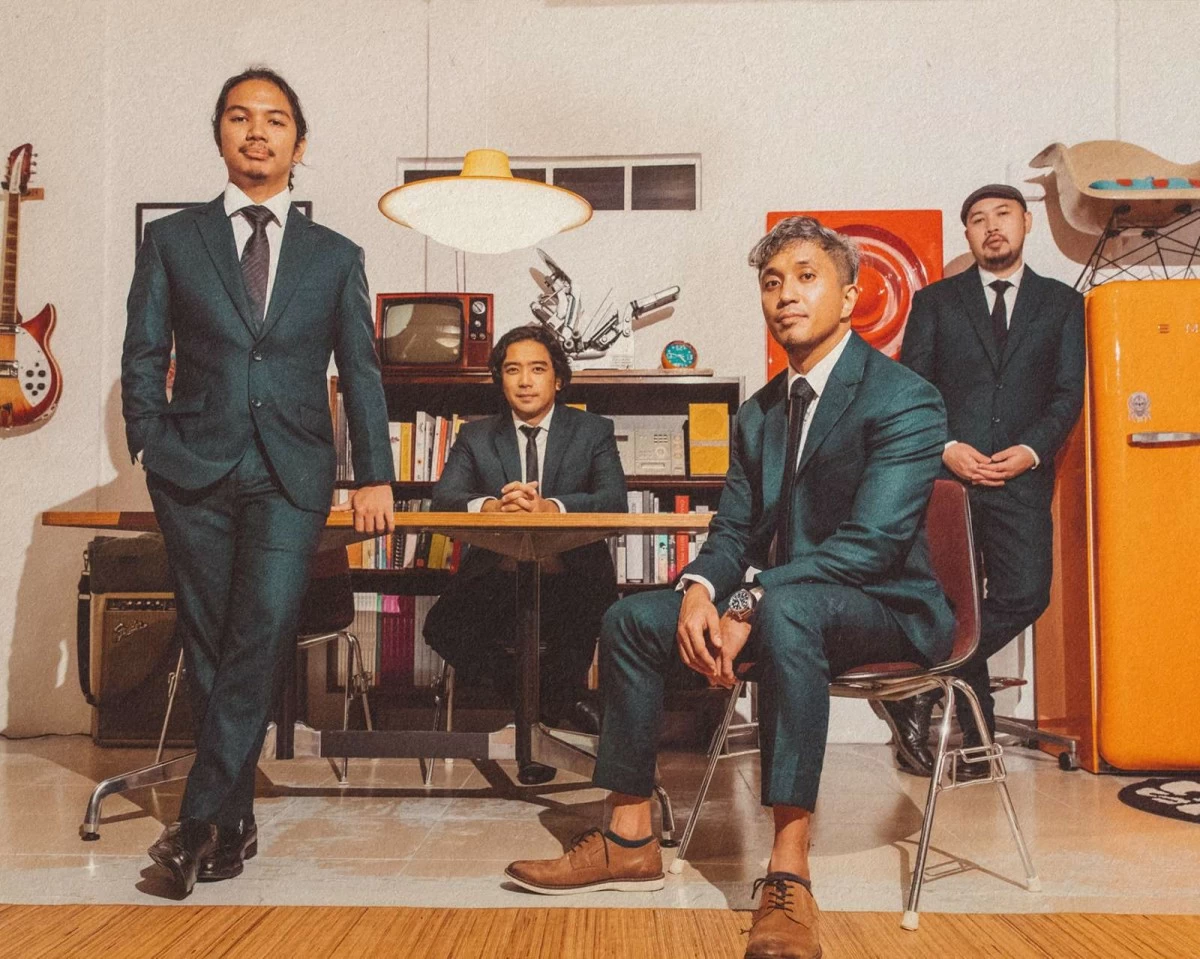
THE BLOOMFIELDS
THE BLOOMFIELDS
That momentum pushed them toward something even riskier: originals. Their first full-length album, “Hit the Ground Running,” showed that their love for ‘60s pop wasn’t just mimicry—it was a lens. Their songs, steeped in psychedelia and sunshine pop, felt like they belonged in a world where vinyl was king and guitar jangle was currency.
“Covers keep us alive, and we enjoy them,” Louie admits. “But writing our own songs—that’s a different kind of fulfillment.”
Still, Louie is pragmatic about the balance. Beatles covers remain the bread and butter, drawing crowds who want to relive the magic. Originals, meanwhile, offer a chance to push their craft forward, even if they still sound like a lost treasure from the Summer of Love.
Now, over two decades since their inception, The Bloomfields are poised for yet another chapter.
Last Sept. 26, the group unveiled their latest single, “Pink Skies,” with a launch at 70s Bistro—a venue steeped in the same kind of musical history they so lovingly channel.
A new all-original album is also in the works, slated for release early next year. And in true Bloomfield's fashion, it comes out on vinyl.
“It just feels right for the kind of music we make,” Louie shares.
When asked whether this new phase means fans can expect to see more of them, Louie offers a gentle correction: “We never really left. We’ve always been around—playing gigs, recording, even sharing live performance videos on YouTube. We’re not picky about venues either. We’ll play anywhere.”
In that sense, The Bloomfields is a reminder that music doesn’t always need to be new to feel alive. Sometimes, it only needs to be played with joy, conviction, and love.

Related Tags

THE BLOOMFIELDS
ADVERTISEMENT
.most-popular .layout-ratio{ padding-bottom: 79.13%; } @media (min-width: 768px) and (max-width: 1024px) { .widget-title { font-size: 15px !important; } }

{{ articles_filter_1561_widget.title }}

.most-popular .layout-ratio{ padding-bottom: 79.13%; } @media (min-width: 768px) and (max-width: 1024px) { .widget-title { font-size: 15px !important; } }

{{ articles_filter_1562_widget.title }}

.most-popular .layout-ratio{ padding-bottom: 79.13%; } @media (min-width: 768px) and (max-width: 1024px) { .widget-title { font-size: 15px !important; } }

{{ articles_filter_1563_widget.title }}

{{ articles_filter_1564_widget.title }}

.mb-article-details { position: relative; } .mb-article-details .article-body-preview, .mb-article-details .article-body-summary{ font-size: 17px; line-height: 30px; font-family: "Libre Caslon Text", serif; color: #000; } .mb-article-details .article-body-preview iframe , .mb-article-details .article-body-summary iframe{ width: 100%; margin: auto; } .read-more-background { background: linear-gradient(180deg, color(display-p3 1.000 1.000 1.000 / 0) 13.75%, color(display-p3 1.000 1.000 1.000 / 0.8) 30.79%, color(display-p3 1.000 1.000 1.000) 72.5%); position: absolute; height: 200px; width: 100%; bottom: 0; display: flex; justify-content: center; align-items: center; padding: 0; } .read-more-background a{ color: #000; } .read-more-btn { padding: 17px 45px; font-family: Inter; font-weight: 700; font-size: 18px; line-height: 16px; text-align: center; vertical-align: middle; border: 1px solid black; background-color: white; } .hidden { display: none; }
function initializeAllSwipers() { // Get all hidden inputs with cms_article_id document.querySelectorAll('[id^="cms_article_id_"]').forEach(function (input) { const cmsArticleId = input.value; const articleSelector = '#article-' + cmsArticleId + ' .body_images'; const swiperElement = document.querySelector(articleSelector); if (swiperElement && !swiperElement.classList.contains('swiper-initialized')) { new Swiper(articleSelector, { loop: true, pagination: false, navigation: { nextEl: '#article-' + cmsArticleId + ' .swiper-button-next', prevEl: '#article-' + cmsArticleId + ' .swiper-button-prev', }, }); } }); } setTimeout(initializeAllSwipers, 3000); const intersectionObserver = new IntersectionObserver( (entries) => { entries.forEach((entry) => { if (entry.isIntersecting) { const newUrl = entry.target.getAttribute("data-url"); if (newUrl) { history.pushState(null, null, newUrl); let article = entry.target; // Extract metadata const author = article.querySelector('.author-section').textContent.replace('By', '').trim(); const section = article.querySelector('.section-info ').textContent.replace(' ', ' '); const title = article.querySelector('.article-title h1').textContent; // Parse URL for Chartbeat path format const parsedUrl = new URL(newUrl, window.location.origin); const cleanUrl = parsedUrl.host + parsedUrl.pathname; // Update Chartbeat configuration if (typeof window._sf_async_config !== 'undefined') { window._sf_async_config.path = cleanUrl; window._sf_async_config.sections = section; window._sf_async_config.authors = author; } // Track virtual page view with Chartbeat if (typeof pSUPERFLY !== 'undefined' && typeof pSUPERFLY.virtualPage === 'function') { try { pSUPERFLY.virtualPage({ path: cleanUrl, title: title, sections: section, authors: author }); } catch (error) { console.error('ping error', error); } } // Optional: Update document title if (title && title !== document.title) { document.title = title; } } } }); }, { threshold: 0.1 } ); function showArticleBody(button) { const article = button.closest("article"); const summary = article.querySelector(".article-body-summary"); const body = article.querySelector(".article-body-preview"); const readMoreSection = article.querySelector(".read-more-background"); // Hide summary and read-more section summary.style.display = "none"; readMoreSection.style.display = "none"; // Show the full article body body.classList.remove("hidden"); } document.addEventListener("DOMContentLoaded", () => { let loadCount = 0; // Track how many times articles are loaded const offset = [1, 2, 3, 4, 5, 6, 7, 8, 9, 10]; // Offset values const currentUrl = window.location.pathname.substring(1); let isLoading = false; // Prevent multiple calls if (!currentUrl) { console.log("Current URL is invalid."); return; } const sentinel = document.getElementById("load-more-sentinel"); if (!sentinel) { console.log("Sentinel element not found."); return; } function isSentinelVisible() { const rect = sentinel.getBoundingClientRect(); return ( rect.top < window.innerHeight && rect.bottom >= 0 ); } function onScroll() { if (isLoading) return; if (isSentinelVisible()) { if (loadCount >= offset.length) { console.log("Maximum load attempts reached."); window.removeEventListener("scroll", onScroll); return; } isLoading = true; const currentOffset = offset[loadCount]; window.loadMoreItems().then(() => { let article = document.querySelector('#widget_1690 > div:nth-last-of-type(2) article'); intersectionObserver.observe(article) loadCount++; }).catch(error => { console.error("Error loading more items:", error); }).finally(() => { isLoading = false; }); } } window.addEventListener("scroll", onScroll); });

Sign up by email to receive news.