






Manila Bulletin
 Philippines
National
Marcos, Congress align on 44 priority bills for agri, social services, energy, governance reforms
Philippines
National
Marcos, Congress align on 44 priority bills for agri, social services, energy, governance reforms
Philippines
National
Marcos, Congress align on 44 priority bills for agri, social services, energy, governance reforms
Marcos, Congress align on 44 priority bills for agri, social services, energy, governance reforms
Published Oct 1, 2025 06:31 am


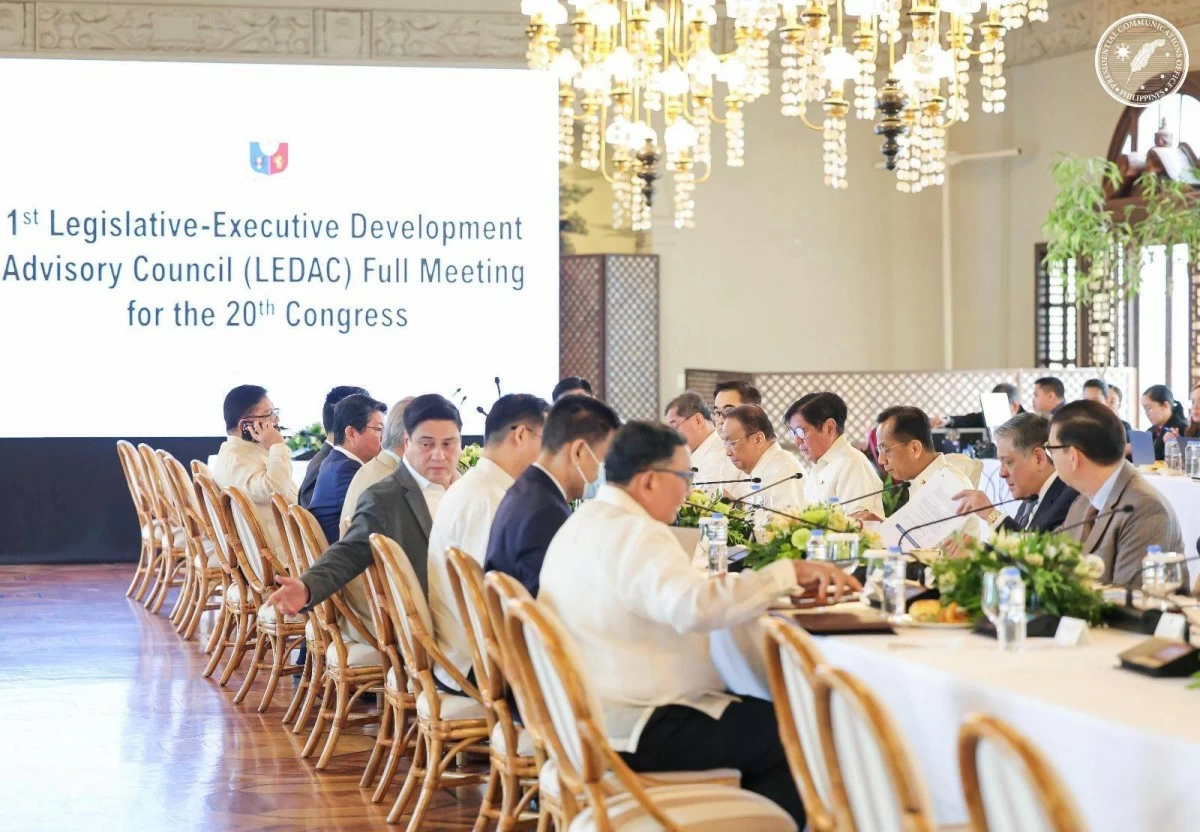
President Ferdinand 'Bongbong' Marcos Jr. leads the 1st Legislative-Executive Development Advisory Council (LEDAC) meeting for the 20th Congress in Malacañan on Sept. 30, 2025. (PCO)
President Marcos and Congress leaders have identified 44 measures under the Common Legislative Agenda (CLA) of the 20th Congress, focusing on agriculture, social services, energy security, and governance reforms.
The measures were finalized during the Legislative-Executive Development Advisory Council (LEDAC) meeting on Tuesday, Sept. 30, in Malacañan, where the President emphasized that amendments to the Local Government Code and the Rice Tariffication Law must be given priority.
Agriculture and fisheries reforms
The CLA places agriculture and fisheries at the forefront, with measures empowering coconut farmers, strengthening fisheries management, and introducing amendments to the Rice Tariffication Law and the Fisheries Code to protect producers and consumers.
Expanded social services
On social protection, health, and education, the CLA includes amendments to the 4Ps Act, the Universal Health Care Act, and the Teachers Professionalization Act.
Other proposed bills seek to establish a National Center for Geriatric Health, expand Assistance to Individuals in Crisis Situations (AICS), enhance school feeding programs, and extend government support to students and teachers in private schools.
Energy and environment
Energy and environment also form a major part of the agenda.
Among the measures are the Department of Water Resources Bill, the Waste-to-Energy Bill, amendments to the EPIRA (Electric Power Industry Reform Act) Law, the National Land Use Act, reforms to the Biofuels Act, and the Blue Economy Act.
An excise tax on single-use plastics was also included to promote sustainable consumption.
Governance and transparency
To strengthen governance and transparency, the CLA lists the Progressive Budgeting Act, the Right to Information Act, and amendments to the Anti-Money Laundering Act.
Other measures include requiring civil servants to waive bank secrecy, passing the Magna Carta for Barangays, and enacting a comprehensive review of the Local Government Code.
Digital economy and security
The digital economy is another focus, with proposed bills on cybersecurity, digital payments, and the regulation of online gambling.
Reforms on the fair use of social media, artificial intelligence, and internet technology in elections are also part of the list.
Disaster resilience and immigration
For disaster preparedness, amendments to the National Building Code and a new Disaster Risk Financing Insurance Act were included.
Meanwhile, the modernization of the Bureau of Immigration aims to enhance border security and improve frontline services.
Job creation and growth
To support inclusive growth, measures such as the Masterplan for Infrastructure and National Development, amendments to the Magna Carta for MSMEs (micro, small, and medium enterprises), and the strengthening of the Bases Conversion and Development Authority are included in the agenda.
The CLA also lists the National Reintegration Bill to aid returning overseas Filipino workers and a Presidential Merit Scholarship Program to expand access to higher education.
Comprehensive package
With the 44 measures, the Palace said both the executive and legislative branches are reaffirming a “shared commitment to reforms that not only address immediate needs but also lay the groundwork for long-term national development.”
The 44 measures under the Common Legislative Agenda are:
- 1. Amendments to the Coconut Farmers and Industry Trust Fund Act.
- 2. Amendments to the Pantawid Pamilyang Pilipino Program (4Ps) Act
- 3. Department of Water Resources (DWR) Bill
- 4. Waste-to-Energy Bill
- 5. EPIRA Amendments: Energy Regulatory Commission (ERC) Strengthening Bill
- 6. National Land Use Act
- 7. Excise Tax on Single-Use Plastics
- 8. Blue Economy Act
- 9. Amendments to the Bank Deposits Secrecy Law
- 10. Progressive Budgeting for Better and Modernized Governance Act
- 11. Right to Information Act
- 12. Amendments to the Anti-Money Laundering Act
- 13. Philippine Civil Registration and Vital Statistics Act
- 14. Amendments to the Universal Health Care (UHC) Act
- 15. National Center for Geriatric Health
- 16. Assistance to Individuals in Crisis Situations (AICS) Act
- 17. Amendments to the Masustansyang Pagkain Para sa Batang Pilipino Act
- 18. Amendments to the Government Assistance to Students and Teachers in Private Education Act
- 19. Amendments to the Universal Access to Quality Tertiary Education Act
- 20. Amendments to the Teachers Professionalization Act
- 21. Amendments to the Local Government Code (Comprehensive)
- 22. General Tax Amnesty
- 23. Extension of Estate Tax Amnesty
- 24. Amendments to the Fisheries Code
- 25. Amendments to the Rice Tariffication Law or Rice Industry and Consumer Empowerment (RICE) Act, including AAES Act minor amendments (Comprehensive)
- 26. Amendments to the Downstream Oil Industry Deregulation Law
- 27. Amendments to the Biofuels Act
- 28. Cybersecurity Act
- 29. Amendments to the National Building Code
- 30. Amendments to the Magna Carta for MSMEs
- 31. National Reintegration Bill
- 32. Reprogramming of Seal of Good Local Governance
- 33. Digital Payments Act
- 34. Masterplan for Infrastructure and National Development
- 35. Classroom-Building Acceleration Program Act
- 36. Requiring Civil Servants to Waive Bank Secrecy
- 37. Law on Online Gambling
- 38. Disaster Risk Financing Insurance
- 39. Strengthening the Bases Conversion and Development Authority
- 40. Presidential Merit Scholarship Program
- 41. Disqualifying Relatives of Officials (4th degree) in Government Contracts
- 42. Fair Use of Social Media, AI and Internet Technology in Elections
- 43. Modernizing the Bureau of Immigration
- 44. Magna Carta for Barangays