






Manila Bulletin
 Philippines
National
DBM activates ₱8-billion quick response fund for quake-hit Cebu
Philippines
National
DBM activates ₱8-billion quick response fund for quake-hit Cebu
Philippines
National
DBM activates ₱8-billion quick response fund for quake-hit Cebu
DBM activates ₱8-billion quick response fund for quake-hit Cebu
By Derco Rosal
Published Oct 1, 2025 02:39 pm


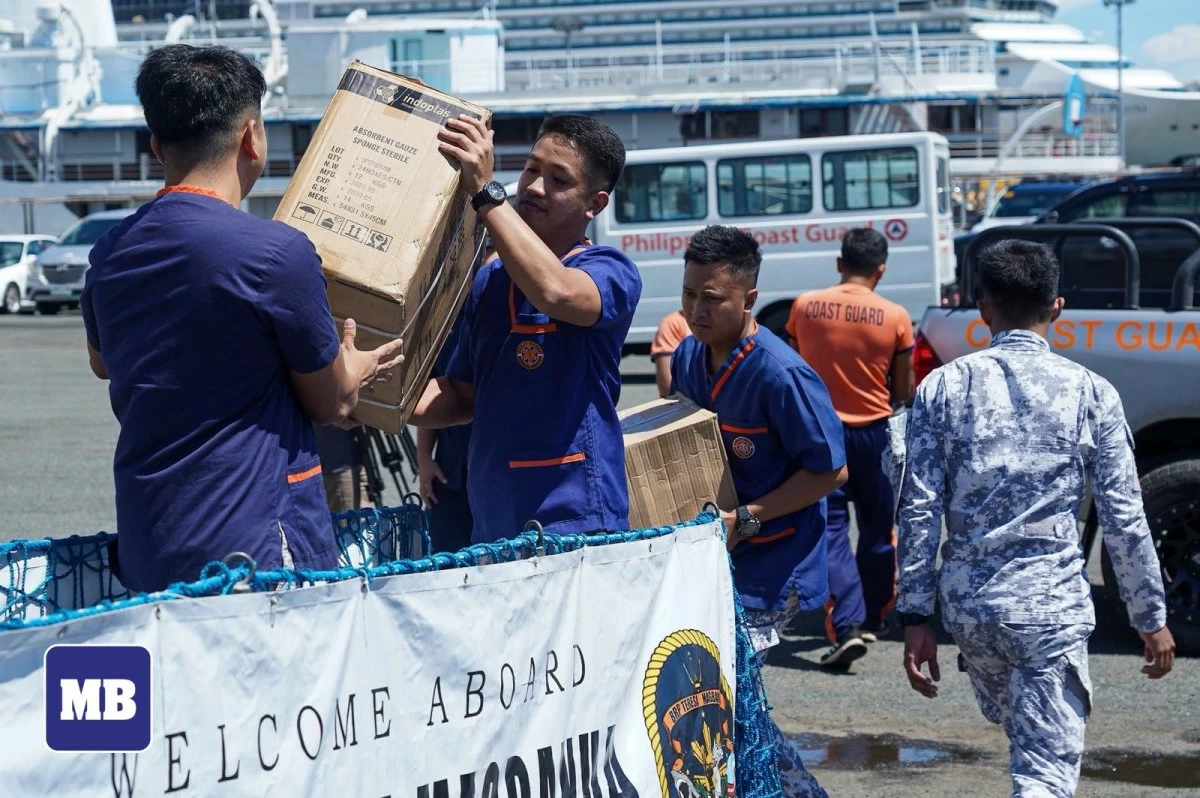
The Philippine Coast Guard (PCG) loads emergency medical equipment onto BRP Teresa Magbanua (MRRV-9701) at Pier 13 in Manila on Wednesday, Oct. 1, for deployment to Cebu, carrying doctors, nurses, and other medical personnel to aid communities affected by the magnitude 6.9 earthquake. (MB photos by John Louie Abrina I Manila Bulletin)
After the devastating earthquake in Cebu, Department of Budget and Management (DBM) Secretary Amenah Pangandaman urged national agencies to immediately activate their quick response funds (QRF), with the source fund now standing at ₱8 billion.
This follows President Ferdinand Marcos Jr.’s order to provide immediate relief and rehabilitation for communities affected by the 6.9-magnitude earthquake on Tuesday night, Sept. 30.
DBM Undersecretary Goddes Hope Libiran told Manila Bulletin on Wednesday, Oct. 1, that there were zero requests to replenish the agencies’ QRFs. Libiran said it is yet to be determined if the remaining balance will suffice for Cebu’s needs.
“If the funds fall short, there’s still the contingent fund—just in case. But for now, we’re still waiting for requests from the agencies, so we can’t tell yet whether it will be enough or not,” Libiran said.
Reports showed that the disaster has left at least 20 people dead, injured dozens, damaged heritage churches and other buildings, and knocked out power in parts of the Visayas.
“In moments like this, government aid must never be delayed,” Pangandaman said, noting that agencies such as the Department of Social Welfare and Development (DSWD), the Department of Public Works and Highways (DPWH), and the Office of Civil Defense (OCD) have QRFs that can be tapped immediately to help affected communities.
Other agencies with built-in QRFs include the Department of Health (DOH), Department of the Interior and Local Government (DILG), Department of Education (DepEd), Department of Transportation–Philippine Coast Guard (DOTr–PCG), National Irrigation Administration (NIA), and Department of Agriculture (DA).
Pangandaman also assured that the National Disaster Risk Reduction and Management (NDRRM) Fund, or calamity fund, is “on standby for larger-scale needs, including the repair of damaged facilities and heritage sites” for faster recovery.
For 2025, the NDRRMF has an allocation of ₱20 billion, plus an additional ₱1 billion from the PSF.
To determine what support the DBM can provide, its regional offices in Central and Eastern Visayas were also instructed to collaborate with the OCD in their respective areas.
In August, the DBM released a total of ₱1.6 billion to replenish the QRFs of the DSWD and the DPWH. It came as a response to the successive typhoons and other weather disturbances that ravaged the country.
The QRF is a standby emergency facility used to finance urgent relief and recovery efforts so communities can return to normal after disasters like earthquakes and typhoons. Agencies can request additional funds from the DBM once their fund balance drops to 50 percent.
Reports showed that the Philippine Institute of Volcanology and Seismology (PHIVOLCS) first recorded the quake at a magnitude of 6.7 and later raised it to 6.9. It hit at 9:59 pm, with the epicenter located 21 kilometers northeast of Bogo City in Cebu. The United States (US) Geological Survey (USGS) also initially measured it at magnitude 7.0 before revising it to 6.9.