






Manila Bulletin
 Philippines
National
'All hands on deck': OCD mobilizes full force for northern Cebu earthquake response; death toll at 69
Philippines
National
'All hands on deck': OCD mobilizes full force for northern Cebu earthquake response; death toll at 69
Philippines
National
'All hands on deck': OCD mobilizes full force for northern Cebu earthquake response; death toll at 69
'All hands on deck': OCD mobilizes full force for northern Cebu earthquake response; death toll at 69
Cebu district hospital overwhelmed by casualties, says OCD Asec. Alejandro
Published Oct 1, 2025 01:08 pm


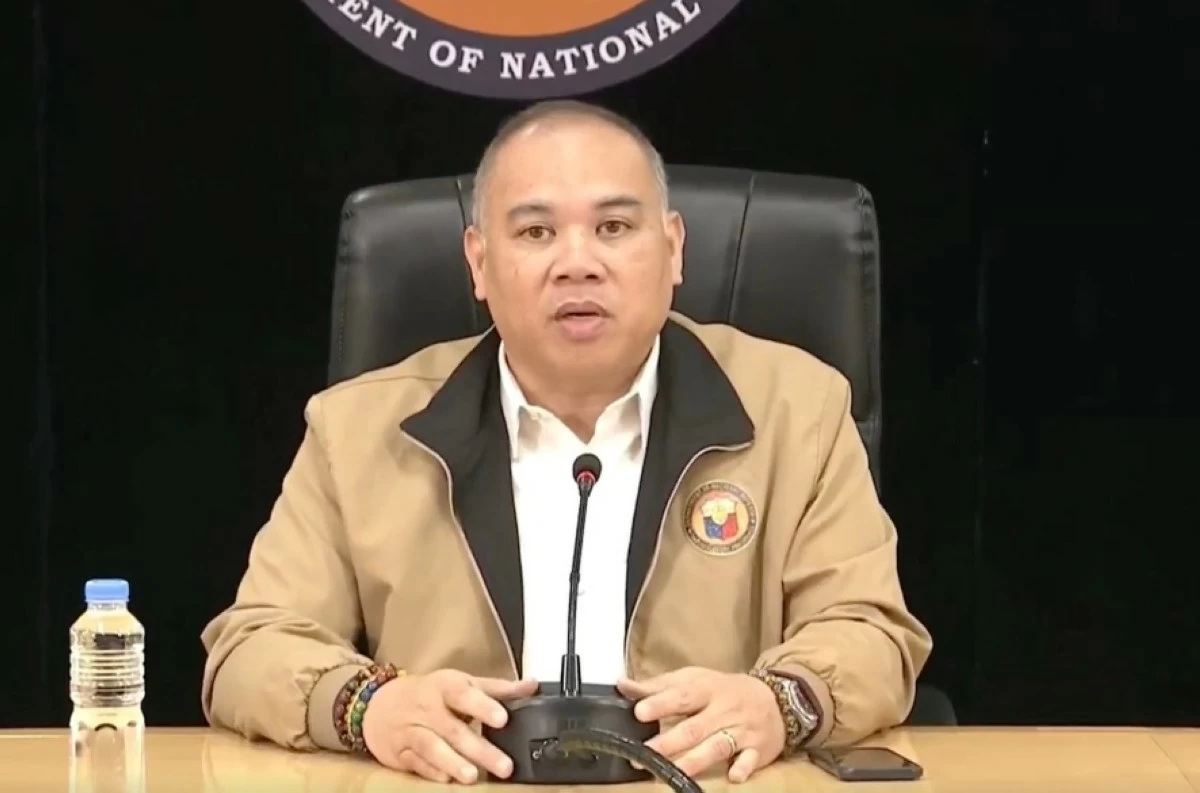
Office of Civil Defense (OCD) Asst. Sec. Bernardo Rafaelito Alejandro IV says the national government conducted full-scale disaster response operations following a magnitude 6.9 earthquake that struck northern Cebu on Tuesday evening, Sept. 30, 2025, with search and rescue (SAR) operations concentrating in Bogo City, Cebu, the hardest-hit area. (Courtesy of OCD livestream)
(UPDATED)
The Office of Civil Defense (OCD) conducted full-scale disaster response operations following a magnitude 6.9 earthquake that struck northern Cebu on Tuesday evening, Sept. 30, with search and rescue (SAR) operations concentrating in Bogo City, the hardest-hit area.
The quake occurred at 9:59 p.m. with its epicenter traced 17 kilometers northeast of Bogo City. It had a depth of focus of 10 kilometers, and was tectonic in origin.
Thirteen hours after the quake, OCD Assistant Secretary for Administration Bernardo Rafaelito Alejandro IV held a press conference at the OCD Building, Camp Aguinaldo in Quezon City at 11 a.m. Wednesday, Oct. 1, where he announced that the full force of the OCD, including all 41 member-agencies of the National Disaster Risk Reduction and Management Council (NDRRMC), was mobilized for disaster response.
“Right now, the full force of the national government is deployed to assist communities affected by this earthquake,” he said.
“This is a major event and we expect significant damage from this earthquake. We are still dealing with the effects of [Severe Tropical Storm] Opong in Masbate, and now we have this. We are not even finished with disaster relief operations after [Super Typhoon] Nando in northern Luzon, and on top of that, we have received another report from PAGASA [Philippine Atmospheric, Geophysical and Astronomical Services Administration] that a typhoon is approaching, which may cross northern Luzon this coming weekend. But we will manage all of these,” he added.
The tremor affected three regions: Western Visayas (Region 6), Central Visayas (Region 7), and Eastern Visayas (Region 8). According to the Alejandro, the death toll already reached 69, with casualties mostly caused by collapsed structures and falling debris in Cebu (Region 7). Bogo City had the most fatalities with 30; followed by San Remigio with 22; Medellin with 10; Tubogon with five; and one each in Sugod and Tabuelan.
“The numbers are still very fluid. We are still in the golden hour of our rescue operations,” Alejandro said, explaining that such a principle refers to the critical first 24 hours following the disaster. “We are still receiving reports that some barangays need assistance for rescue. Many people are still reported trapped or pinned under debris caused by the earthquake.”
There were also 147 injured individuals in Bogo, Tabuelan, Catmon, Daanbantayan, and San Francisco in Cebu.
Search and rescue
Uniformed services have been fully deployed for SAR operations. Engineering and SAR units from the Armed Forces of the Philippines (AFP), Philippine National Police (PNP), and Bureau of Fire Protection (BFP) were already sent to Cebu.
To further assist in SAR and disaster relief, the Philippine Coast Guard (PCG) also deployed BRP Teresa Magbanua to Cebu to transport medical personnel with emergency equipment from Manila. Two 44-meter vessels were also set for deployment by the Coast Guard District Southwestern Mindanao (CGDSWM) while the Coast Guard District Northeastern Mindanao (CGDNEM) was scheduled to field a 44-meter vessel currently stationed at the Coast Guard District Central Visayas (CGDCV).
Two C-130 aircraft from the Philippine Air Force (PAF) transported additional search and rescue personnel and equipment from Manila, while regional and neighboring units, including disaster response teams from Eastern Visayas, were also mobilized.
Department of National Defense (DND) Secretary Gilberto Teodoro Jr. flew to Cebu to personally assess the situation, according to Alejandro. Teodoro activated the Inter-Agency Coordinating Cell (IACC) to sort out all logistical requirements and needs in the areas needing response.
“Before he left Manila, he issued an order, in line with President Ferdinand Marcos’ directive, to prepare and anticipate essential needs such as water, immediately restore power, and ensure that all facilities, including bridges, are assessed for structural integrity,” Alejandro said.
‘Overflowing with dead people’
Meanwhile, the Cebu Provincial Hospital in Bogo City was “overwhelmed” by dead bodies and injured people which prompted immediate reinforcements of medical teams from the Vicente Sotto Memorial Medical Center in Cebu City and other Department of Health (DOH) hospitals, Alejandro said.
Cadavers were lying side by side with patients due to the lack of medical facilities but Alejandro said the DOH was already addressing the concern along with the Management of the Dead and Missing (MDM) Cluster led by the Department of the Interior and Local Government (DILG).
Coordination was also made by the OCD with the Department of Energy (DOE) to assess power needs in Cebu to reenergize the affected areas.
More than 1,000 evacuees were monitored, many of them set up tents or gathered in open spaces out of fear that their houses might collapse. Alejandro said the Department of Public Works and Highways (DPWH) was organizing a team to support provincial personnel in accelerating the assessment of priority structures such as schools, hospitals, and road networks.
Alejandro assured that there was a sufficient supply of food and water for the evacuees from the OCD and Department of Social Welfare and Development (DSWD). Additional non-food items, such as shelter repair kits and hygiene kits, were also sent to Cebu to address the evcuees' needs.
A major challenge for the disaster response units on the ground was the communication system due to power outage in many areas.
“Communication is somewhat unstable, which is why we are coordinating with the DICT [Department of Information and Communications Technology] to set up an alternative system, as communication is currently difficult,” Alejandro said.