ADVERTISEMENT

Houseplants that don't require soil and can be displayed any which way? Look to air plants

Published Jan 8, 2025 09:15 am
IMG_5414.jpeg
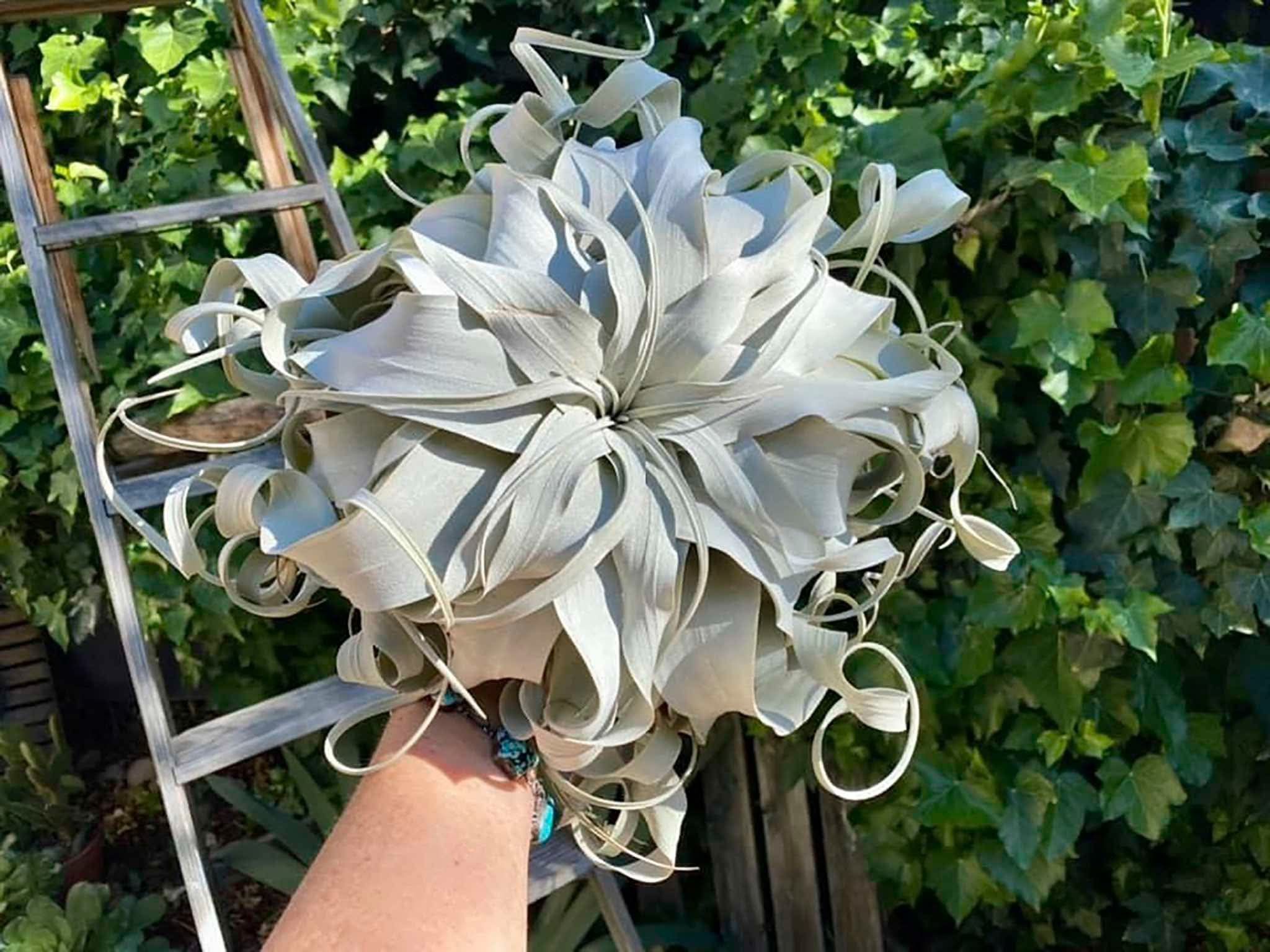
This image provided by Drift in Air Plants shows a Tillandsia xerographica air plant in Bakersfield, California. (Jennifer Tuttle/Drift in Air Plants via AP)

If you're looking for a houseplant that's as unique as it is low-maintenance, let me introduce you to air plants, members of the Tillandsia genus in the Bromeliad family.

I first became acquainted with Tillandsia circa 2007, when I was invited to tour the Epcot Flower and Garden Festival at Walt Disney World in Florida. The larger-than-life Disney character topiaries were blanketed in flowers, succulents, ivy, moss — and a variety of air plants. I was amazed by them.

The quirky little curiosities, which are related to pineapples, are native to tropical and subtropical regions of North and South America, where -- instead of growing in soil -- they cling to trees, rocks and even buildings without parasitizing or harming their hosts. Since they do not have roots, air plants depend on specialized cells called trichomes that allow their leaves to absorb moisture and nutrients.
IMG_5413.jpeg
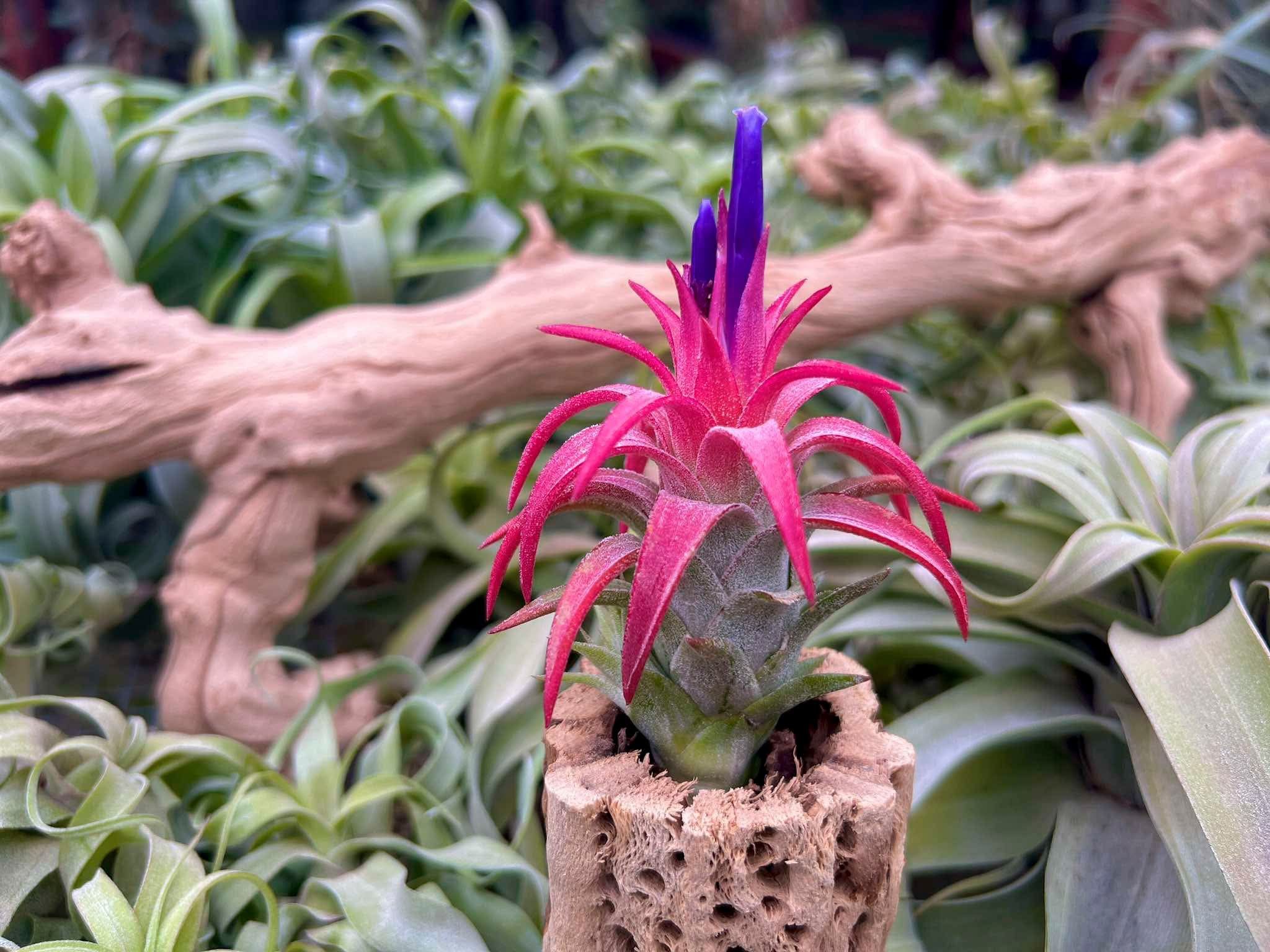
This image provided by Air Plant Hub shows a Tillandsia ionantha air plant in Vacaville, California. (Nathaniel Miller/Air Plant Hub via AP)

Sun exposure

Air plants require bright, indirect light, so should be placed near an east- or west-facing window, but not directly in front of it. Direct sunlight can scorch their leaves.

Watering

In homes with average humidity levels, soak air plants once a week by placing them in a bowl of room-temperature water for 30 to 60 minutes; in homes with dry air, more frequent soaking may be necessary.

Gently shake the plants to remove excess water, then place them upside-down on a towel to drip dry for several hours. This last step is essential to prevent water from pooling in the plant's leaves, which can result in rot.

It's always best to allow tap water to sit for 12 to 24 hours to allow chlorine to dissipate before watering any plant, and air plants are especially sensitive to the chemical.

Fertilizing

Add an all-purpose houseplant, bromeliad or orchid fertilizer to the soaking water once a month to provide nutrients. Apply at half the rate recommended on the package.

Life cycle

Air plants bloom only once, their small pink, coral, purple or white flowers signaling their impending death. But no worries: The flowers will give way to offshoots, or "pups," that can be separated into new plants once they grow to about one-third the size of their mother.

So many choices

There are more than 500 species of air plants to choose from. Notable species include the well-known Spanish moss (Tillandsia usneoides), which is often found hanging from large trees in tropical and subtropical regions. In the home, it's best grown in a humid environment, such as a bathroom.

Tillandsia ionantha, or sky plant, is a shaggy-looking specimen with green bracts that turn pink or purple at their tips before flowering.

Tillandsia caput-medusae is named for its resemblance to the snake-haired head of Medusa, of Greek myth. The plant is beloved for its long, wavy leaves that grow upward from a bulbous base.

Perhaps the most unique species of Tillandsia is the tendrilled Xerographic air plant (T. xerographica). Known as the King of Air Plants, it can grow up to two feet wide. The plant's long, thin silver leaves curl downward to produce an overall spherical shape that distinguishes it from other air plants.

Display Your Tillandsia

You can display your air plants in practically any spot that provides the required light exposure and good air circulation.

Inside open-topped glass globes or terrariums are popular display options, but you can also place the plants inside seashells or on rocks. You can even create a suspended Tillandsia garden by hanging several plants from fishing lines.

You might affix them to driftwood with wire or glue for a more nature-inspired display. Or grow them inside hanging frames. Working within the parameters of the plant's needs, you are limited only by your imagination.

Related Tags

Gardening Air plants Tillandsia
ADVERTISEMENT
.most-popular .layout-ratio{ padding-bottom: 79.13%; } @media (min-width: 768px) and (max-width: 1024px) { .widget-title { font-size: 15px !important; } }

{{ articles_filter_1561_widget.title }}

.most-popular .layout-ratio{ padding-bottom: 79.13%; } @media (min-width: 768px) and (max-width: 1024px) { .widget-title { font-size: 15px !important; } }

{{ articles_filter_1562_widget.title }}

.most-popular .layout-ratio{ padding-bottom: 79.13%; } @media (min-width: 768px) and (max-width: 1024px) { .widget-title { font-size: 15px !important; } }

{{ articles_filter_1563_widget.title }}

{{ articles_filter_1564_widget.title }}

.mb-article-details { position: relative; } .mb-article-details .article-body-preview, .mb-article-details .article-body-summary{ font-size: 17px; line-height: 30px; font-family: "Libre Caslon Text", serif; color: #000; } .mb-article-details .article-body-preview iframe , .mb-article-details .article-body-summary iframe{ width: 100%; margin: auto; } .read-more-background { background: linear-gradient(180deg, color(display-p3 1.000 1.000 1.000 / 0) 13.75%, color(display-p3 1.000 1.000 1.000 / 0.8) 30.79%, color(display-p3 1.000 1.000 1.000) 72.5%); position: absolute; height: 200px; width: 100%; bottom: 0; display: flex; justify-content: center; align-items: center; padding: 0; } .read-more-background a{ color: #000; } .read-more-btn { padding: 17px 45px; font-family: Inter; font-weight: 700; font-size: 18px; line-height: 16px; text-align: center; vertical-align: middle; border: 1px solid black; background-color: white; } .hidden { display: none; }
function initializeAllSwipers() { // Get all hidden inputs with cms_article_id document.querySelectorAll('[id^="cms_article_id_"]').forEach(function (input) { const cmsArticleId = input.value; const articleSelector = '#article-' + cmsArticleId + ' .body_images'; const swiperElement = document.querySelector(articleSelector); if (swiperElement && !swiperElement.classList.contains('swiper-initialized')) { new Swiper(articleSelector, { loop: true, pagination: false, navigation: { nextEl: '#article-' + cmsArticleId + ' .swiper-button-next', prevEl: '#article-' + cmsArticleId + ' .swiper-button-prev', }, }); } }); } setTimeout(initializeAllSwipers, 3000); const intersectionObserver = new IntersectionObserver( (entries) => { entries.forEach((entry) => { if (entry.isIntersecting) { const newUrl = entry.target.getAttribute("data-url"); if (newUrl) { history.pushState(null, null, newUrl); let article = entry.target; // Extract metadata const author = article.querySelector('.author-section').textContent.replace('By', '').trim(); const section = article.querySelector('.section-info ').textContent.replace(' ', ' '); const title = article.querySelector('.article-title h1').textContent; // Parse URL for Chartbeat path format const parsedUrl = new URL(newUrl, window.location.origin); const cleanUrl = parsedUrl.host + parsedUrl.pathname; // Update Chartbeat configuration if (typeof window._sf_async_config !== 'undefined') { window._sf_async_config.path = cleanUrl; window._sf_async_config.sections = section; window._sf_async_config.authors = author; } // Track virtual page view with Chartbeat if (typeof pSUPERFLY !== 'undefined' && typeof pSUPERFLY.virtualPage === 'function') { try { pSUPERFLY.virtualPage({ path: cleanUrl, title: title, sections: section, authors: author }); } catch (error) { console.error('ping error', error); } } // Optional: Update document title if (title && title !== document.title) { document.title = title; } } } }); }, { threshold: 0.1 } ); function showArticleBody(button) { const article = button.closest("article"); const summary = article.querySelector(".article-body-summary"); const body = article.querySelector(".article-body-preview"); const readMoreSection = article.querySelector(".read-more-background"); // Hide summary and read-more section summary.style.display = "none"; readMoreSection.style.display = "none"; // Show the full article body body.classList.remove("hidden"); } document.addEventListener("DOMContentLoaded", () => { let loadCount = 0; // Track how many times articles are loaded const offset = [1, 2, 3, 4, 5, 6, 7, 8, 9, 10]; // Offset values const currentUrl = window.location.pathname.substring(1); let isLoading = false; // Prevent multiple calls if (!currentUrl) { console.log("Current URL is invalid."); return; } const sentinel = document.getElementById("load-more-sentinel"); if (!sentinel) { console.log("Sentinel element not found."); return; } function isSentinelVisible() { const rect = sentinel.getBoundingClientRect(); return ( rect.top < window.innerHeight && rect.bottom >= 0 ); } function onScroll() { if (isLoading) return; if (isSentinelVisible()) { if (loadCount >= offset.length) { console.log("Maximum load attempts reached."); window.removeEventListener("scroll", onScroll); return; } isLoading = true; const currentOffset = offset[loadCount]; window.loadMoreItems().then(() => { let article = document.querySelector('#widget_1690 > div:nth-last-of-type(2) article'); intersectionObserver.observe(article) loadCount++; }).catch(error => { console.error("Error loading more items:", error); }).finally(() => { isLoading = false; }); } } window.addEventListener("scroll", onScroll); });

Sign up by email to receive news.