

ADVERTISEMENT

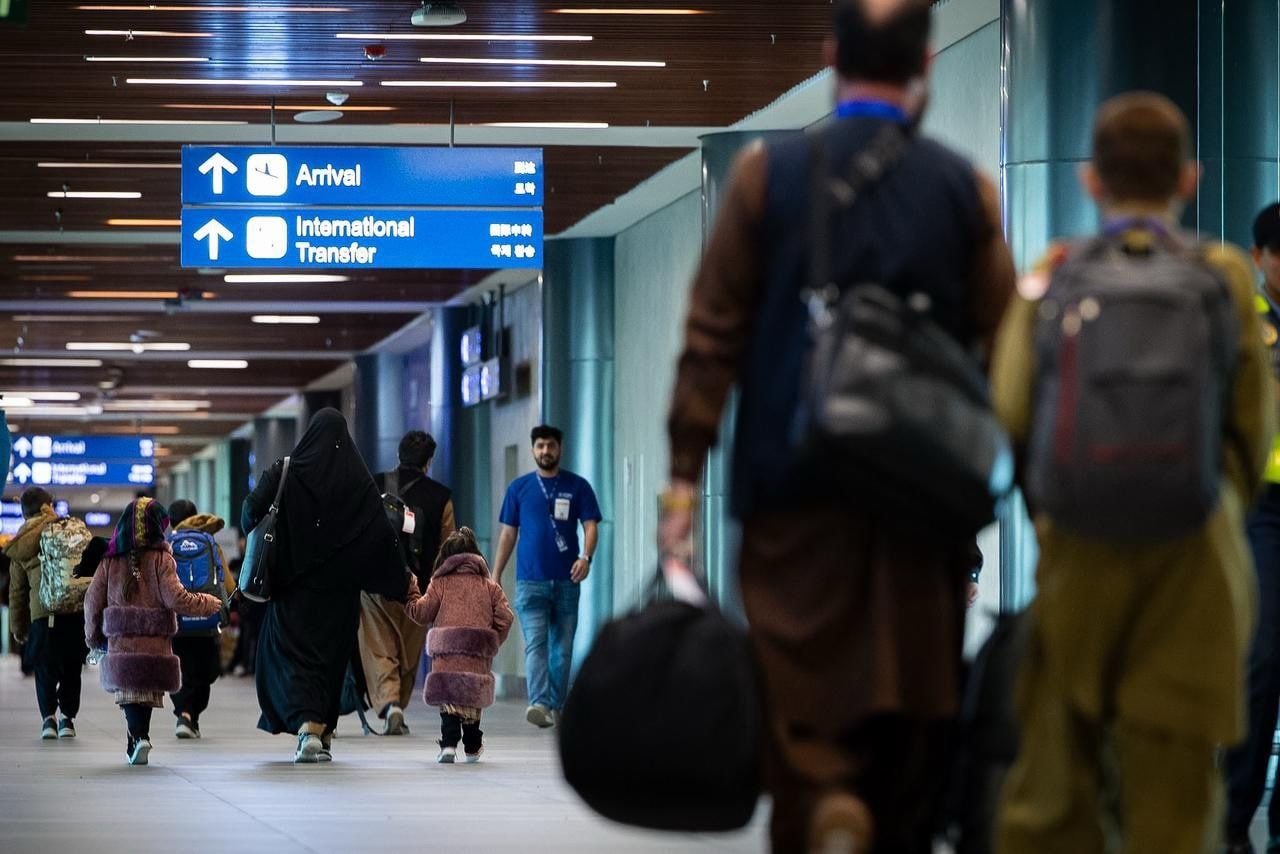
Several Afghan nationals arrive in PH to process US visa

Published Jan 6, 2025 02:55 am

​The Department of Foreign Affairs (DFA) confirmed the arrival on Monday, Jan. 6, in the Philippines of several Afghan nationals who will stay in the country while waiting for their United States visas.

According to DFA, "a limited number" of Afghan nationals arrived in Manila to complete the processing of their US Special Immigrant Visas (SIV), which are required for their immigration to the US.

Amid concerns from the public regarding the country's national security, the DFA clarified that it issued appropriate Philippine entry visa to the applicants in line with current rules and regulations.
ae55fad7-6144-4179-a5f4-8384edacbe86.jpeg
​Photo courtesy of US Embassy in Manila

"All applicants completed extensive security vetting by Philippines national security agencies," DFA spokesperson Ma. Teresita Daza said.

"They also underwent full medical screening prior to their arrival in the Philippines," it added.

Based on previous briefings conducted by the DFA and the US Embassy in Manila, up to 300 Afghan nationals—more than half of them are minors—are expected to stay in the country for up to 59 days as they wait for their visas to enter and be allowed to resettle in the US.

They are not refugees, a US State Department official said. Rather, they are individuals and families with whom "the United States government has had long, extensive, and secure cooperation" throughout the years the American forces were in Afghanistan, added a senior Philippine official.

"Some fought with us on the battlefield, but many worked with us at our embassy and facilities and in the field," the US official said, referring to the time US military forces were deployed to Afghanistan prior before the Taliban took over the government.

The Afghan nationals' arrival came as Manila, because of the size and the capacity of its visa center, agreed to serve as a temporary site for SIV processing when the US government made a request to its partners.

Meanwhile, DFA said that the US government is supporting all necessary services for those SIV applicants temporarily in the Philippines as part of the agreement between the two countries. Services include food, housing, medical care, security, and transportation to complete visa processing.
 
​The US Embassy ​in Manila also gave assurance  that the program will not impact the normal processing of immigrant and nonimmigrant visas for Filipinos​, according to DFA.

​"The department acknowledges the support of partners in the Philippine government for the timely and coordinated implementation of the ​agreement​," Daza said.

Related Tags

US Visa Department of Foreign Affairs US EMBASSY IN MANILA AFGHANS
ADVERTISEMENT
.most-popular .layout-ratio{ padding-bottom: 79.13%; } @media (min-width: 768px) and (max-width: 1024px) { .widget-title { font-size: 15px !important; } }

{{ articles_filter_1561_widget.title }}

.most-popular .layout-ratio{ padding-bottom: 79.13%; } @media (min-width: 768px) and (max-width: 1024px) { .widget-title { font-size: 15px !important; } }

{{ articles_filter_1562_widget.title }}

.most-popular .layout-ratio{ padding-bottom: 79.13%; } @media (min-width: 768px) and (max-width: 1024px) { .widget-title { font-size: 15px !important; } }

{{ articles_filter_1563_widget.title }}

{{ articles_filter_1564_widget.title }}

.mb-article-details { position: relative; } .mb-article-details .article-body-preview, .mb-article-details .article-body-summary{ font-size: 17px; line-height: 30px; font-family: "Libre Caslon Text", serif; color: #000; } .mb-article-details .article-body-preview iframe , .mb-article-details .article-body-summary iframe{ width: 100%; margin: auto; } .read-more-background { background: linear-gradient(180deg, color(display-p3 1.000 1.000 1.000 / 0) 13.75%, color(display-p3 1.000 1.000 1.000 / 0.8) 30.79%, color(display-p3 1.000 1.000 1.000) 72.5%); position: absolute; height: 200px; width: 100%; bottom: 0; display: flex; justify-content: center; align-items: center; padding: 0; } .read-more-background a{ color: #000; } .read-more-btn { padding: 17px 45px; font-family: Inter; font-weight: 700; font-size: 18px; line-height: 16px; text-align: center; vertical-align: middle; border: 1px solid black; background-color: white; } .hidden { display: none; }
function initializeAllSwipers() { // Get all hidden inputs with cms_article_id document.querySelectorAll('[id^="cms_article_id_"]').forEach(function (input) { const cmsArticleId = input.value; const articleSelector = '#article-' + cmsArticleId + ' .body_images'; const swiperElement = document.querySelector(articleSelector); if (swiperElement && !swiperElement.classList.contains('swiper-initialized')) { new Swiper(articleSelector, { loop: true, pagination: false, navigation: { nextEl: '#article-' + cmsArticleId + ' .swiper-button-next', prevEl: '#article-' + cmsArticleId + ' .swiper-button-prev', }, }); } }); } setTimeout(initializeAllSwipers, 3000); const intersectionObserver = new IntersectionObserver( (entries) => { entries.forEach((entry) => { if (entry.isIntersecting) { const newUrl = entry.target.getAttribute("data-url"); if (newUrl) { history.pushState(null, null, newUrl); let article = entry.target; // Extract metadata const author = article.querySelector('.author-section').textContent.replace('By', '').trim(); const section = article.querySelector('.section-info ').textContent.replace(' ', ' '); const title = article.querySelector('.article-title h1').textContent; // Parse URL for Chartbeat path format const parsedUrl = new URL(newUrl, window.location.origin); const cleanUrl = parsedUrl.host + parsedUrl.pathname; // Update Chartbeat configuration if (typeof window._sf_async_config !== 'undefined') { window._sf_async_config.path = cleanUrl; window._sf_async_config.sections = section; window._sf_async_config.authors = author; } // Track virtual page view with Chartbeat if (typeof pSUPERFLY !== 'undefined' && typeof pSUPERFLY.virtualPage === 'function') { try { pSUPERFLY.virtualPage({ path: cleanUrl, title: title, sections: section, authors: author }); } catch (error) { console.error('ping error', error); } } // Optional: Update document title if (title && title !== document.title) { document.title = title; } } } }); }, { threshold: 0.1 } ); function showArticleBody(button) { const article = button.closest("article"); const summary = article.querySelector(".article-body-summary"); const body = article.querySelector(".article-body-preview"); const readMoreSection = article.querySelector(".read-more-background"); // Hide summary and read-more section summary.style.display = "none"; readMoreSection.style.display = "none"; // Show the full article body body.classList.remove("hidden"); } document.addEventListener("DOMContentLoaded", () => { let loadCount = 0; // Track how many times articles are loaded const offset = [1, 2, 3, 4, 5, 6, 7, 8, 9, 10]; // Offset values const currentUrl = window.location.pathname.substring(1); let isLoading = false; // Prevent multiple calls if (!currentUrl) { console.log("Current URL is invalid."); return; } const sentinel = document.getElementById("load-more-sentinel"); if (!sentinel) { console.log("Sentinel element not found."); return; } function isSentinelVisible() { const rect = sentinel.getBoundingClientRect(); return ( rect.top < window.innerHeight && rect.bottom >= 0 ); } function onScroll() { if (isLoading) return; if (isSentinelVisible()) { if (loadCount >= offset.length) { console.log("Maximum load attempts reached."); window.removeEventListener("scroll", onScroll); return; } isLoading = true; const currentOffset = offset[loadCount]; window.loadMoreItems().then(() => { let article = document.querySelector('#widget_1690 > div:nth-last-of-type(2) article'); intersectionObserver.observe(article) loadCount++; }).catch(error => { console.error("Error loading more items:", error); }).finally(() => { isLoading = false; }); } } window.addEventListener("scroll", onScroll); });

Sign up by email to receive news.