

ADVERTISEMENT

FDA approves painkiller designed to eliminate the risks of addiction associated with opioids

Published Jan 30, 2025 11:45 pm

WASHINGTON (AP) — Federal officials on Thursday approved a new type of pain drug designed to eliminate the risks of addiction and overdose associated with opioid medications like Vicodin and OxyContin.
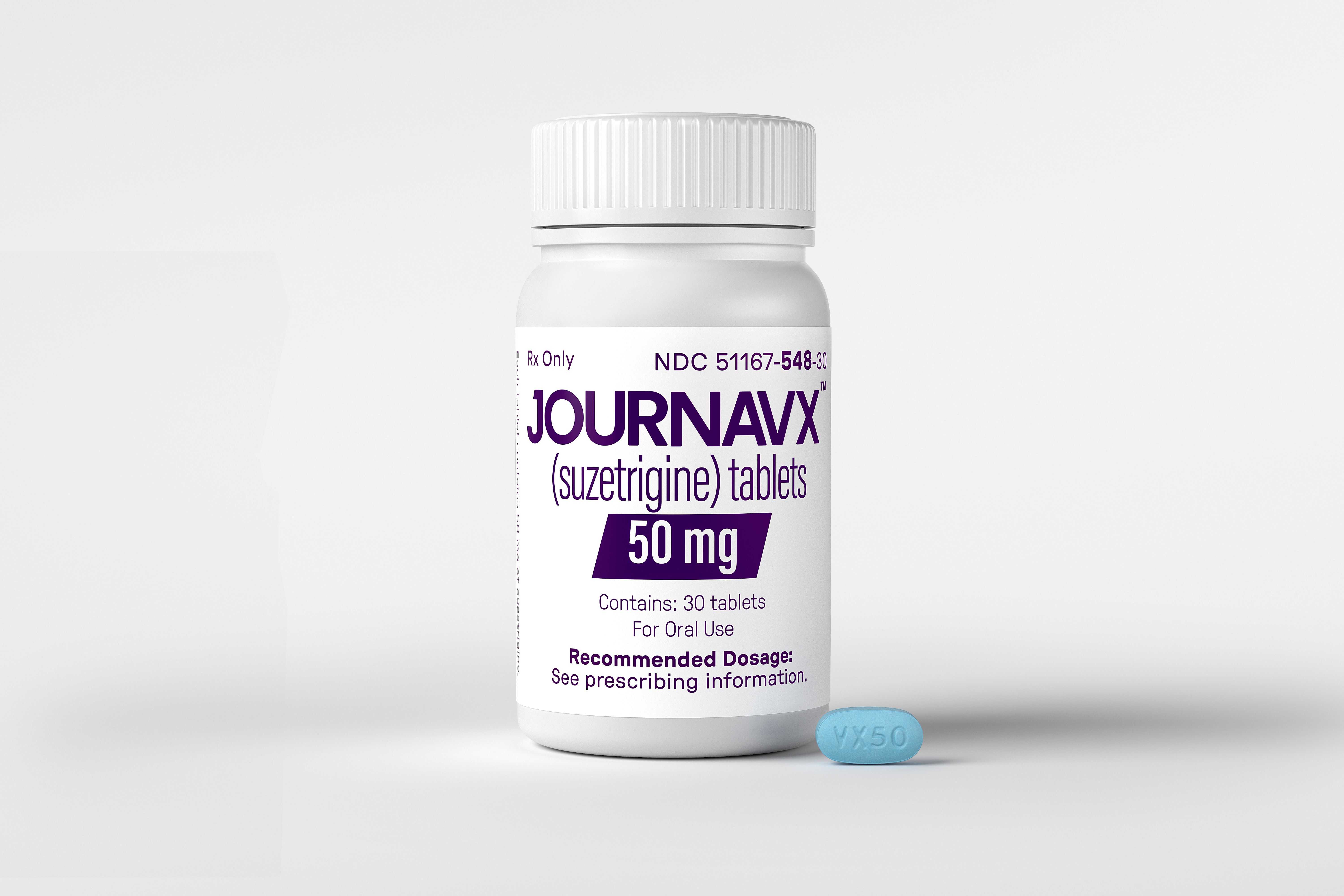
AP25029617525046.jpg
This photo provided by Vertex Pharmaceuticals in January 2025 shows a tablet and bottle of the JOURNAVX (suzetrigine) medication. (Vertex Pharmaceuticals via AP)

The U.S. Food and Drug Administration said it approved Vertex Pharmaceuticals' Journavx for short-term pain that often follows surgery or injuries.

It’s the first new pharmaceutical approach to treating pain in more than 20 years, offering an alternative to both opioids and over-the-counter medications like ibuprofen and acetaminophen. But the medication’s modest effectiveness and lengthy development process underscore the challenges of finding new ways to manage pain.

Two studies in more than 870 patients with acute pain following foot and abdominal surgeries showed Vertex’s pill provided more relief than a dummy pill but didn’t outperform a common opioid-acetaminophen combination pill.

“It’s not a slam dunk on effectiveness,” said Michael Schuh of the Mayo Clinic, a pharmacist and pain medicine expert who was not involved in the research. “But it is a slam dunk in that it’s a very different pathway and mechanism of action, so I think that shows a lot promise.”

Vertex began researching the drug in the 2000s, when drug overdoses were rocketing upward, principally driven by mass prescribing of opioid painkillers for common ailments like arthritis and back pain. Prescriptions have fallen sharply in the last decade and the current wave of the opioid epidemic is mainly due to illicit fentanyl, not pharmaceutical medicines.

Opioids reduce pain by binding to receptors in the brain that receive nerve signals from different parts of the body. Those chemical interactions also give rise to opioids' addictive effects.

Vertex’s drug works differently, blocking proteins that trigger pain signals that are later sent to the brain.

"In trying to develop medicines that don’t have the addictive risks of opioid medicines, a key factor is working to block pain signaling before it gets to the brain,” Vertex’s Dr. David Altshuler, told the Associated Press last year.

Commonly reported side effects with the drug were nausea, constipation, itching, rash and headache.

“The new medication has side effect profiles that are inherently, not only different, but don’t involve the risk of substance abuse and other key side effects associated with opioids,” said Dr. Charles Argoff of the Albany Medical Center, who consulted for Vertex on the drug's development.

The initial concept to focus on pain-signaling proteins came out of research involving people with a rare hereditary condition that causes insensitivity to pain.

Vertex has attracted interest from Wall Street for its ambitious drug pipeline that involves winning FDA approval for multiple drugs across several forms of chronic pain, which generally represents a bigger financial opportunity than acute pain.

But the Boston drugmaker's share price plummeted in December when Vertex reported disappointing mid-stage results in a study of patients with chronic nerve pain affecting the lower back and legs. The drug didn't perform significantly better than placebo, the research found.

“We believe the data reflect a near worst-case scenario for this key pipeline program,” biotechnology analyst Brian Abrahams said in a research note to investors, adding that the results jeopardized estimates that Vertex's pipeline could be worth billions across multiple forms of pain.

Still, Vertex executives said they plan to move forward with a new, late-stage study of the drug, theorizing that a different trial design could yield better results and pave the way for FDA approval in chronic pain.

Related Tags

World news
ADVERTISEMENT
.most-popular .layout-ratio{ padding-bottom: 79.13%; } @media (min-width: 768px) and (max-width: 1024px) { .widget-title { font-size: 15px !important; } }

{{ articles_filter_1561_widget.title }}

.most-popular .layout-ratio{ padding-bottom: 79.13%; } @media (min-width: 768px) and (max-width: 1024px) { .widget-title { font-size: 15px !important; } }

{{ articles_filter_1562_widget.title }}

.most-popular .layout-ratio{ padding-bottom: 79.13%; } @media (min-width: 768px) and (max-width: 1024px) { .widget-title { font-size: 15px !important; } }

{{ articles_filter_1563_widget.title }}

{{ articles_filter_1564_widget.title }}

.mb-article-details { position: relative; } .mb-article-details .article-body-preview, .mb-article-details .article-body-summary{ font-size: 17px; line-height: 30px; font-family: "Libre Caslon Text", serif; color: #000; } .mb-article-details .article-body-preview iframe , .mb-article-details .article-body-summary iframe{ width: 100%; margin: auto; } .read-more-background { background: linear-gradient(180deg, color(display-p3 1.000 1.000 1.000 / 0) 13.75%, color(display-p3 1.000 1.000 1.000 / 0.8) 30.79%, color(display-p3 1.000 1.000 1.000) 72.5%); position: absolute; height: 200px; width: 100%; bottom: 0; display: flex; justify-content: center; align-items: center; padding: 0; } .read-more-background a{ color: #000; } .read-more-btn { padding: 17px 45px; font-family: Inter; font-weight: 700; font-size: 18px; line-height: 16px; text-align: center; vertical-align: middle; border: 1px solid black; background-color: white; } .hidden { display: none; }
function initializeAllSwipers() { // Get all hidden inputs with cms_article_id document.querySelectorAll('[id^="cms_article_id_"]').forEach(function (input) { const cmsArticleId = input.value; const articleSelector = '#article-' + cmsArticleId + ' .body_images'; const swiperElement = document.querySelector(articleSelector); if (swiperElement && !swiperElement.classList.contains('swiper-initialized')) { new Swiper(articleSelector, { loop: true, pagination: false, navigation: { nextEl: '#article-' + cmsArticleId + ' .swiper-button-next', prevEl: '#article-' + cmsArticleId + ' .swiper-button-prev', }, }); } }); } setTimeout(initializeAllSwipers, 3000); const intersectionObserver = new IntersectionObserver( (entries) => { entries.forEach((entry) => { if (entry.isIntersecting) { const newUrl = entry.target.getAttribute("data-url"); if (newUrl) { history.pushState(null, null, newUrl); let article = entry.target; // Extract metadata const author = article.querySelector('.author-section').textContent.replace('By', '').trim(); const section = article.querySelector('.section-info ').textContent.replace(' ', ' '); const title = article.querySelector('.article-title h1').textContent; // Parse URL for Chartbeat path format const parsedUrl = new URL(newUrl, window.location.origin); const cleanUrl = parsedUrl.host + parsedUrl.pathname; // Update Chartbeat configuration if (typeof window._sf_async_config !== 'undefined') { window._sf_async_config.path = cleanUrl; window._sf_async_config.sections = section; window._sf_async_config.authors = author; } // Track virtual page view with Chartbeat if (typeof pSUPERFLY !== 'undefined' && typeof pSUPERFLY.virtualPage === 'function') { try { pSUPERFLY.virtualPage({ path: cleanUrl, title: title, sections: section, authors: author }); } catch (error) { console.error('ping error', error); } } // Optional: Update document title if (title && title !== document.title) { document.title = title; } } } }); }, { threshold: 0.1 } ); function showArticleBody(button) { const article = button.closest("article"); const summary = article.querySelector(".article-body-summary"); const body = article.querySelector(".article-body-preview"); const readMoreSection = article.querySelector(".read-more-background"); // Hide summary and read-more section summary.style.display = "none"; readMoreSection.style.display = "none"; // Show the full article body body.classList.remove("hidden"); } document.addEventListener("DOMContentLoaded", () => { let loadCount = 0; // Track how many times articles are loaded const offset = [1, 2, 3, 4, 5, 6, 7, 8, 9, 10]; // Offset values const currentUrl = window.location.pathname.substring(1); let isLoading = false; // Prevent multiple calls if (!currentUrl) { console.log("Current URL is invalid."); return; } const sentinel = document.getElementById("load-more-sentinel"); if (!sentinel) { console.log("Sentinel element not found."); return; } function isSentinelVisible() { const rect = sentinel.getBoundingClientRect(); return ( rect.top < window.innerHeight && rect.bottom >= 0 ); } function onScroll() { if (isLoading) return; if (isSentinelVisible()) { if (loadCount >= offset.length) { console.log("Maximum load attempts reached."); window.removeEventListener("scroll", onScroll); return; } isLoading = true; const currentOffset = offset[loadCount]; window.loadMoreItems().then(() => { let article = document.querySelector('#widget_1690 > div:nth-last-of-type(2) article'); intersectionObserver.observe(article) loadCount++; }).catch(error => { console.error("Error loading more items:", error); }).finally(() => { isLoading = false; }); } } window.addEventListener("scroll", onScroll); });

Sign up by email to receive news.