ADVERTISEMENT

The Manila Bulletin building: A historic landmark in Philippine journalism

Published Jan 29, 2025 09:35 am
1 (1).jpeg
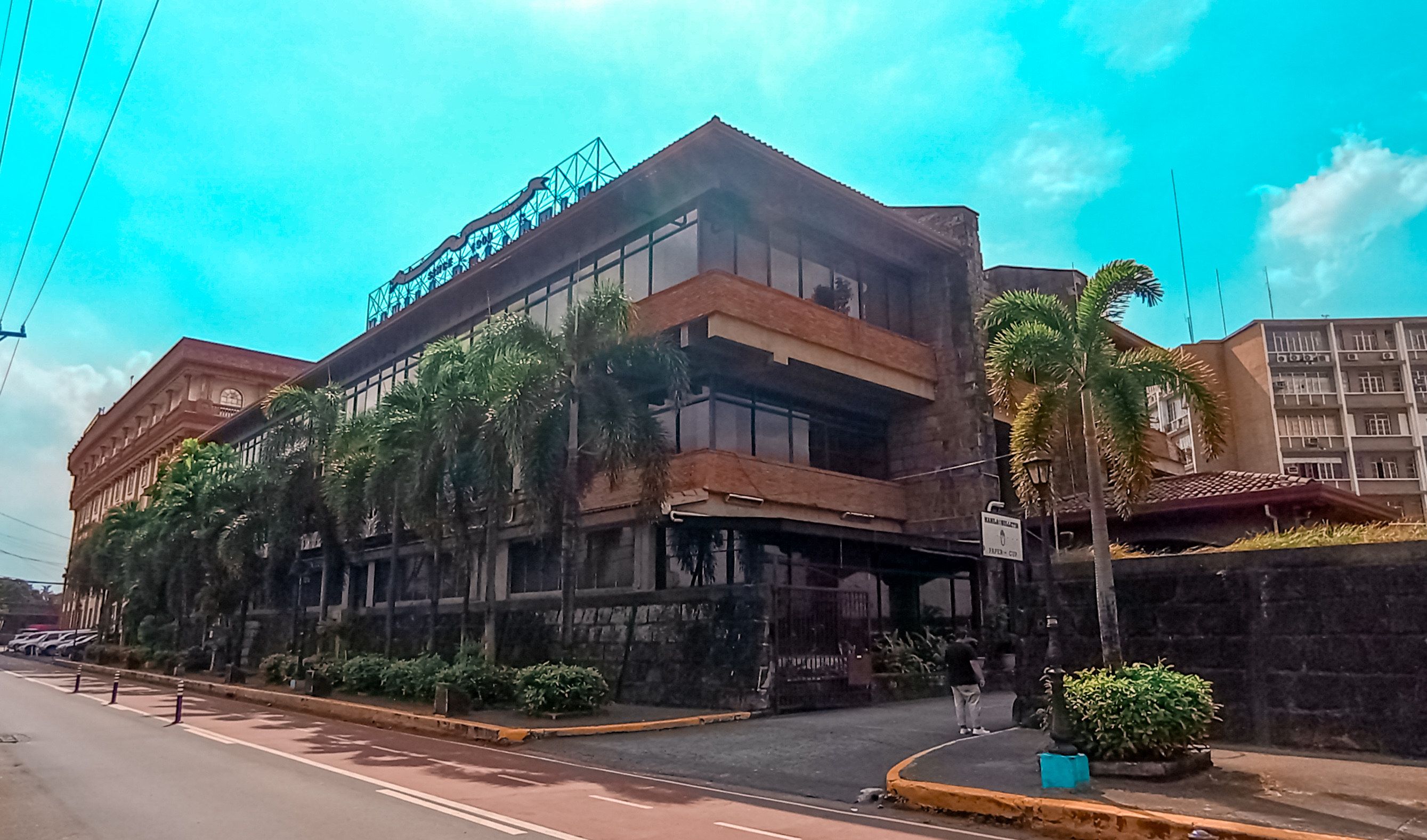
The Manila Bulletin building located at Muralla corner Recoletos Streets in Intramuros.

The streets of Intramuros are alive with history, and along Muralla Street stands a building with its own place in this narrative. Located across from the Intramuros Golf Club, the Manila Bulletin building—the headquarters of the nation’s leading newspaper—is more than just an office; it is a landmark deeply intertwined with over a century of Philippine journalism and historical significance.


The Manila Bulletin’s story began in 1900 as The Daily Bulletin, operating from El Progreso at No. 10 Carriedo in Manila. By 1901, it had moved to Evangelista Street, where the media company continued to grow. Despite early successes, its journey was not without challenges. During World War II, the Evangelista office was destroyed, halting publication under Japanese occupation from 1942 to 1945.
0 (1).jpeg
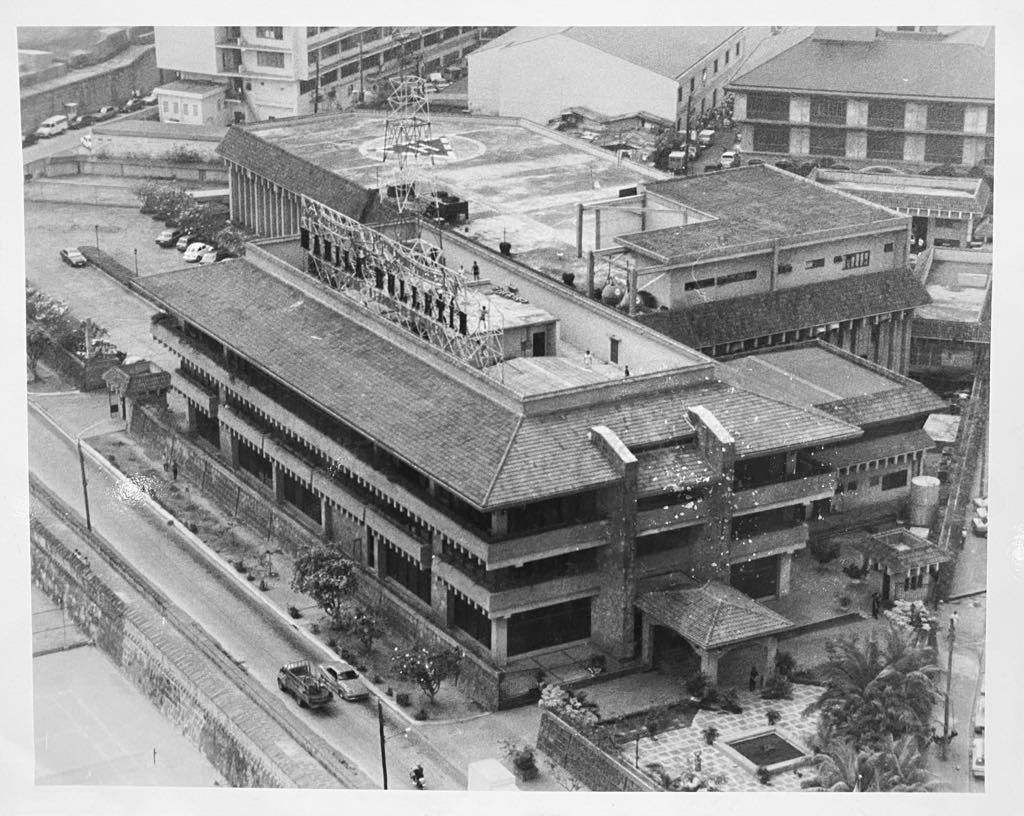
The Manila Bulletin building (1977)


Yet the company persevered, resuming operations and weathering political and social upheavals. After the liberation of Manila, the Bulletin office moved to Florentino Torres Street in Sta. Cruz and resumed publication in 1946. In 1956, its offices relocated to the Shurdut Investments building, near the current location of the Department of Labor and Employment (DOLE). However, not all departments were there; the press and the Sunday magazine Panorama operated from a separate building on Romualdez Street in Ermita.


Following the closure of the paper due to Proclamation 1081 and the declaration of Martial Law in 1972, which led to the closure of many newspapers, the media company reopened as Bulletin Today a couple of months later.
9.jpeg
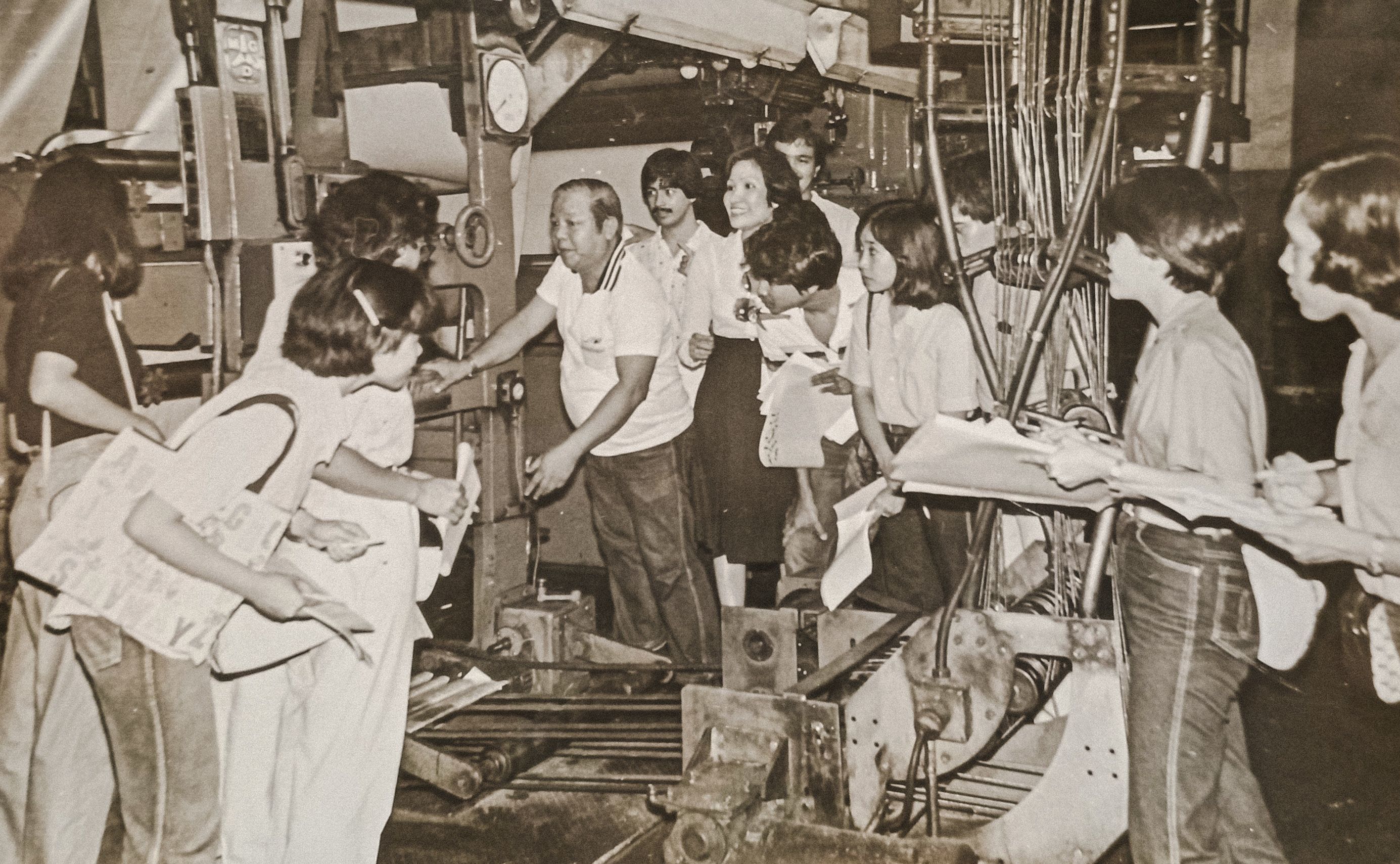
Bulletin Today’s administrative assistant Francing Alincastre conducted a tour for the La Salle
College Bacolod communication arts student interns.


Before settling into its Intramuros headquarters in 1977, the site had its own historical significance. It was once the location of the San Nicolas de Tolentino Church, the motherhouse of the Augustinian Recollects. Built in 1608, the church was the original home of the revered Black Nazarene statue, which was later moved to Quiapo’s San Sebastian Church in 1767. The church and its iconic four-tiered bell tower were destroyed during World War II, and its ruins stood until their demolition in 1959. When the publishing company acquired the property, it sought to honor the site’s legacy by contributing to the nation’s ongoing narrative.
8.jpeg
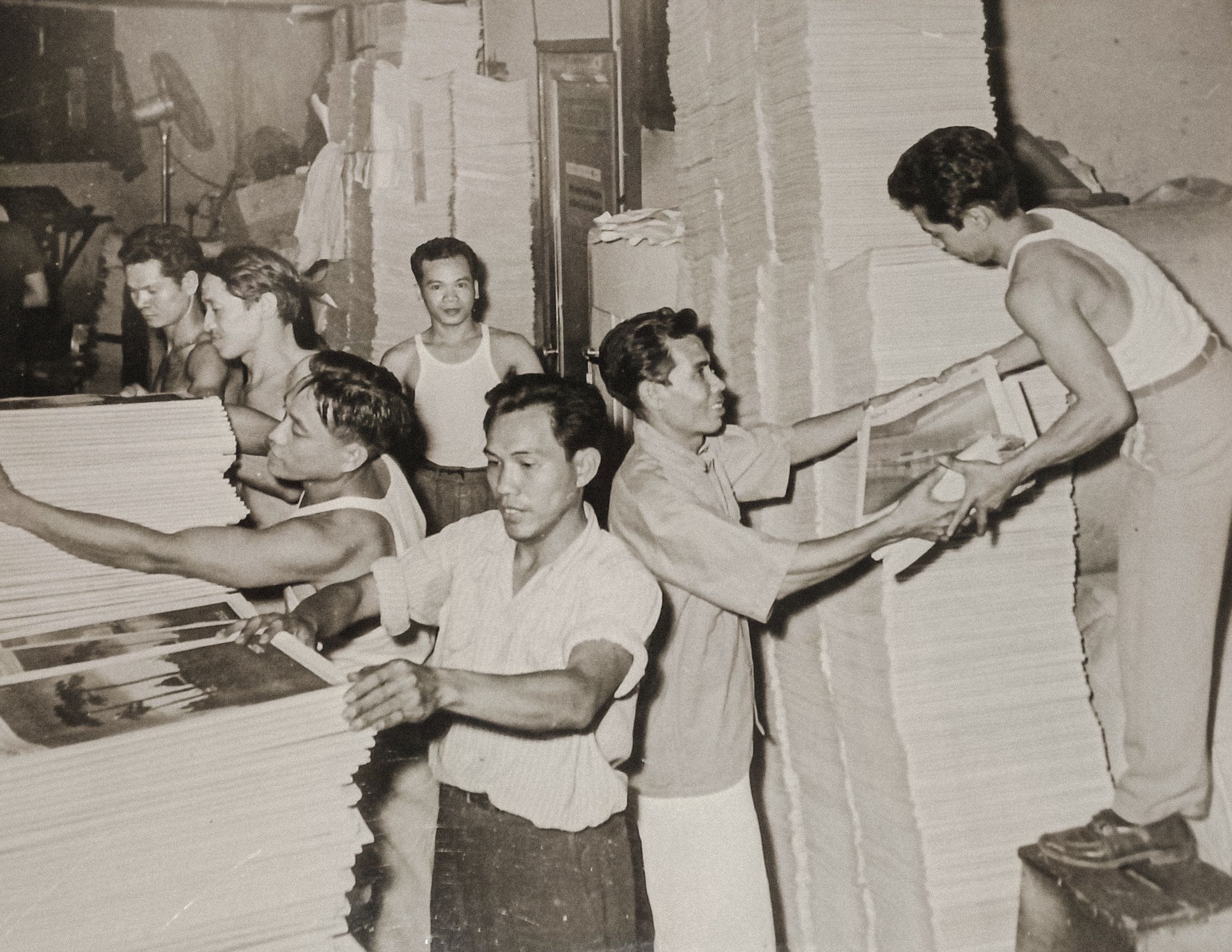
1952 anniversary


By 1976, construction of the new facility on a 1.2-hectare lot was complete, marking a significant milestone in the Manila Bulletin’s growth. In April 1977, the publishing company consolidated its operations and began publishing from its new headquarters, equipped with a 10-unit Headliners press that modernized its production capabilities. The paper was renamed Manila Bulletin in March 1986, following the EDSA People Power Revolution.


Inside the Manila Bulletin
 

Today, the Manila Bulletin building in Intramuros seamlessly blends history and modernity, serving as a dynamic hub for Philippine journalism. A visit here offers more than a glimpse into the press machines that churn out hundreds of pages per second—it’s a chance to experience the heart of a publishing company, starting with a warm welcome at the café by the main entrance.
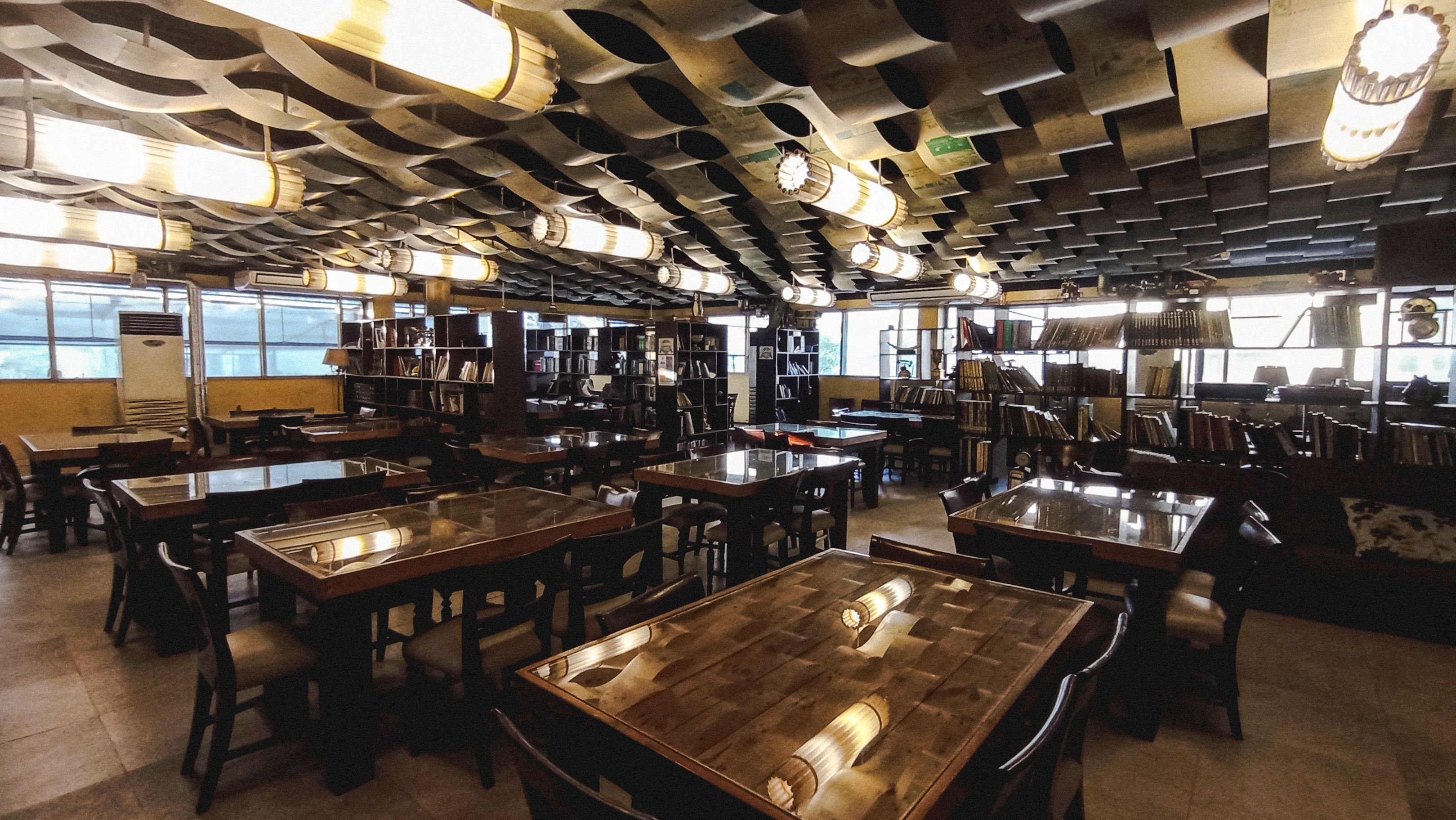
5 (2).jpeg
The staff’s pantry, found on the second floor of the building, is decorated with upcycled materials.


What began as a simple pastry stall during a Christmas village event evolved into Paper + Cup in 2016. This café transformed an unused corner into a lively space adorned with mid-century modern touches and artworks from the Manila Bulletin Sketchfest competition. Its popularity surged after a viral TikTok video, attracting students, tourists, and professionals during the pandemic. Now with a seating of 100, it’s a creative haven for connection and inspiration.


Beyond the café, the Manila Bulletin’s layout reflects functionality and sustainability. The second-floor newsroom features open, collaborative spaces with recycled materials, hanging gardens, and warm lighting that fosters focus. Other areas include a gym, library, ballroom, and a cafeteria with upcycled designs, like palochina wood tables and walls made of old motherboards, all emphasizing eco-conscious practices.
 

ADVERTISEMENT
.most-popular .layout-ratio{ padding-bottom: 79.13%; } @media (min-width: 768px) and (max-width: 1024px) { .widget-title { font-size: 15px !important; } }

{{ articles_filter_1561_widget.title }}

.most-popular .layout-ratio{ padding-bottom: 79.13%; } @media (min-width: 768px) and (max-width: 1024px) { .widget-title { font-size: 15px !important; } }

{{ articles_filter_1562_widget.title }}

.most-popular .layout-ratio{ padding-bottom: 79.13%; } @media (min-width: 768px) and (max-width: 1024px) { .widget-title { font-size: 15px !important; } }

{{ articles_filter_1563_widget.title }}

{{ articles_filter_1564_widget.title }}

.mb-article-details { position: relative; } .mb-article-details .article-body-preview, .mb-article-details .article-body-summary{ font-size: 17px; line-height: 30px; font-family: "Libre Caslon Text", serif; color: #000; } .mb-article-details .article-body-preview iframe , .mb-article-details .article-body-summary iframe{ width: 100%; margin: auto; } .read-more-background { background: linear-gradient(180deg, color(display-p3 1.000 1.000 1.000 / 0) 13.75%, color(display-p3 1.000 1.000 1.000 / 0.8) 30.79%, color(display-p3 1.000 1.000 1.000) 72.5%); position: absolute; height: 200px; width: 100%; bottom: 0; display: flex; justify-content: center; align-items: center; padding: 0; } .read-more-background a{ color: #000; } .read-more-btn { padding: 17px 45px; font-family: Inter; font-weight: 700; font-size: 18px; line-height: 16px; text-align: center; vertical-align: middle; border: 1px solid black; background-color: white; } .hidden { display: none; }
function initializeAllSwipers() { // Get all hidden inputs with cms_article_id document.querySelectorAll('[id^="cms_article_id_"]').forEach(function (input) { const cmsArticleId = input.value; const articleSelector = '#article-' + cmsArticleId + ' .body_images'; const swiperElement = document.querySelector(articleSelector); if (swiperElement && !swiperElement.classList.contains('swiper-initialized')) { new Swiper(articleSelector, { loop: true, pagination: false, navigation: { nextEl: '#article-' + cmsArticleId + ' .swiper-button-next', prevEl: '#article-' + cmsArticleId + ' .swiper-button-prev', }, }); } }); } setTimeout(initializeAllSwipers, 3000); const intersectionObserver = new IntersectionObserver( (entries) => { entries.forEach((entry) => { if (entry.isIntersecting) { const newUrl = entry.target.getAttribute("data-url"); if (newUrl) { history.pushState(null, null, newUrl); let article = entry.target; // Extract metadata const author = article.querySelector('.author-section').textContent.replace('By', '').trim(); const section = article.querySelector('.section-info ').textContent.replace(' ', ' '); const title = article.querySelector('.article-title h1').textContent; // Parse URL for Chartbeat path format const parsedUrl = new URL(newUrl, window.location.origin); const cleanUrl = parsedUrl.host + parsedUrl.pathname; // Update Chartbeat configuration if (typeof window._sf_async_config !== 'undefined') { window._sf_async_config.path = cleanUrl; window._sf_async_config.sections = section; window._sf_async_config.authors = author; } // Track virtual page view with Chartbeat if (typeof pSUPERFLY !== 'undefined' && typeof pSUPERFLY.virtualPage === 'function') { try { pSUPERFLY.virtualPage({ path: cleanUrl, title: title, sections: section, authors: author }); } catch (error) { console.error('ping error', error); } } // Optional: Update document title if (title && title !== document.title) { document.title = title; } } } }); }, { threshold: 0.1 } ); function showArticleBody(button) { const article = button.closest("article"); const summary = article.querySelector(".article-body-summary"); const body = article.querySelector(".article-body-preview"); const readMoreSection = article.querySelector(".read-more-background"); // Hide summary and read-more section summary.style.display = "none"; readMoreSection.style.display = "none"; // Show the full article body body.classList.remove("hidden"); } document.addEventListener("DOMContentLoaded", () => { let loadCount = 0; // Track how many times articles are loaded const offset = [1, 2, 3, 4, 5, 6, 7, 8, 9, 10]; // Offset values const currentUrl = window.location.pathname.substring(1); let isLoading = false; // Prevent multiple calls if (!currentUrl) { console.log("Current URL is invalid."); return; } const sentinel = document.getElementById("load-more-sentinel"); if (!sentinel) { console.log("Sentinel element not found."); return; } function isSentinelVisible() { const rect = sentinel.getBoundingClientRect(); return ( rect.top < window.innerHeight && rect.bottom >= 0 ); } function onScroll() { if (isLoading) return; if (isSentinelVisible()) { if (loadCount >= offset.length) { console.log("Maximum load attempts reached."); window.removeEventListener("scroll", onScroll); return; } isLoading = true; const currentOffset = offset[loadCount]; window.loadMoreItems().then(() => { let article = document.querySelector('#widget_1690 > div:nth-last-of-type(2) article'); intersectionObserver.observe(article) loadCount++; }).catch(error => { console.error("Error loading more items:", error); }).finally(() => { isLoading = false; }); } } window.addEventListener("scroll", onScroll); });

Sign up by email to receive news.